Aratinga gorjirroja
Psittacara rubritorquis
Equipo editorial de Avilumen ·

La aratinga gorgirroja, también conocido como perico gorjirrojo o periquito hondureño, es una especie de ave de la familia de los loros (Psittacidae) endémica de las selvas centroamericanas. Sólo vive en libertad en Guatemala, Honduras, Nicaragua y El Salvador.
The green parakeet (Psittacara holochlorus), green conure, or Mexican green conure is a New World parrot. As defined by the International Ornithological Committee (IOC), it is native to Mexico and southern Texas in the Rio Grande Valley.
Taxonomy and systematics
The green parakeet was formally described in 1859 by the English zoologist Philip Sclater under the binomial name Conurus holochlorus based on a specimen that had been collected near the town of Xalapa in the state Veracruz of southern Mexico. The specific epithet holochlorus is from Classical Greek ὁλοχλωρος/holokhlōros meaning "all-green" or "all-yellow". The green parakeet was formerly placed in the genus Aratinga, but is now one of 12 species placed in the resurrected genus Psittacara that was introduced in 1825 by the Irish zoologist Nicholas Aylward Vigors.
Three subspecies are recognised:
P. h. brewsteri (Nelson, 1928) – northwest Mexico
P. h. holochlorus (Sclater, PL, 1859) – east, south Mexico
P. h. rubritorquis (Sclater, PL, 1887) – south Guatemala, Honduras and north Nicaragua
The subspecies P. h. rubritorquis has sometimes been considered as a separate species, the red-throated parakeet.
The Socorro parakeet (Psittacara brevipes) was formerly considered as a subspecies. The green parakeet was for a time placed in the genus Aratinga as A. holochlora but from about 2013 has been in its present genus Psittacara.
Description
The green parakeet is 28 to 30.5 cm (11 to 12 in) long and weighs about 230 g (8.1 oz). The sexes are alike. Adults of both subspecies are generally green that is paler and yellower on their underparts. Their cheeks and throat have variable amounts of red speckles. Their underwing coverts are yellowish green and the undersides of their flight feathers and tail are olive-yellow. Their iris is orange-red surrounded by bare pale beige skin, their bill horn colored, and their legs and feet brownish. The subspecies P. h. brewsteri is overall somewhat darker than the nominate and has a slight glaucous cast on its head.
Distribution and habitat
The nominate subspecies of the green parakeet is native in eastern Mexico from Nuevo León and Tamaulipas south to Veracruz. The subspecies P. h. brewsteri is in the northwestern Mexican states of Sonora, Sinaloa, and Chihuahua. In the United States, the species is established in the lower Rio Grande Valley of Texas; that sub-population's origin is unknown but could be derived from introduced individuals or by natural dispersion. Sightings in California, Florida, and New Mexico are believed to be of escaped or released cage birds and the species is not on those states' lists.
In its native range, the green parakeet inhabits semi-open landscapes including deciduous woodland, gallery forest, and scrublands. It shuns humid lowland forest and is typically found at elevations between 500 and 2,000 m (1,600 and 6,600 ft). In Texas it is also found in cities and towns.
Behavior
The green parakeet is non-migratory but makes local movements in response to food availability.
Its diet has not been fully documented but is known to include seed and fruits. It can be a crop pest.
The breeding season has not been defined but appears to include at least January to April. It nests in tree cavities, caves, and cliff faces. The clutch size is four eggs. The incubation period is thought to be 23 days; the time to fledging and details of parental care are not known.
Its variety of vocalizations include "sharp squeaky notes", "loud harsh calls", and "shrill noisy chattering". Its flight call is "a rolling, harsh and high pitched screek...screek."
Status
The IUCN follows the HBW taxonomy and so includes the Socorro and Pacific parakeets in its assessment of the green parakeet as being of Least Concern. It has estimated that the combined population numbers about 200,000 mature individuals and is decreasing. No immediate threats to the Mexican population have been identified. NatureServe considers the species Vulnerable in Texas due to hunting pressure.
Texto adaptado de Wikipedia · CC BY-SA 4.0
Colores del plumaje
Taxonomía
- Orden
- Psittaciformes
- Familia
- Psittacidae
- Género
- Psittacara
- Estado de conservación
- Preocupación menor
Escucha su canto
Aún sin grabación
Guía de cuidado
Periquitos, cotorras y pericos: guía de cuidado
Cuidado del periquito australiano, cotorras, conuros, catitas y pericos: alimentación, jaula, salud, comportamiento, cría y legalidad.
Leer la guía →Galería de ilustraciones
6 ilustraciones de Psittacara rubritorquis (Aratinga gorjirroja) en estilos distintos, fieles a su plumaje real. Se muestran con marca de agua; el pack de arte incluye los originales en alta resolución, listos para imprimir.
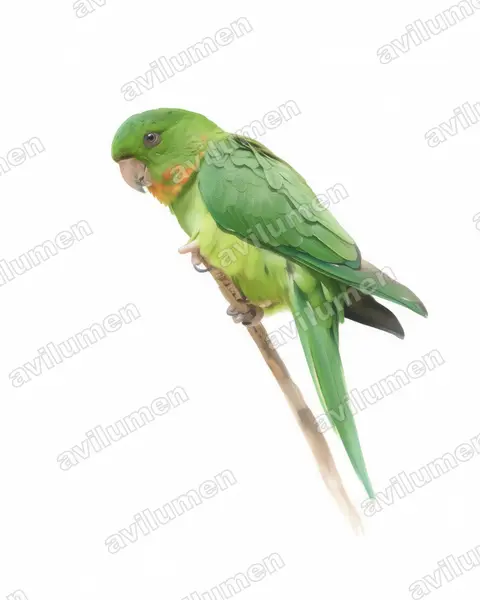
Acuarela 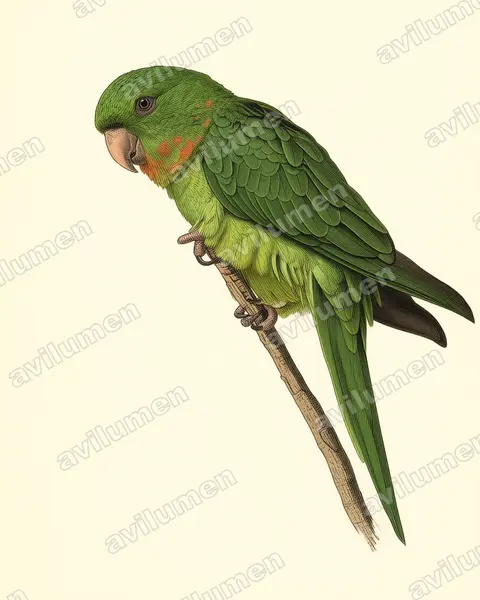
Lámina antigua 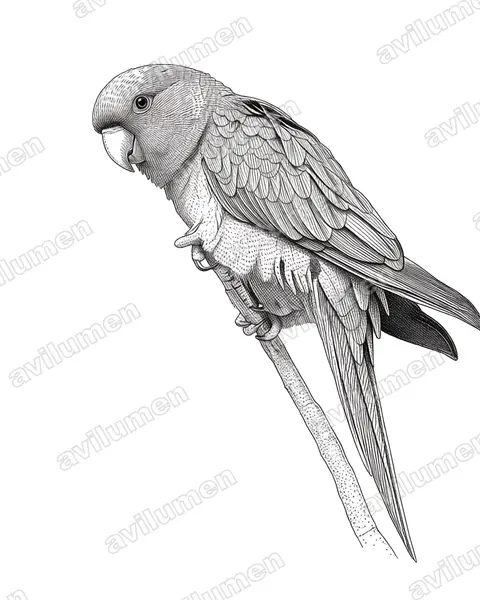
Tinta 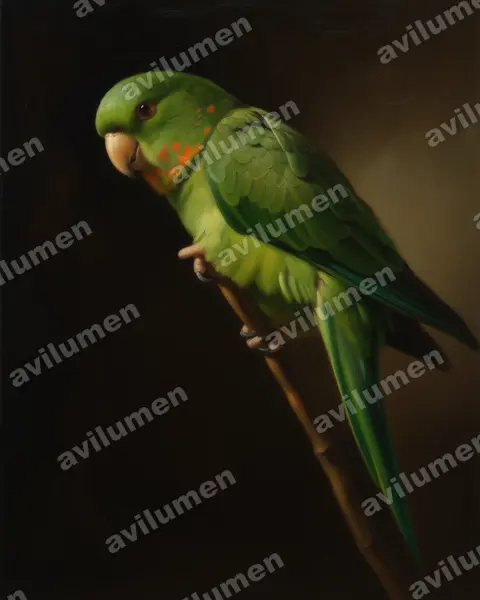
Óleo 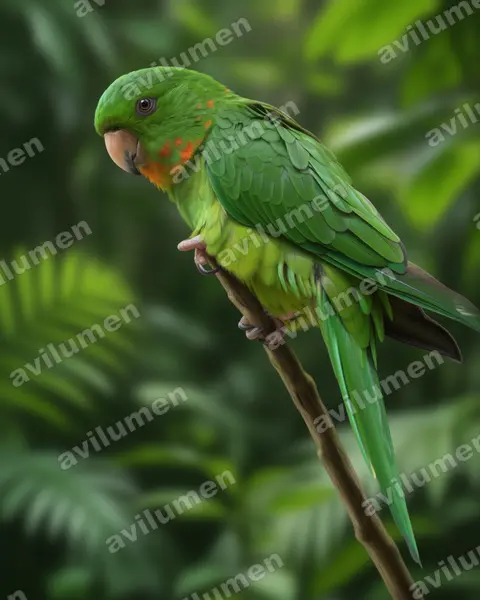
Realista 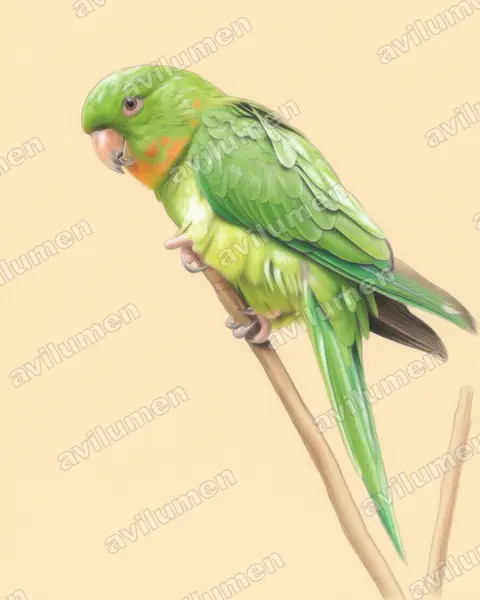
Lápiz de color
Ilustraciones basadas en la fotografía de Lauri Väin (CC BY 2.0), de Wikimedia Commons.
Ediciones digitales
Pack de arte digital HD — Aratinga gorjirroja
Descarga digital: 6 ilustraciones en alta resolución del Aratinga gorjirroja (Psittacara rubritorquis), listas para imprimir. Es un archivo digital; no incluye ningún animal ni producto físico.
Avatar con IA — Aratinga gorjirroja
Genera un avatar fusionando tu rostro con el Aratinga gorjirroja (Psittacara rubritorquis). Entrega digital en 8K y sin marca de agua. Producto digital; no se venden ni intermedian animales.
Descarga inmediata. No se venden aves vivas.
Preguntas frecuentes
- ¿Está Psittacara rubritorquis (Aratinga gorjirroja) en peligro de extinción?
- La Lista Roja de la UICN clasifica a Psittacara rubritorquis, cuyo nombre común es Aratinga gorjirroja, en la categoría «Preocupación menor». «Preocupación menor» significa que no está amenazada en este momento.
- ¿A qué familia pertenece Psittacara rubritorquis (Aratinga gorjirroja)?
- Psittacara rubritorquis (Aratinga gorjirroja) pertenece a la familia Psittacidae, dentro del orden Psittaciformes.
- ¿De qué color es Psittacara rubritorquis (Aratinga gorjirroja)?
- El plumaje de Psittacara rubritorquis (Aratinga gorjirroja) combina estos colores: Verde.
Otras de la misma familia
 Casi amenazada
Amazona del Cerrado
Alipiopsitta xanthops
La amazona del Cerrado, también denominada loro cara amarilla o amazona chica, es una especie de ave de la familia de los loros. Puebla las sabanas del cerrado brasileño y parte de Bolivia. Es la única especie del género Alipiopsitta
desde 1,99 US$
 Preocupación menor
Papagayo moluqueño
Alisterus amboinensis
El papagayo moluqueño es una especie de ave psitaciforme de la familia Psittaculidae endémica del este del archipiélago malayo.
desde 1,99 US$
 Preocupación menor
Papagayo papú
Alisterus chloropterus
El papagayo papú es una especie de ave psitaciforme de la familia Psittaculidae endémica del este de Nueva Guinea.
desde 1,99 US$
 Preocupación menor
Papagayo australiano
Alisterus scapularis
El papagayo australiano o cotorra real es una especie de ave psitaciforme de la familia Psittaculidae endémica del este de Australia. Se encuentra en los bosques húmedos de regiones altas del este del continente australiano, incluidos los bosques de Eucalyptus de la zona templada como las selvas de las zonas tropicales y subtropicales. Se alimentan de frutos, semillas e insectos.
desde 1,99 US$