Colibri d'Abeillé
Abeillia abeillei
Équipe éditoriale d'Avilumen ·

Le Colibri d'Abeillé est une espèce de colibris appartenant à la famille des Trochilidae.
The emerald-chinned hummingbird (Abeillia abeillei) is a species of hummingbird in the "emeralds", tribe Trochilini of subfamily Trochilinae.
It is native to montane areas of southern Mexico, El Salvador, Guatemala, Honduras and Nicaragua.
Taxonomy and systematics
The emerald-chinned hummingbird is the only member of genus Abeillia. It has two subspecies, the nominate A. a. abeillei and A. a. aurea.
Description
The emerald-chinned hummingbird is 7 to 8.6 cm (2.8 to 3.4 in) long and weighs about 2.7 to 3.5 g (0.095 to 0.12 oz). Both sexes of both subspecies have a short, straight, dull black bill. The nominate adult male has metallic bronze green to greenish bronze upperparts. Its central pair of tail feathers are bronze green and the rest black with a faint bluish or bronzy gloss. All have brownish gray tips. Its face has a bold white spot behind the eye. Its chin and upper throat are brilliant metallic emerald green and the lower throat velvety black to dusky metallic bronze green. The rest of its underparts are deep brownish gray with some metallic bronze green gloss except on the belly. The undertail coverts are metallic bronze green with wide brownish gray edges to the feathers. Nominate females are similar to the male but lack the metallic throat. Their underparts are entirely pale gray with some metallic green spots on the sides. Subspecies A. a. aurea is smaller than the nominate. Where the nominate male is bronze green, this subspecies is golden green.
Distribution and habitat
The nominate subspecies of emerald-chinned hummingbird is found discontinuously from Veracruz in southern Mexico through Guatemala into northern Honduras. A. a. aurea is found from southern Honduras into northern Nicaragua. The species inhabits the interior and edges of humid evergreen montane forest and pine-evergreen forest. In elevation it ranges between 1,000 and 2,200 m (3,300 and 7,200 ft).
Movement
The emerald-chinned hummingbird's movements, if any, are not known.
Feeding
The emerald-chinned hummingbird forages low to the ground for nectar, usually in cover. Its diet has not been detailed but is known to include the flowers of Rubiaceae, Verbenaceae, and Oenotheraceae. Males defend clusters of flowers. In addition to nectar, the species feeds on small insects that it gleans from flowers, leaves, and tree trunks while hovering.
Breeding
Little is known about the emerald-chinned hummingbird's breeding phenology. It is reported to nest in Mexico during February and March, and to build a cup nest low in the forest understory. Its incubation length and time to fledging are not known.
Vocalization
The emerald-chinned hummingbird's song is "a high, thin, slightly squeaking chipping, tsin, tisn-tsin tsin-tsin tsin-tsin, or tsi tsi tsi-si, tsi-tsi tsi tsi-tsi..." When foraging it gives "a liquid, rattling trill ... at times only single notes given, puip puip" and when perched "a sharp sii'ing".
Status
The IUCN has assessed the emerald-chinned hummingbird as being of Least Concern, though it population size is not known and is believed to be decreasing. It has "Special Protection" status in Mexico because its habitat there is under threat. "The primary threats to this species are logging of mature forests, and habitat conversion for agriculture and livestock production."
Texte adapté de Wikipedia · CC BY-SA 4.0
Répartition

Taxonomie
- Ordre
- Apodiformes
- Famille
- Trochilidae
- Genre
- Abeillia
- Statut de conservation
- Préoccupation mineure
Écoutez son chant
Pas encore d'enregistrement
Galerie d'illustrations
6 illustrations de Abeillia abeillei (Colibri d'Abeillé) dans des styles différents, fidèles à son plumage réel. Affichées avec filigrane ; le pack d'art contient les originaux haute résolution, prêts à imprimer.
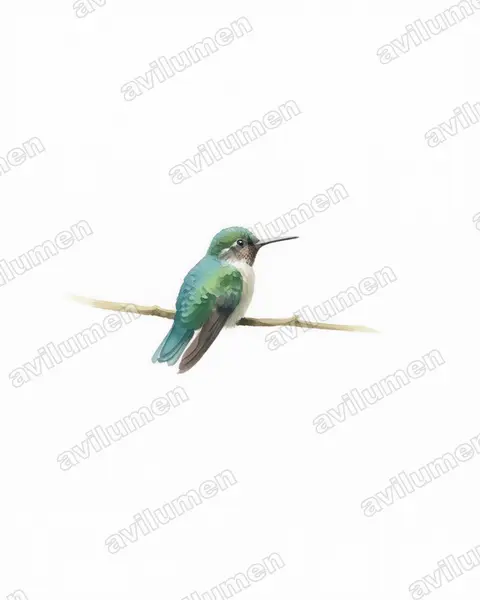
Aquarelle 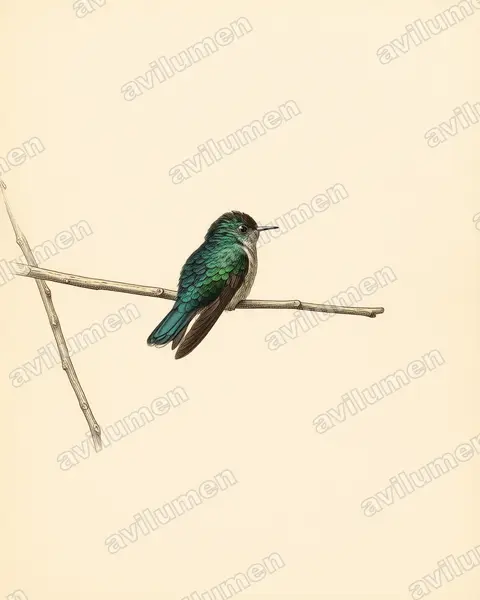
Planche ancienne 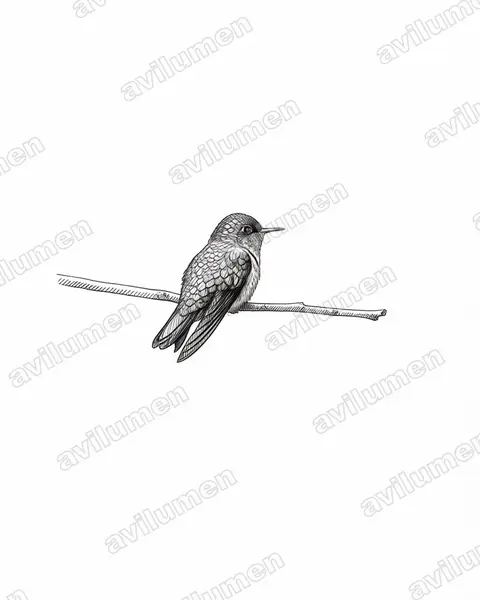
Encre 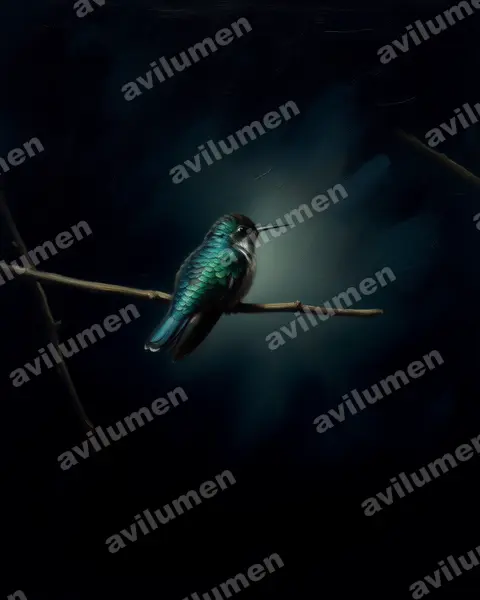
Huile 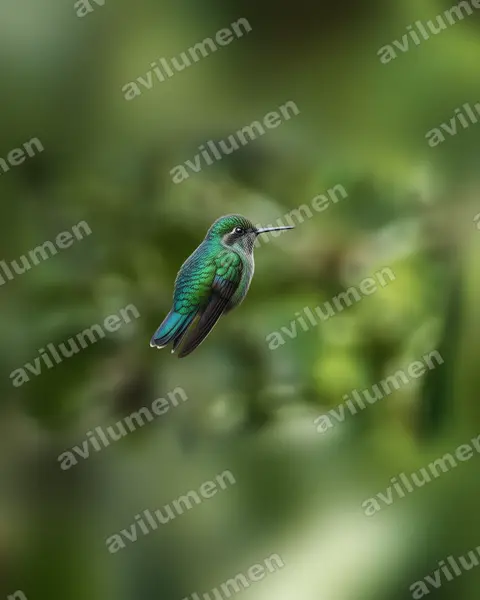
Réaliste 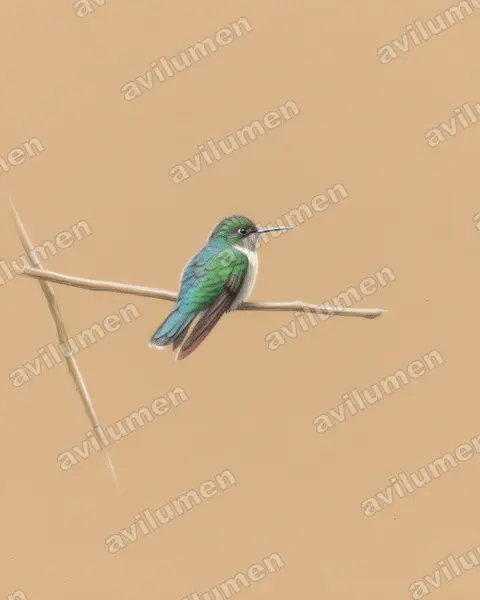
Crayon de couleur
Illustrations d'après la photographie de thibaudaronson (CC BY-SA 4.0), sur Wikimedia Commons.
Éditions numériques
Pack d'art numérique HD — Colibri d'Abeillé
Téléchargement numérique : 6 illustrations haute résolution du Colibri d'Abeillé (Abeillia abeillei), prêtes à imprimer. Fichier numérique ; aucun animal ni objet physique n'est inclus.
Avatar IA — Colibri d'Abeillé
Générez un avatar fusionnant votre visage avec le Colibri d'Abeillé (Abeillia abeillei). Livraison numérique en 8K, sans filigrane. Produit numérique ; aucun animal n'est vendu ni intermédié.
Téléchargement immédiat. Aucun oiseau vivant n'est vendu.
Questions fréquentes
- Quel est le statut de conservation de Abeillia abeillei (Colibri d'Abeillé) ?
- La Liste rouge de l’UICN classe Abeillia abeillei, dont le nom courant est Colibri d'Abeillé, dans la catégorie « Préoccupation mineure ». « Préoccupation mineure » signifie qu’elle n’est pas menacée actuellement.
- À quelle famille appartient Abeillia abeillei (Colibri d'Abeillé) ?
- Abeillia abeillei (Colibri d'Abeillé) appartient à la famille des Trochilidae, dans l’ordre des Apodiformes.
- De quelle couleur est Abeillia abeillei (Colibri d'Abeillé) ?
- Le plumage de Abeillia abeillei (Colibri d'Abeillé) associe les couleurs suivantes : Vert et Jaune.
Autres de la même famille
 Préoccupation mineure
Colibri moucheté
Adelomyia melanogenys
Le Colibri moucheté est une espèce d'oiseaux de la famille des Trochilidae.
à partir de 1,99 $US
 Vulnérable
Colibri d'Alice
Aglaeactis aliciae
Le Colibri d'Alice est une espèce d'oiseaux appartenant à la famille des Trochilidae.
à partir de 1,99 $US
 Quasi menacée
Colibri de Castelnau
Aglaeactis castelnaudii
Le Colibri de Castelnau est une espèce d'oiseaux de la famille des Trochilidae. L'espèce est endémique du Pérou
à partir de 1,99 $US
 Préoccupation mineure
Colibri étincelant
Aglaeactis cupripennis
Le Colibri étincelant est une espèce d'oiseau appartenant à la famille des Trochilidae présente en Colombie, Équateur et Pérou.
à partir de 1,99 $US