Solomons Cockatoo
Cacatua ducorpsii
Avilumen editorial team ·

The Solomons corella, also known as Solomons cockatoo, Ducorps's cockatoo or broad-crested corella, is a species of cockatoo endemic to the Solomon Islands archipelago. This small white cockatoo is larger than the Tanimbar corella yet smaller than the umbrella cockatoo. The species is common across most of the Solomons, absent only from Makira in the south.
The Solomons corella (Cacatua ducorpsii), also known as Solomons cockatoo, Ducorps's cockatoo or broad-crested corella, is a species of cockatoo endemic to the Solomon Islands archipelago. This small white cockatoo is larger than the Tanimbar corella yet smaller than the umbrella cockatoo. The species is common across most of the Solomons, absent only from Makira in the south. It inhabits lowland rainforests, secondary forests, cleared areas and gardens.
Description
The Solomons corella is about 30 cm (12 in) long. They are predominantly white. They have a blue eye ring and a recumbent crest which resembles a sail in its raised state. As other members of the subgenus Licmetis, it has a pale bill.
Distribution & population
The Solomons corella is abundant on all islands in the archipelago except Makira and surrounding islands. Ornithologists estimate that the bird has a population of around 100,000 individual birds. It has been listed as Least Concern by the International Union for Conservation of Nature.
Breeding
The Solomons corella nests in tree cavities. The eggs are white and there are usually two in a clutch. The eggs are incubated for about 25 days and the chicks leave the nest about 62 days after hatching. Wild birds typically breed from July–September.
Text adapted from Wikipedia · CC BY-SA 4.0
Where it lives
Plumage colours
Taxonomy
- Order
- Psittaciformes
- Family
- Cacatuidae
- Genus
- Cacatua
- Conservation status
- Least concern
Listen to its call
No recording yet
Care guide
Cockatoo and Cockatiel Care Guide: Diet and Housing
How to care for a cockatoo or cockatiel: diet, cage size, feather dust, health, behavior, breeding and CITES legal status. A practical guide for bird owners.
Read the guide →Illustration gallery
6 illustrations of Cacatua ducorpsii (Solomons Cockatoo) in different styles, true to its real plumage. Shown watermarked; the art pack includes the high-resolution originals, ready to print.
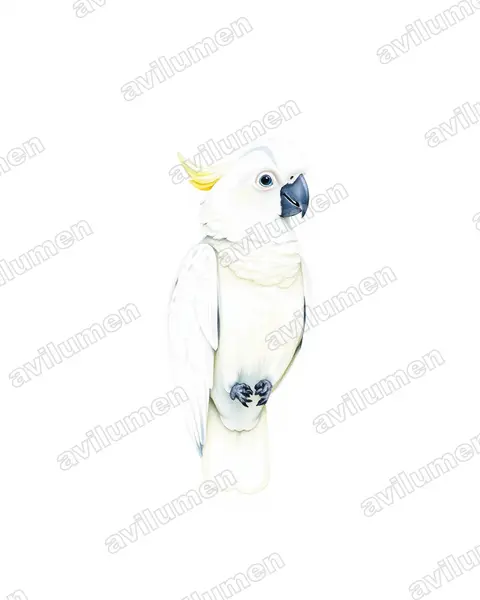
Watercolor 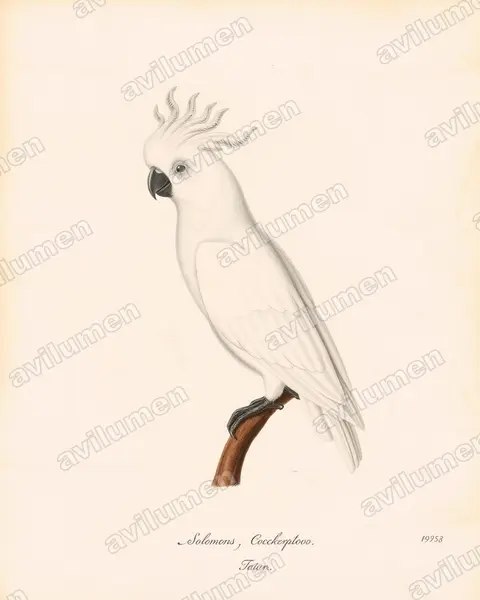
Vintage plate 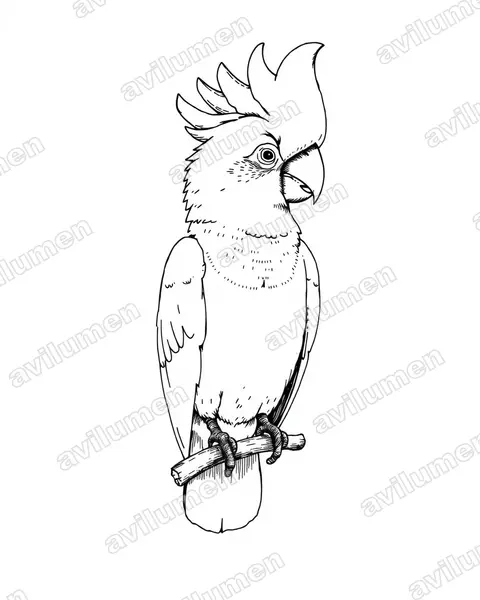
Ink 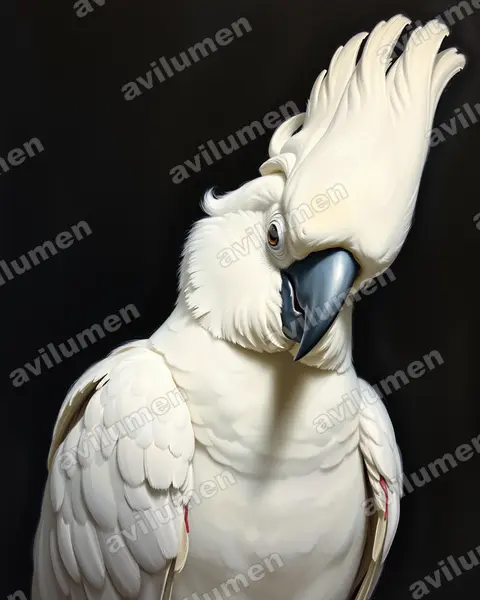
Oil 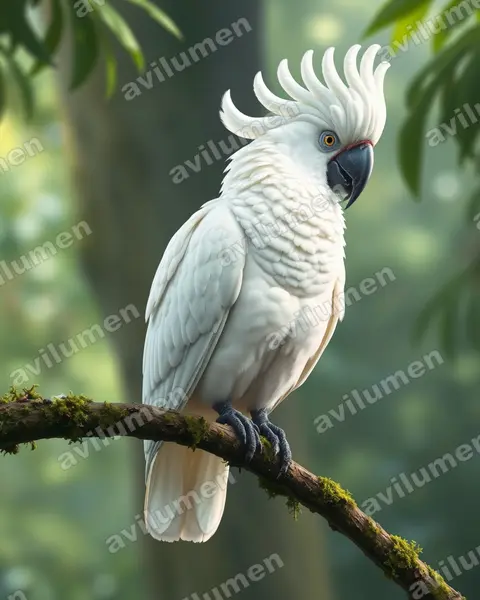
Realistic 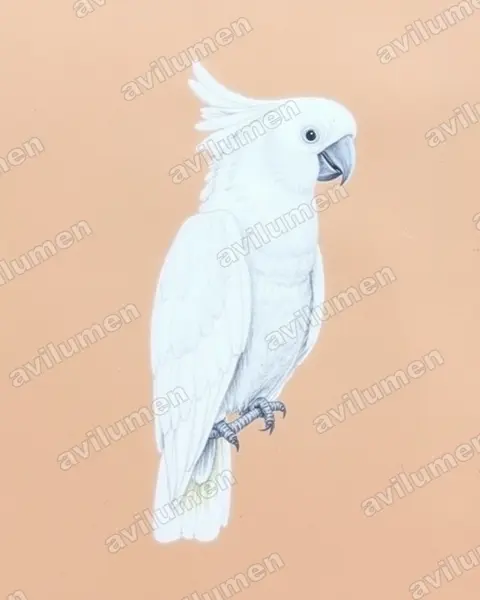
Colored pencil
Digital editions
HD Digital Art Pack — Solomons Cockatoo
Digital download: 6 high-resolution illustrations of the Solomons Cockatoo (Cacatua ducorpsii), print-ready. This is a digital file; no animal or physical item is included.
AI Avatar — Solomons Cockatoo
Generate an avatar fusing your face with the Solomons Cockatoo (Cacatua ducorpsii). Delivered digitally in 8K, watermark-free. Digital product; no animals are sold or brokered.
Instant download. No live birds are sold.
Frequently asked questions
- Is Cacatua ducorpsii (Solomons Cockatoo) endangered?
- The IUCN Red List places Cacatua ducorpsii, commonly known as the Solomons Cockatoo, in the «Least concern» category. «Least concern» means it is not currently threatened.
- Where does Cacatua ducorpsii (Solomons Cockatoo) live?
- Cacatua ducorpsii (Solomons Cockatoo) is found in Solomon Islands.
- What family does Cacatua ducorpsii (Solomons Cockatoo) belong to?
- Cacatua ducorpsii (Solomons Cockatoo) belongs to the family Cacatuidae, in the order Psittaciformes.
- What colour is Cacatua ducorpsii (Solomons Cockatoo)?
- The plumage of Cacatua ducorpsii (Solomons Cockatoo) combines these colours: White.
More from the same family
 Endangered
White Cockatoo
Cacatua alba
The white cockatoo, also known as the umbrella cockatoo, is a medium-sized all-white cockatoo endemic to tropical rainforest on islands of Indonesia. When surprised, it extends a large and striking head crest, which has a semicircular shape. The wings and tail have a pale yellow or lemon color which is exposed when they fly.
from $1.99
 Least concern
Sulphur-crested Cockatoo
Cacatua galerita
The sulphur-crested cockatoo is a relatively large white cockatoo found in wooded habitats in Australia, New Guinea, and some of the islands of Indonesia. They can be locally very numerous, leading to them sometimes being considered pests. As highly intelligent birds, they are well known in aviculture, although they can be demanding pets.
from $1.99
 Near threatened
Tanimbar Corella
Cacatua goffiniana
The Tanimbar corella, also known as Goffin's cockatoo or Tanimbar cockatoo, is a species of cockatoo endemic to forests of Yamdena, Larat, and Selaru, all islands in the Tanimbar Islands archipelago in Indonesia. It has been introduced to the Kai Islands, Indonesia; Puerto Rico; and Singapore.
from $1.99
 Critically endangered
Red-vented Cockatoo
Cacatua haematuropygia
The red-vented cockatoo, also known as the Philippine cockatoo and locally katala, abukay, agay, or kalangay, is a species of cockatoo. It is endemic to the Philippines, formerly found throughout the entire country, but due to the illegal wildlife trade, it is now locally extinct in most of its range with the only sizeable population remaining in Palawan and Sulu Archipelago.
from $1.99