Puerto Rican emerald
Chlorostilbon maugaeus
Avilumen editorial team ·

The Puerto Rican emerald, or zumbadorcito de Puerto Rico in Spanish, is species of hummingbird in the "emeralds", tribe Trochilini of subfamily Trochilinae. It is endemic to Puerto Rico.
The Puerto Rican emerald (Riccordia maugaeus), or zumbadorcito de Puerto Rico in Spanish, is species of hummingbird in the "emeralds", tribe Trochilini of subfamily Trochilinae. It is endemic to Puerto Rico.
Taxonomy and systematics
The Puerto Rican emerald was formerly placed in the genus Chlorostilbon. Based on a molecular phylogenetic study published in 2014 and a 2017 publication, the North American Classification Committee of the American Ornithological Society, the International Ornithological Committee (IOC), and the Clements taxonomy moved it to the resurrected genus Riccordia. However, as of 2020 BirdLife International's Handbook of the Birds of the World (HBW) retained it in Chlorostilbon.
Description
Male Puerto Rican emeralds are 8.5 to 9.5 cm (3.3 to 3.7 in) long and females 7.5 to 8.5 cm (3.0 to 3.3 in). The species weighs between 3.4 and 3.8 g (0.12 and 0.13 oz). Both sexes have a small white spot behind the eye. Males have a short straight bill with black-tipped red mandible and a black maxilla. Its forehead and crown are iridescent green; the rest of its upperparts are dark shining metallic green. Its gorget is iridescent bluish green and the rest of its underparts are shining green. The tail is forked and shining steely blue. The female's bill is all black. Its forehead and crown are dull dark green and the rest of the upperparts shining grass green. Its throat is light gray that darkens on the belly and undertail coverts. The tail is less forked than the male's. Its outermost pair of feathers have pale white bases, brown centers, and white ends. The next pair inward is steel blue with greenish white bases and a white spot at the end. The next two pairs are green on their body half and dull brown beyond. The central pair is shining green.
Distribution and habitat
The Puerto Rican emerald is found throughout its namesake island. It inhabits almost all the forested landscapes from coastal mangroves to montane forest on the summits including dry and moist forests, plantations, and secondary forest. It also occurs in gardens and urban areas.
Movement
The Puerto Rican emerald is sedentary.
Feeding
The Puerto Rican emerald forages for nectar from wide variety flowering plants and trees. It mostly feeds at low to medium levels of the forest. In addition to nectar, it feeds on small arthropods by gleaning from leaves and branches; its diet includes flies, Homoptera, Hymenoptera, and spiders.
Breeding
The Puerto Rican emerald's peak breeding season spans from February to May but some nesting occurs at any time of year. The nest is a small cup of dry plant fibers lined with softer material and covered with lichen. It is typically built in a low to medium-height shrub or tree. The female incubates the clutch of two eggs for 14 to 16 days; fledging occurs 20 to 22 days after hatch.
Vocalization
What is believed to be the Puerto Rican emerald's song is "a repeated twittering phrase of high-pitched descending notes followed by a series of ‘lisping’ notes on constant pitch 'tseereetseetseetsee-tslew-tslew-tslew-tslew-tslew'". It also makes "high-pitched 'tsik'" and "si..si..sik-sik...tsik.." calls.
Status
The IUCN has assessed the Puerto Rican emerald as being of Least Concern, though its population size and trend are not known. It is considered generally common throughout its large island and accepts human-made landscapes like plantations, gardens, and parks.
Text adapted from Wikipedia · CC BY-SA 4.0
Plumage colours
Distribution

Taxonomy
- Order
- Apodiformes
- Family
- Trochilidae
- Genus
- Chlorostilbon
- Conservation status
- Least concern
Listen to its call
No recording yet
Illustration gallery
6 illustrations of Chlorostilbon maugaeus (Puerto Rican emerald) in different styles, true to its real plumage. Shown watermarked; the art pack includes the high-resolution originals, ready to print.
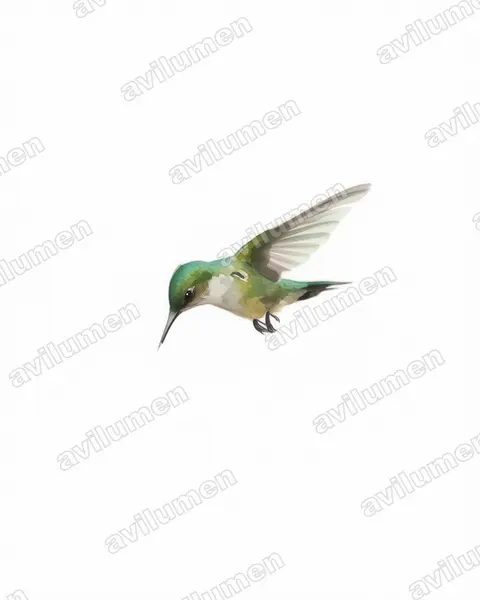
Watercolor 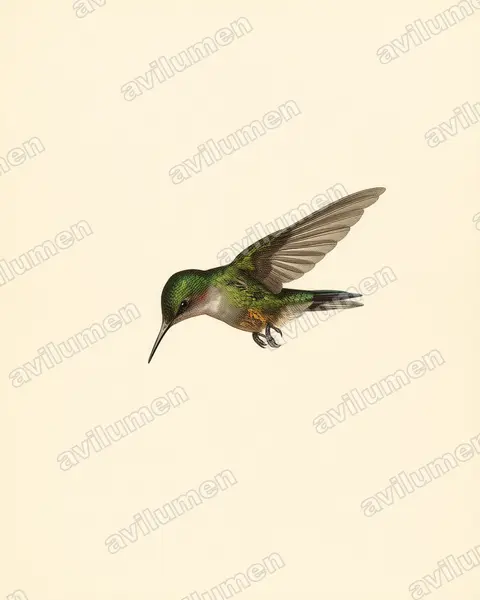
Vintage plate 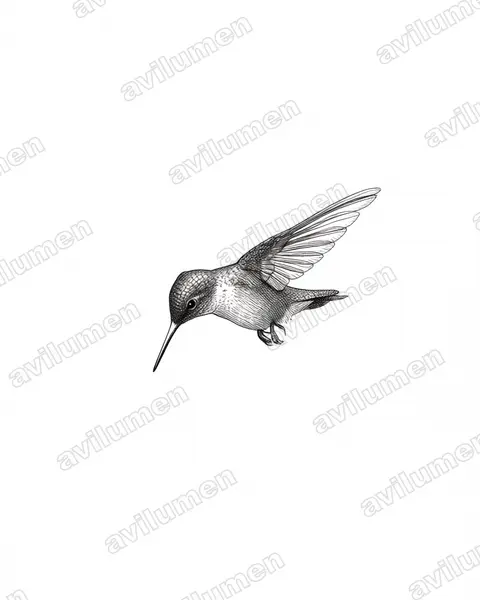
Ink 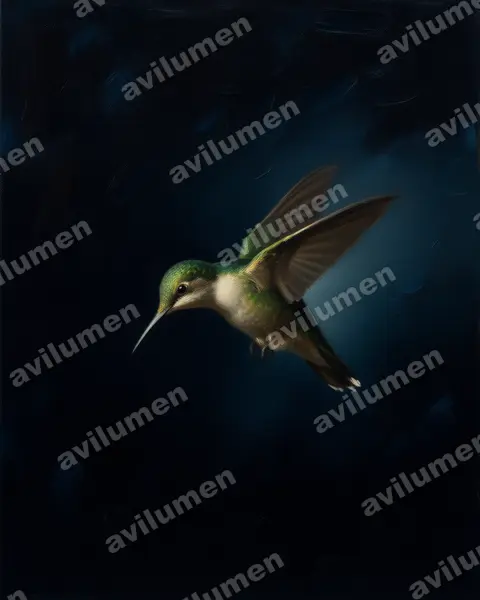
Oil 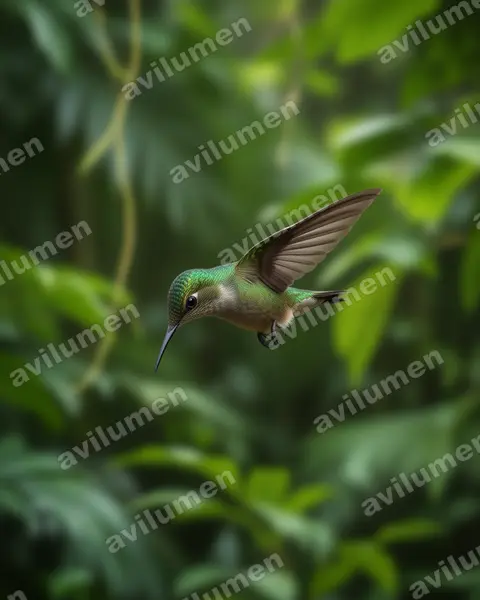
Realistic 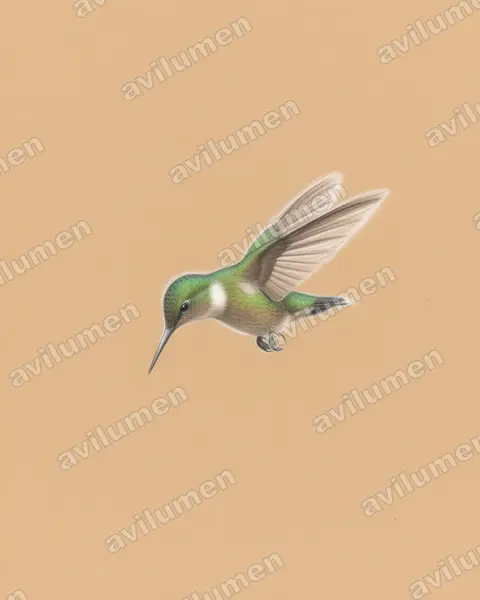
Colored pencil
Illustrations based on the photograph by Katka Nemčoková (CC BY-SA 3.0), from Wikimedia Commons.
Digital editions
HD Digital Art Pack — Puerto Rican emerald
Digital download: 6 high-resolution illustrations of the Puerto Rican emerald (Chlorostilbon maugaeus), print-ready. This is a digital file; no animal or physical item is included.
AI Avatar — Puerto Rican emerald
Generate an avatar fusing your face with the Puerto Rican emerald (Chlorostilbon maugaeus). Delivered digitally in 8K, watermark-free. Digital product; no animals are sold or brokered.
Instant download. No live birds are sold.
Frequently asked questions
- Is Chlorostilbon maugaeus (Puerto Rican emerald) endangered?
- The IUCN Red List places Chlorostilbon maugaeus, commonly known as the Puerto Rican emerald, in the «Least concern» category. «Least concern» means it is not currently threatened.
- What family does Chlorostilbon maugaeus (Puerto Rican emerald) belong to?
- Chlorostilbon maugaeus (Puerto Rican emerald) belongs to the family Trochilidae, in the order Apodiformes.
- What colour is Chlorostilbon maugaeus (Puerto Rican emerald)?
- The plumage of Chlorostilbon maugaeus (Puerto Rican emerald) combines these colours: Green.
More from the same family
 Least concern
Emerald-chinned Hummingbird
Abeillia abeillei
The emerald-chinned hummingbird is a species of hummingbird in the "emeralds", tribe Trochilini of subfamily Trochilinae.
from $1.99
 Least concern
Speckled hummingbird
Adelomyia melanogenys
The speckled hummingbird is a species of hummingbird. It is the only member of the genus Adelomyia. It inhabits Neotropical montane cloud forests at elevations of 1,000–2,500 meters and is confined to the Andes of Argentina, Bolivia, Peru, Ecuador, Colombia and Venezuela; as well as to some isolated montane forests in western Ecuador and Venezuela.
from $1.99
 Vulnerable
Purple-backed sunbeam
Aglaeactis aliciae
The purple-backed sunbeam is a bird species in the family Trochilidae. It is found only in Peru.
from $1.99
 Near threatened
White-tufted sunbeam
Aglaeactis castelnaudii
The white-tufted sunbeam is a species of hummingbird in the family Trochilidae. It is found only in Peru. Its natural habitats are subtropical or tropical moist montane forest and subtropical or tropical high-altitude shrubland.
from $1.99