Long-billed Corella
Cacatua tenuirostris
Avilumen editorial team ·

The long-billed corella, also known as long-billed cockatoo or slender-billed corella, is a cockatoo native to Australia, which is similar in appearance to the little corella. This species is mostly white, with a reddish-pink face and forehead, and has a long, pale beak, which is used to dig for roots and seeds. It has reddish-pink feathers on the breast and belly.
The long-billed corella, also known as long-billed cockatoo or slender-billed corella (Cacatua tenuirostris), is a cockatoo native to Australia, which is similar in appearance to the little corella. This species is mostly white, with a reddish-pink face and forehead, and has a long, pale beak, which is used to dig for roots and seeds. It has reddish-pink feathers on the breast and belly.
Taxonomy
The long-billed corella does not have any recognized subspecies. The first formal written description was by German naturalist Heinrich Kuhl in 1820. It is one of several related species of cockatoos called corellas and classified in the subgenus Licmetis within the genus Cacatua, members of which are known as "white cockatoos".
Description
The adult long-billed corella measures from 38 to 41 cm in length, has a wingspan around 80–90 cm, and averages 567 g in weight. It has a long, bone-coloured beak, and a rim of featherless, bluish skin around the eyes. The plumage is predominantly white with reddish feathers around the eyes and lores. The underside of the wings and tail feathers are tinged with yellow.
Distribution and habitat
The long-billed corella can be found in the wild in Victoria and southeastern New South Wales. It has extended its range since the 1970s into Melbourne, Victoria and can now be found in Tasmania, South Australia and southeast Queensland. A feral population resides in Perth, Western Australia as of the mid-1980s, which has conservation implications as this species may hybridize with the endangered western corella.
The long-billed corella is found in grassy woodlands and grasslands, including pasture, fields of agricultural crop, and urban parks. It can also be found in red gum woodland.
Call
The call of the long-billed corella is a quick, quavering, falsetto currup!, wulluk-wulluk, or cadillac-cadillac combined with harsh screeches.
Breeding
Breeding generally takes place in Austral winter to spring (from July to November). Long-billed corellas form monogamous pairs and both sexes share the task of building the nest, incubating the eggs, and caring for the young. Nests are made in decayed debris, the hollows of large old eucalypts, and occasionally in the cavities of loose gravely cliffs. 2–3 dull white, oval eggs are laid on a lining of decayed wood. The incubation period is around 24 days and chicks spend about 56 days in the nest.
Feeding
The long-billed corella typically digs for roots, seeds, corms, and bulbs, especially from the weed onion grass. Native plants eaten include murnong Microseris lanceolata, but a substantial portion of the bird's diet now includes introduced plants.
As pets
Long-billed corellas are now popular as pets in many parts of Australia, although they were formerly uncommon, and their captive population has stabilised in the last decade. This may be due to their ability to mimic words and whole sentences to near perfection. The long-billed corella has been labeled the best "talker" of the Australian cockatoos, and possibly of all native Psittacines.
As pests
Long-billed corellas are viewed as agricultural pests, particularly in western Victoria and Western Australia. They can cause significant crop damage, are known for tearing and playing with pieces of asphalt along roadsides, and even damaging power lines. Permits are regularly issued in Western Australia (and sometimes in Victoria) for the culling of this species. Within New South Wales, the corellas are the most common avian pest among sporting fields and golf courses, as they can dig holes in the ground up to 3 in across and 6 in deep.
In July 2019, in a scene that was said to resemble a "horror movie", about 60 corellas in Adelaide, South Australia, died in a suspected case of poisoning after "falling from the sky" wailing and bleeding from their mouths. At least 57 (95%) of the 60 birds were long-billed corellas, with a few short-billed corellas. It was hoped that whoever poisoned them could be traced, after toxicology tests were performed (which could nevertheless take several weeks to complete); in Australia, people are required to register if they purchase poisons, according to Sarah King (founder of Casper's Bird Rescue, who witnessed the deaths). King also said that the poison was a slow-release variety that takes several painful weeks to kill the bird. Additionally, the local Alexandrina council had, previously, allowed for periodic culling of short-billed corellas due to crop damage, chewing on streetlights and wires, damaging infrastructure (such as buildings and sporting equipment), and unfairly outcompeting other native species of birds, insects, small mammals, and other organisms.
Text adapted from Wikipedia · CC BY-SA 4.0
Distribution

Taxonomy
- Order
- Psittaciformes
- Family
- Cacatuidae
- Genus
- Cacatua
- Conservation status
- Least concern
Listen to its call
No recording yet
Care guide
Cockatoo and Cockatiel Care Guide: Diet and Housing
How to care for a cockatoo or cockatiel: diet, cage size, feather dust, health, behavior, breeding and CITES legal status. A practical guide for bird owners.
Read the guide →Illustration gallery
6 illustrations of Cacatua tenuirostris (Long-billed Corella) in different styles, true to its real plumage. Shown watermarked; the art pack includes the high-resolution originals, ready to print.
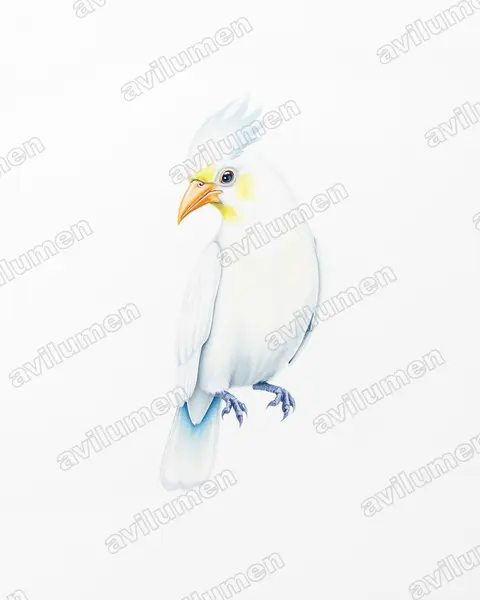
Watercolor 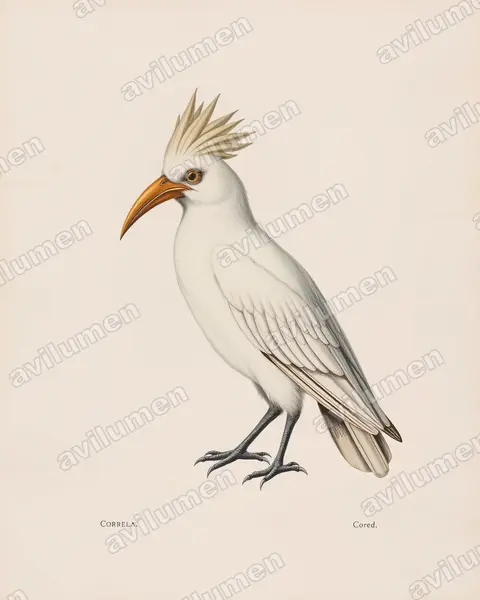
Vintage plate 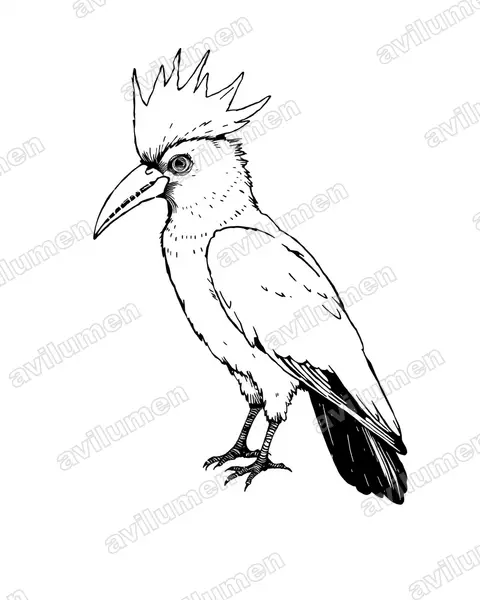
Ink 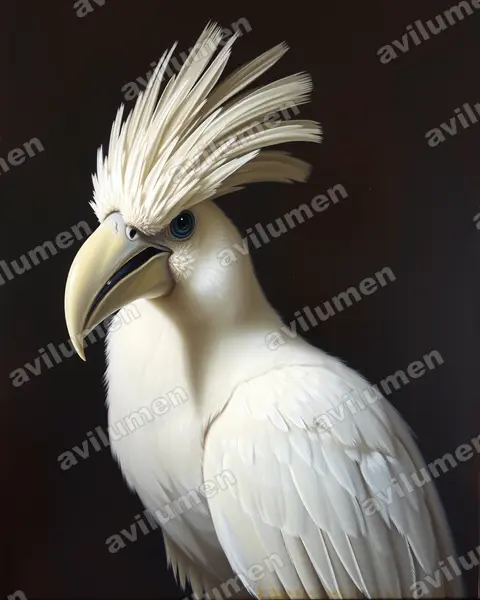
Oil 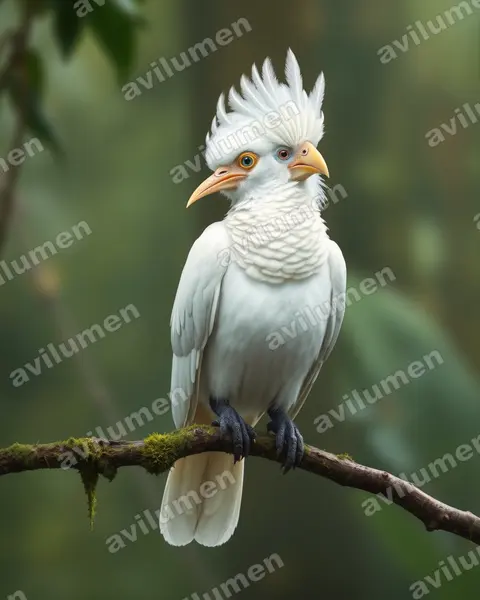
Realistic 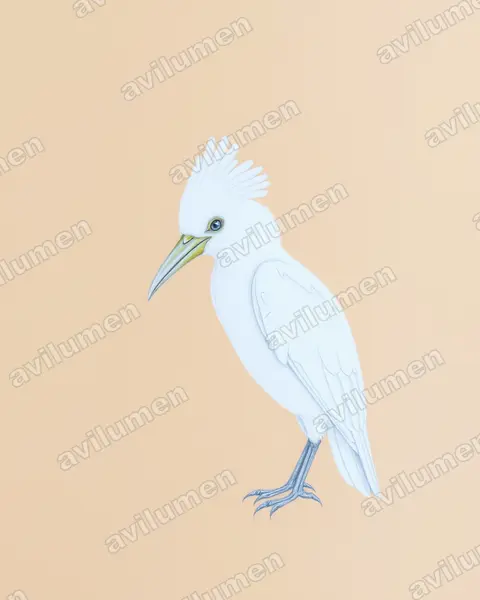
Colored pencil
Digital editions
HD Digital Art Pack — Long-billed Corella
Digital download: 6 high-resolution illustrations of the Long-billed Corella (Cacatua tenuirostris), print-ready. This is a digital file; no animal or physical item is included.
AI Avatar — Long-billed Corella
Generate an avatar fusing your face with the Long-billed Corella (Cacatua tenuirostris). Delivered digitally in 8K, watermark-free. Digital product; no animals are sold or brokered.
Instant download. No live birds are sold.
Frequently asked questions
- Is Cacatua tenuirostris (Long-billed Corella) endangered?
- The IUCN Red List places Cacatua tenuirostris, commonly known as the Long-billed Corella, in the «Least concern» category. «Least concern» means it is not currently threatened.
- Where does Cacatua tenuirostris (Long-billed Corella) live?
- Cacatua tenuirostris (Long-billed Corella) is found in Australia.
- What family does Cacatua tenuirostris (Long-billed Corella) belong to?
- Cacatua tenuirostris (Long-billed Corella) belongs to the family Cacatuidae, in the order Psittaciformes.
- What colour is Cacatua tenuirostris (Long-billed Corella)?
- The plumage of Cacatua tenuirostris (Long-billed Corella) combines these colours: White and Pink.
More from the same family
 Endangered
White Cockatoo
Cacatua alba
The white cockatoo, also known as the umbrella cockatoo, is a medium-sized all-white cockatoo endemic to tropical rainforest on islands of Indonesia. When surprised, it extends a large and striking head crest, which has a semicircular shape. The wings and tail have a pale yellow or lemon color which is exposed when they fly.
from $1.99
 Least concern
Solomons Cockatoo
Cacatua ducorpsii
The Solomons corella, also known as Solomons cockatoo, Ducorps's cockatoo or broad-crested corella, is a species of cockatoo endemic to the Solomon Islands archipelago. This small white cockatoo is larger than the Tanimbar corella yet smaller than the umbrella cockatoo. The species is common across most of the Solomons, absent only from Makira in the south.
from $1.99
 Least concern
Sulphur-crested Cockatoo
Cacatua galerita
The sulphur-crested cockatoo is a relatively large white cockatoo found in wooded habitats in Australia, New Guinea, and some of the islands of Indonesia. They can be locally very numerous, leading to them sometimes being considered pests. As highly intelligent birds, they are well known in aviculture, although they can be demanding pets.
from $1.99
 Near threatened
Tanimbar Corella
Cacatua goffiniana
The Tanimbar corella, also known as Goffin's cockatoo or Tanimbar cockatoo, is a species of cockatoo endemic to forests of Yamdena, Larat, and Selaru, all islands in the Tanimbar Islands archipelago in Indonesia. It has been introduced to the Kai Islands, Indonesia; Puerto Rico; and Singapore.
from $1.99