Crimson finch
Neochmia phaeton
Avilumen editorial team ·

The crimson finch is a species of bird in the family Estrildidae. It is found throughout Northern Australia as well as parts of southern New Guinea. Crimson finches feature a distinctively bright crimson coat and are known for their aggression.
The crimson finch (Neochmia phaeton) is a species of bird in the family Estrildidae. It is found throughout Northern Australia as well as parts of southern New Guinea. Crimson finches feature a distinctively bright crimson coat and are known for their aggression.
Taxonomy and systematics
Hombron and Jacquinot first observed crimson finches at Raffles Bay in northern Australia in 1841. Its protonym is Fringilla phaeton.
"Crimson finch" has been designated as the official common name for the species by the International Ornithologists' Union (IOC). Alternate names include "blood finch" and "killer finch", derived from its tendency for aggressive behavior towards other red birds.
The crimson finch belongs to the family Estrildidae. Two subspecies are recognised: the black-bellied crimson finch (Neochmia p. phaeton) and its white-bellied counterpart (Neochmia p. evangelinae). A related species is the star finch (Neochmia ruficauda). It also bears resemblance to birds of the genus Lagonosticta (firefinches), to which it is closely related. Common physical characteristics between crimson finches and firefinches include a red head and bright crimson coat.
Description
The crimson finch is a relatively small-sized bird. It is about 13 cm in length and weighs just 13g (0.46 oz). Standout features include a bright crimson color, long tail, and white specks that run across the sides of its body. There are also shades of grey around the neck area. This species is sexually dimorphic as the females are slightly paler in color. However, the same plumage is observed for both sexes.
A difference between males and females is that males have longer tails and bills. In addition, they are larger and heavier. Three weeks after fledging, crimson finches moult into adult plumage. The moult is only partial as juvenile greater primary coverts are preserved.
Distribution and habitat
Crimson finches are mainly distributed across Northern Australia with some residing in New Guinea. They are common in the Kimberley (Northwest) region but less widespread in the Queensland (Northeast) area.
Crimson finches' preferred habitats are areas with tall, dense grasses. They typically reside near wetlands (riparian vegetation) that have an abundance of Pandanus trees. For nesting, they utilize shrubs and dry brush to establish nests at the base of these trees. Nests are also commonly established within hollow tree limbs.
Behavior and ecology
Crimson finches are renowned for their aggressive behavior; hence the nicknames "blood finch" and "killer finch". Males are aggressive towards birds of the same species as well as different species. In any case, there is no consideration of age, coloration, or body size. Aggressive encounters are largely held on an individual basis and thus vary. Female crimson finches also exhibit similar aggressive behavior towards intruders if they are the primary defenders of a nest. However, little is known about female aggression.
For breeding, crimson finches' primary mating system is monogamy. There are about 4 to 5 breeding pairs per 100 metres (330 ft). They are known to be non-territorial and establish nests in close proximity to other birds' nests. They primarily nest in areas that are centrally located to riparian vegetation and rivers. Unlike other southern passerines that lay small clutches, crimson finches have extremely large clutch sizes. This deviance could be explained by high rates of nest predation by reptiles, which use their olfactory sense to find nests.
For feeding, crimson finches primarily feed on seeds of grasses. One example is Xerochloa imberbis, a type of rice grass. They also feed on insects.
Crimson finches have high survival rates (70-96%). They can live up to 5 years and beyond.
Relationship to humans
Crimson finches are not limited to their wild habitats. They can also be purchased and raised as pet birds. However, they are costly. A pair can cost anywhere from $600 to $800. Black-bellied crimson finches have a "bad reputation" in terms of general ownership and care. Moreover, its aggressive behavior is evident when confined to a small space. Captive males are said to be more aggressive relative to their wild counterparts. Crimson finches are not common in aviculture based on data collected within the past twenty years.
Conservation status
According to the IUCN Red List, the crimson finch is classified as "least concern" The current population is stable and doesn't see any substantial threats. However, their habitat has been vulnerable due to floods caused by dam construction. Despite this, they have adapted and have yet to encounter any significant problems as indicated by their unaffected nesting and breeding success.
Text adapted from Wikipedia · CC BY-SA 4.0
Plumage colours
Taxonomy
- Order
- Passeriformes
- Family
- Estrildidae
- Genus
- Neochmia
- Conservation status
- Least concern
Listen to its call
No recording yet
Care guide
Canary and Finch Care Guide: Diet, Housing and Breeding
How to care for canaries, zebra finches, Gouldian finches and other finches: diet, flight cage setup, health, song and breeding. A guide for bird keepers.
Read the guide →Illustration gallery
6 illustrations of Neochmia phaeton (Crimson finch) in different styles, true to its real plumage. Shown watermarked; the art pack includes the high-resolution originals, ready to print.
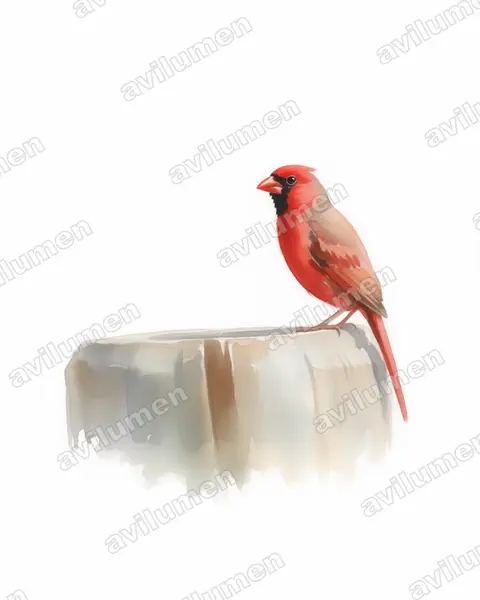
Watercolor 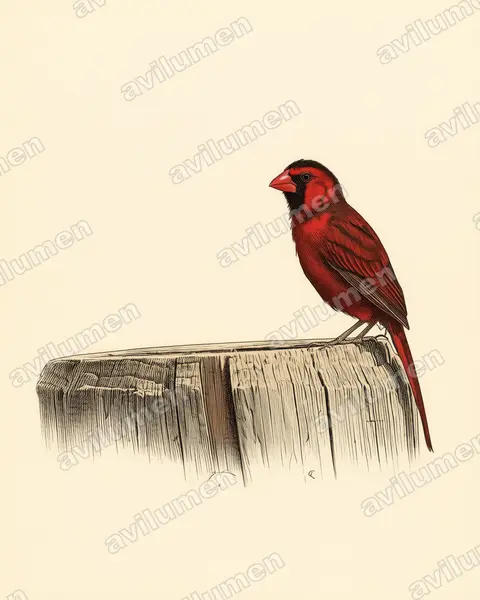
Vintage plate 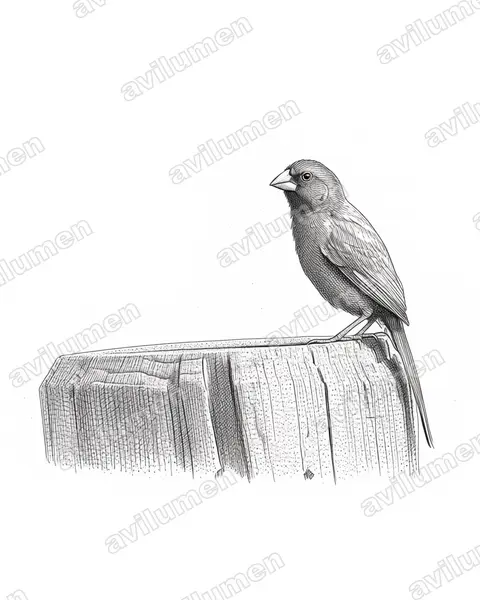
Ink 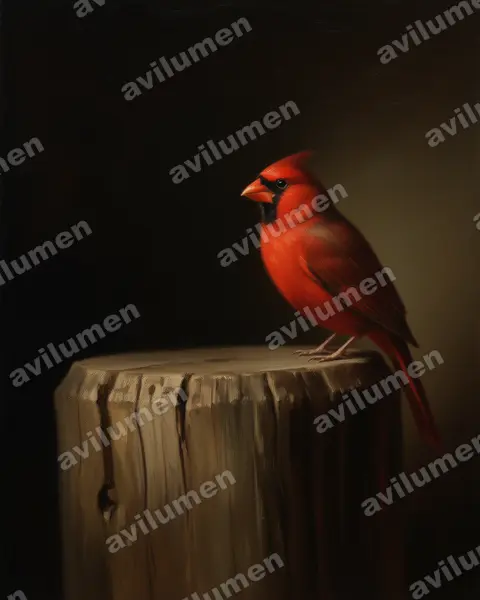
Oil 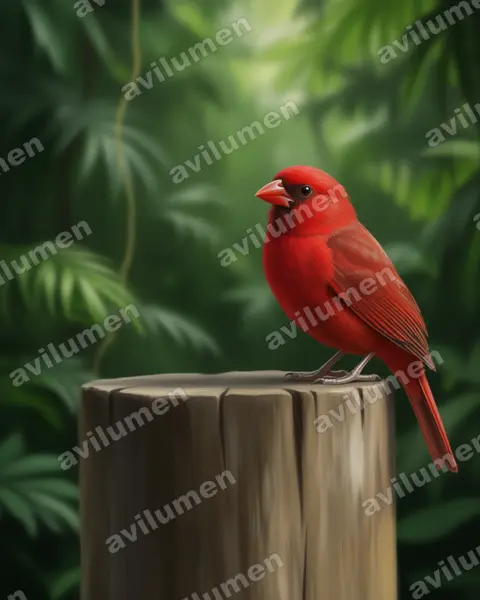
Realistic 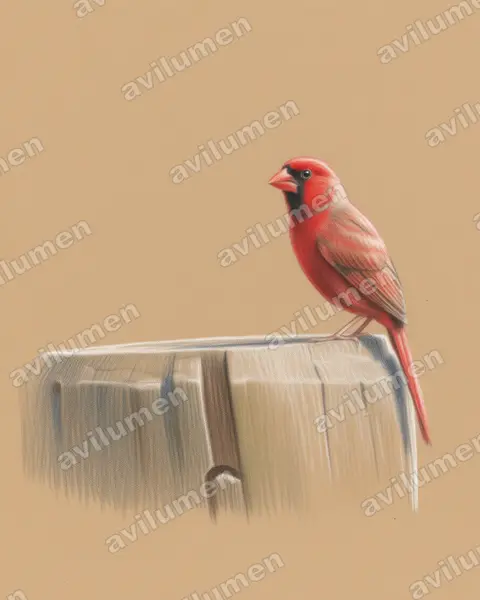
Colored pencil
Illustrations based on the photograph by Lip Kee Yap from Singapore, Republic of Singapore (CC BY-SA 2.0), from Wikimedia Commons.
Digital editions
HD Digital Art Pack — Crimson finch
Digital download: 6 high-resolution illustrations of the Crimson finch (Neochmia phaeton), print-ready. This is a digital file; no animal or physical item is included.
AI Avatar — Crimson finch
Generate an avatar fusing your face with the Crimson finch (Neochmia phaeton). Delivered digitally in 8K, watermark-free. Digital product; no animals are sold or brokered.
Instant download. No live birds are sold.
Frequently asked questions
- Is Neochmia phaeton (Crimson finch) endangered?
- The IUCN Red List places Neochmia phaeton, commonly known as the Crimson finch, in the «Least concern» category. «Least concern» means it is not currently threatened.
- What family does Neochmia phaeton (Crimson finch) belong to?
- Neochmia phaeton (Crimson finch) belongs to the family Estrildidae, in the order Passeriformes.
- What colour is Neochmia phaeton (Crimson finch)?
- The plumage of Neochmia phaeton (Crimson finch) combines these colours: Red.
More from the same family
 Least concern
Red-headed finch
Amadina erythrocephala
The red-headed finch is a common species of estrildid finch found in Africa. It has an estimated global extent of occurrence of 1,600,000 km2 (620,000 sq mi). It is found in Angola, Botswana, Lesotho, Namibia, South Africa and Zimbabwe.
from $1.99
 Least concern
Cut-throat finch
Amadina fasciata
The cut-throat finch is a common species of estrildid finch found throughout Africa; it is also known as the bearded finch, the ribbon finch, the cut throat, and the weaver finch.
from $1.99
 Least concern
Red avadavat
Amandava amandava
The red avadavat, red munia or strawberry finch, is a sparrow-sized bird of the family Estrildidae. It is found in the open fields and grasslands of tropical Asia and is popular as a cage bird due to the colourful plumage of the males in their breeding season. It breeds in the Indian subcontinent in the monsoon season.
from $1.99
 Vulnerable
Green avadavat
Amandava formosa
The green avadavat or green munia is a species of Estrildid finch with green and yellow on the body, a bright red bill and black "zebra stripes" on the flanks. They are endemic to the Indian subcontinent and were formerly popular as cagebirds. The name "avadavat" is a corruption of the name the city of Ahmedabad in Gujarat, India, which was a centre of bird trade.
from $1.99