Grey-headed Chachalaca
Ortalis cinereiceps
Avilumen editorial team ·

The grey-headed chachalaca is a member of an ancient group of birds in the family Cracidae, which includes chachalacas, guans, and curassows. It is found from Honduras to Colombia.
The grey-headed chachalaca (Ortalis cinereiceps) is a member of an ancient group of birds in the family Cracidae, which includes chachalacas, guans, and curassows. It is found from Honduras to Colombia.
Taxonomy and systematics
The family Cracidae is closely related to the guineafowl (Numididae), the pheasants, grouse and allies (Phasianidae), and the New World quail (Odontophoridae). The grey-headed chachalaca was at one time treated as conspecific with the chestnut-winged chachalaca (Ortalis garrula). It is monotypic; several subspecies have been proposed and not accepted.
Description
The grey-headed chachalaca is a medium-sized bird, similar in general appearance to turkeys, with a small head, long strong legs, and a long broad tail. They are 48 to 58 cm (1.6 to 1.9 ft) long and weigh 490 to 540 g (1.1 to 1.2 lb). They have fairly dull plumage, grayish brown above and paler below. The head is dark grey with a red dewlap and the blackish tail is tipped with buff. Their primary flight feathers are bright chestnut. Juveniles are browner overall, especially on the head.
Distribution and habitat
The grey-headed chachalaca is found from Mosquitia in eastern Honduras through eastern Nicaragua and most of Costa Rica and Panama into Colombia's Chocó Department. In addition to mainland Panama it occurs on Isla del Rey, where it might have been introduced by Native Americans. It inhabits a variety of humid landscapes characterized by dense vegetation such as thickets, secondary forest, brushy abandoned fields, and thinned forests. It shuns the interior of dense forest though it can occur in their edges. In elevation it ranges from sea level to 1,700 m (5,600 ft).
Feeding
The grey-headed chachalaca forages typically in groups of six to 12 but sometimes up to 20, usually in the vegetation but sometimes on the ground. Its diet is about 75% fruit, 17% leaves, and 8% invertebrates. In the dry season it visits rivers to drink in the morning and evening.
Breeding
The grey-headed chachalaca's egg-laying season spans at least January to May, which overlaps the dry season. Its broad shallow nest is built of twigs, vines, and other vegetation and placed 1 to 2.4 m (3 to 8 ft) above ground in a tree or bush and often screened by vines. The female lays three dull white eggs and incubates them alone.
Vocalization
The grey-headed chachalaca is less noisy than plain (O. vetula) or rufous-vented chachalacas (O. ruficauda). Its song is a soft "cha-cha-lac-ah". Flocks give raucous calls described as "kloik, kleeuk kraahk". It also makes a variety of screams, sharp alarm calls, and a quiet purr.
Status
The IUCN has assessed the grey-headed chachalaca as being of Least Concern. It varies from fairly common to common throughout its range though in some areas the population has been significantly reduced by hunting. It adapts well to some habitat disturbance.
Other reading
Stiles, F. Gary; Skutch, Alexander F. (1989). A Guide to the Birds of Costa Rica. Comstock Publishing Associates. ISBN 0-8014-9600-4.
Text adapted from Wikipedia · CC BY-SA 4.0
Where it lives
Plumage colours
Distribution

Taxonomy
- Order
- Galliformes
- Family
- Cracidae
- Genus
- Ortalis
- Conservation status
- Least concern
Listen to its call
No recording yet
Illustration gallery
6 illustrations of Ortalis cinereiceps (Grey-headed Chachalaca) in different styles, true to its real plumage. Shown watermarked; the art pack includes the high-resolution originals, ready to print.
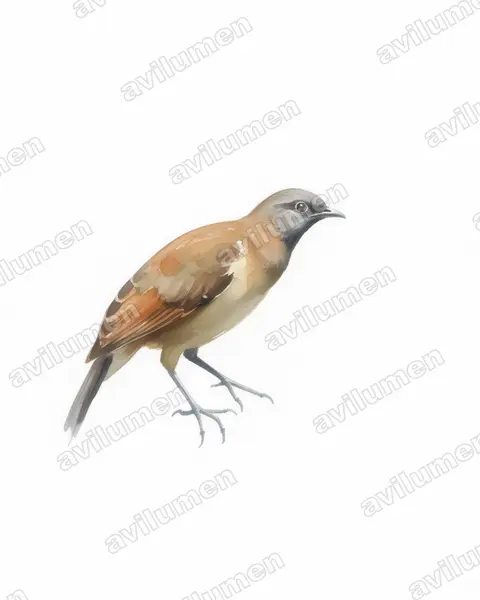
Watercolor 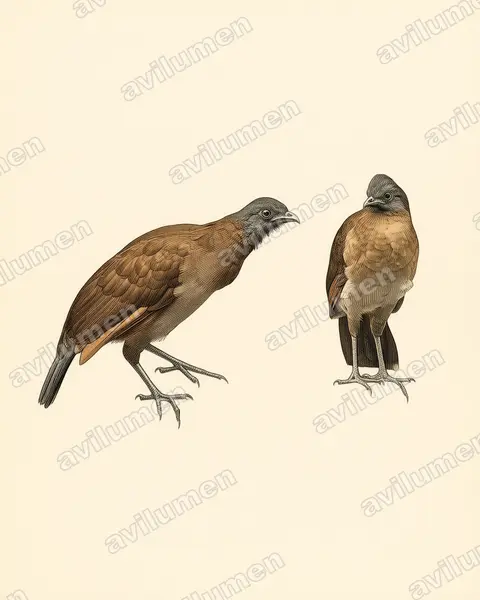
Vintage plate 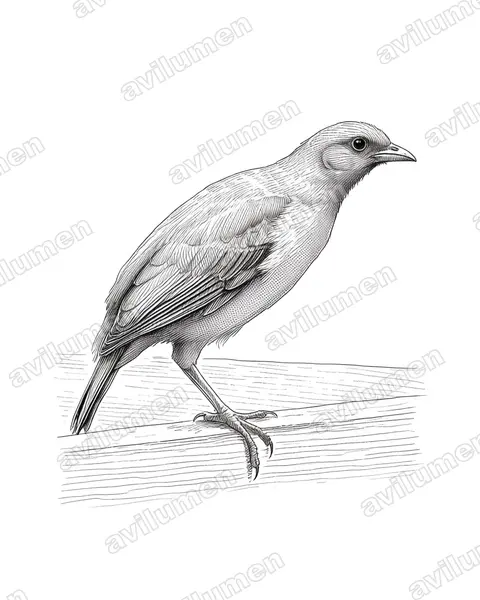
Ink 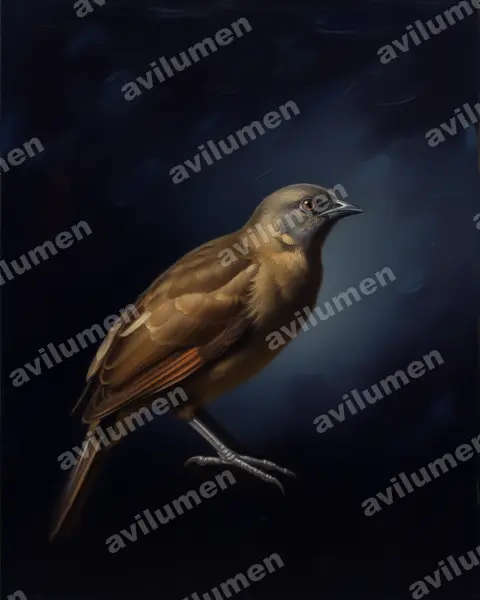
Oil 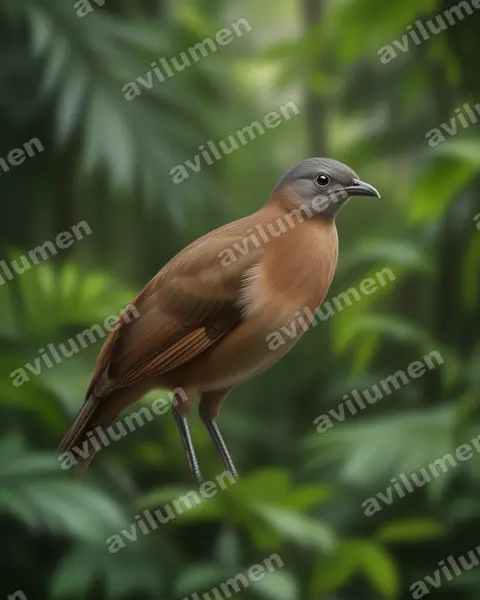
Realistic 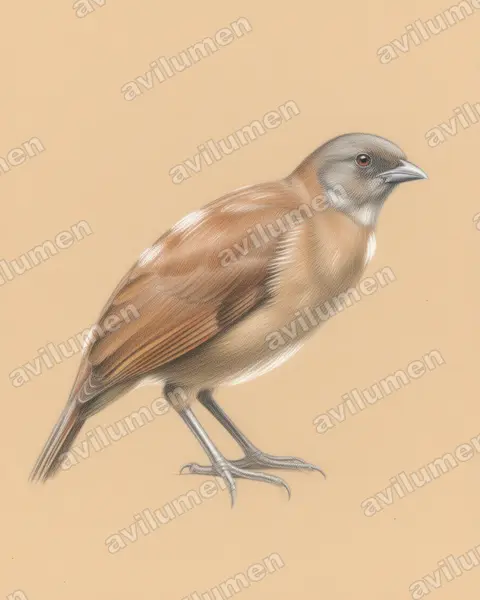
Colored pencil
Illustrations based on the photograph by Rhododendrites (CC BY-SA 4.0), from Wikimedia Commons.
Digital editions
HD Digital Art Pack — Grey-headed Chachalaca
Digital download: 6 high-resolution illustrations of the Grey-headed Chachalaca (Ortalis cinereiceps), print-ready. This is a digital file; no animal or physical item is included.
AI Avatar — Grey-headed Chachalaca
Generate an avatar fusing your face with the Grey-headed Chachalaca (Ortalis cinereiceps). Delivered digitally in 8K, watermark-free. Digital product; no animals are sold or brokered.
Instant download. No live birds are sold.
Frequently asked questions
- Is Ortalis cinereiceps (Grey-headed Chachalaca) endangered?
- The IUCN Red List places Ortalis cinereiceps, commonly known as the Grey-headed Chachalaca, in the «Least concern» category. «Least concern» means it is not currently threatened.
- Where does Ortalis cinereiceps (Grey-headed Chachalaca) live?
- Ortalis cinereiceps (Grey-headed Chachalaca) is found in South America.
- What family does Ortalis cinereiceps (Grey-headed Chachalaca) belong to?
- Ortalis cinereiceps (Grey-headed Chachalaca) belongs to the family Cracidae, in the order Galliformes.
- What colour is Ortalis cinereiceps (Grey-headed Chachalaca)?
- The plumage of Ortalis cinereiceps (Grey-headed Chachalaca) combines these colours: Grey.
More from the same family
 Least concern
Wattled Guan
Aburria aburri
The wattled guan is a species of bird in the family Cracidae. It is a fairly large black cracid with blue-based, black-tipped beak and a long, red-and-yellow wattle.
from $1.99
 Least concern
Sickle-winged Guan
Chamaepetes goudotii
The sickle-winged guan is a species of bird in the chachalaca, guan, and curassow family Cracidae. It is found in Bolivia, Colombia, Ecuador, and Peru.
from $1.99
 Least concern
Black Guan
Chamaepetes unicolor
The black guan is a species of bird in the chachalaca, guan, and curassow family Cracidae. It is found in Costa Rica and Panama.
from $1.99
 Critically endangered
Blue-billed Curassow
Crax alberti
The blue-billed curassow is a species of bird in the family Cracidae, the chachalacas, guans, and curassows. It is endemic to Colombia.
from $1.99