Sulawesi hornbill
Rhabdotorrhinus exarhatus
Avilumen editorial team ·

The Sulawesi hornbill, also known as the Sulawesi tarictic hornbill, Temminck's hornbill or Sulawesi dwarf hornbill, is a relatively small, approximately 45 cm (18 in) long, black hornbill. The male has a yellow face and throat, and yellowish horn bill with black markings. The female has all-black plumage and a darker bill.
The Sulawesi hornbill (Rhabdotorrhinus exarhatus), also known as the Sulawesi tarictic hornbill, Temminck's hornbill or Sulawesi dwarf hornbill, is a relatively small, approximately 45 cm (18 in) long, black hornbill. The male has a yellow face and throat, and yellowish horn bill with black markings. The female has all-black plumage and a darker bill.
Taxonomy
An Indonesian endemic, the Sulawesi hornbill is distributed in the tropical lowland, swamps and primary forests of Sulawesi and nearby islands, from sea level to altitude up to 1,100 metres. There are two subspecies of the Sulawesi hornbill. The nominate subspecies, P. e. exarhatus, occurs in north Sulawesi, and P. e. sanfordi is found in central, east and south Sulawesi, Buton and Muna Island.
Status and conservation
Uncommon throughout its native range, the Sulawesi hornbill is evaluated as vulnerable on the IUCN Red List of Threatened Species. The species usually performs better in captivity than other species of hornbill. It is kept in multiple facilities across Europe, North America & Asia, including but not limited to Weltvogelpark Walsrode in Germany, Plzeň Zoo in the Czech Republic as well as San Diego Zoo, Bronx Zoo, ZooTampa at Lowry Park and Turtle Back Zoo in the United States. At Walsrode the birds are kept in the bird garden area, whilst at San Diego they have two pairs, one in the walk-through Parker Aviary and the other in a small nearby aviary.
Behavior
The Sulawesi hornbill is a social species that lives in groups of up to 20 individuals. It is believed that only the dominant pair breeds, while the remaining members of the group act as helpers. The diet consists mainly of fruits, figs and insects. The female seals herself inside a tree hole to lay her eggs. During this time, the male and helpers provide food for the female and the young.
Text adapted from Wikipedia · CC BY-SA 4.0
Taxonomy
- Order
- Bucerotiformes
- Family
- Bucerotidae
- Genus
- Rhabdotorrhinus
- Conservation status
- Vulnerable
Listen to its call
No recording yet
Illustration gallery
6 illustrations of Rhabdotorrhinus exarhatus (Sulawesi hornbill) in different styles, true to its real plumage. Shown watermarked; the art pack includes the high-resolution originals, ready to print.
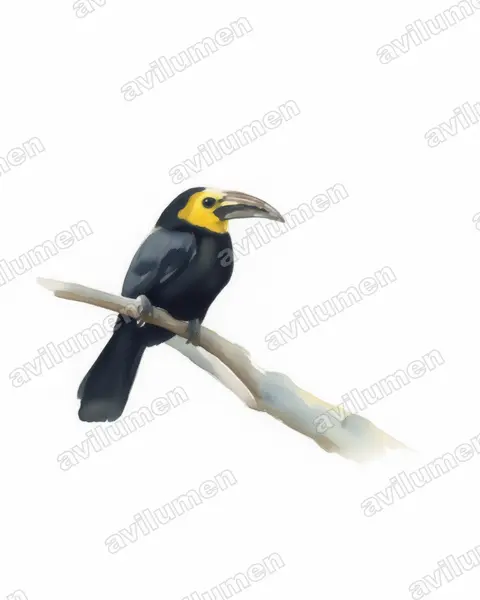
Watercolor 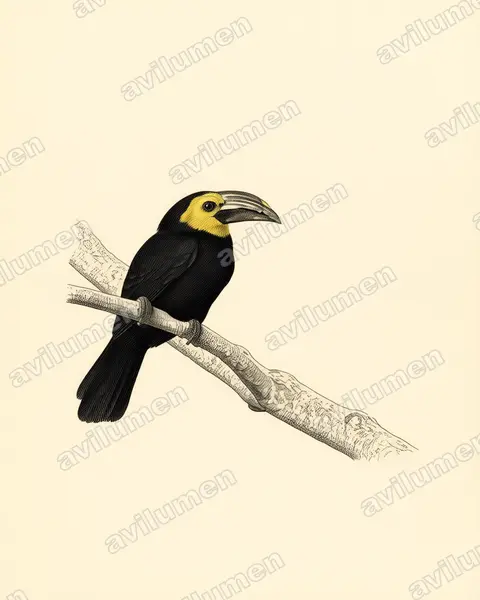
Vintage plate 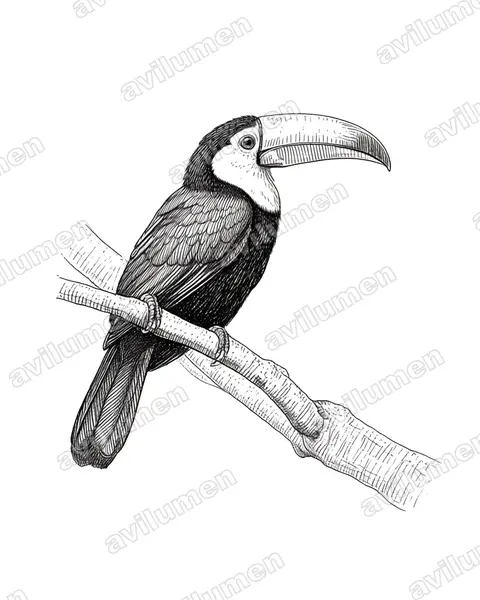
Ink 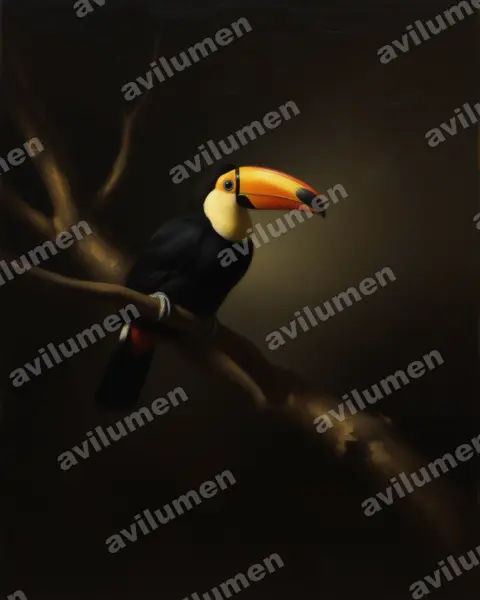
Oil 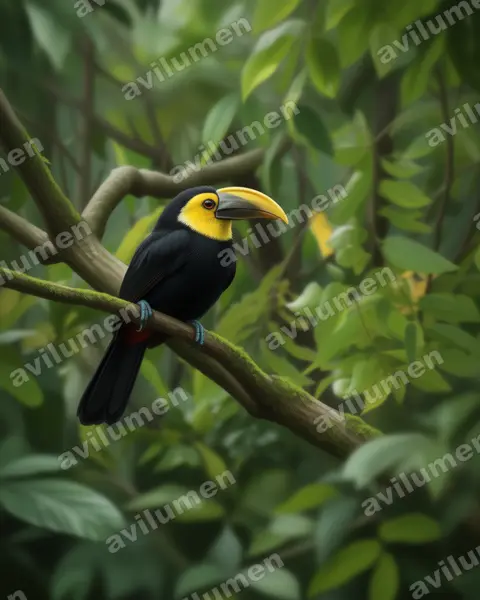
Realistic 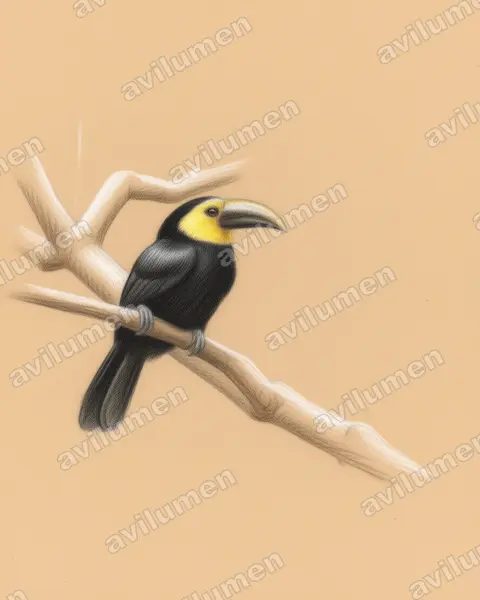
Colored pencil
Illustrations based on the photograph by T. R. Shankar Raman (CC BY-SA 3.0), from Wikimedia Commons.
Digital editions
HD Digital Art Pack — Sulawesi hornbill
Digital download: 6 high-resolution illustrations of the Sulawesi hornbill (Rhabdotorrhinus exarhatus), print-ready. This is a digital file; no animal or physical item is included.
AI Avatar — Sulawesi hornbill
Generate an avatar fusing your face with the Sulawesi hornbill (Rhabdotorrhinus exarhatus). Delivered digitally in 8K, watermark-free. Digital product; no animals are sold or brokered.
Instant download. No live birds are sold.
Frequently asked questions
- Is Rhabdotorrhinus exarhatus (Sulawesi hornbill) endangered?
- The IUCN Red List places Rhabdotorrhinus exarhatus, commonly known as the Sulawesi hornbill, in the «Vulnerable» category. «Vulnerable» means it faces a high risk of extinction in the medium term.
- What family does Rhabdotorrhinus exarhatus (Sulawesi hornbill) belong to?
- Rhabdotorrhinus exarhatus (Sulawesi hornbill) belongs to the family Bucerotidae, in the order Bucerotiformes.
- What colour is Rhabdotorrhinus exarhatus (Sulawesi hornbill)?
- The plumage of Rhabdotorrhinus exarhatus (Sulawesi hornbill) combines these colours: Black and Yellow.
More from the same family
 Vulnerable
Rufous-necked Hornbill
Aceros nipalensis
The rufous-necked hornbill is a species of hornbill in Bhutan, northeastern India, especially in Arunachal Pradesh, Indian subcontinent and Southeast Asia. It is locally extinct in Nepal due to hunting and significant loss of habitat. There are less than 10,000 adults left in the wild. With a length of about 117 cm (46 in), it is among the largest Bucerotine hornbills.
from $1.99
 Near threatened
Austen's Brown Hornbill
Anorrhinus austeni
Austen's brown hornbill, also known as the white-throated brown hornbill or brown hornbill, is a medium-sized species of hornbill found in forests from northeastern India to Vietnam and northern Thailand. It is rare throughout its range and is threatened by habitat loss and fragmentation.
from $1.99
 Near threatened
Bushy-crested Hornbill
Anorrhinus galeritus
The bushy-crested hornbill is a bird in the hornbill family. It is found in Brunei, Indonesia, Malaysia, Myanmar, and Thailand. Its natural habitat is subtropical or tropical moist lowland forests.
from $1.99
 Near threatened
Austen's Brwon Hornbill
Anorrhinus tickelli
Tickell's brown hornbill, also known as the rusty-cheeked hornbill, is a species of hornbill found in forests in Burma and adjacent western Thailand. Austen's brown hornbill is sometimes considered as a subspecies of Tickell's brown hornbill.
from $1.99