Musk Lorikeet
Glossopsitta concinna
Avilumen editorial team ·

The musk lorikeet is a species of bird in the parrot family Psittaculidae. It inhabits south-central/eastern Australia.
The musk lorikeet (Trichoglossus concinnus) is a species of bird in the parrot family Psittaculidae. It inhabits south-central/eastern Australia.
Taxonomy
The musk lorikeet was first described and illustrated by the English naturalist George Shaw in 1791 as Psittacus concinnus. The specimen had been collected in New Holland, now New South Wales. The musk lorikeet is now placed in the genus Trichoglossus that was introduced by the English naturalist James Francis Stephens in 1826. Its specific epithet is the Latin concinna "elegant". Other common names include red-eared lorikeet, and green keet, and formerly a local Sydney indigenous term coolich. The names green leek and king parrot have been incorrectly applied to this species in the past.
Description
The musk lorikeet is 22 centimetres (8.7 in) long. It is mainly green and it is identified by its red forehead, blue crown and a distinctive yellow band on its wing. Both upper and lower mandibles of the beak are red at the tip and darker near its base.
Distribution and habitat
Musk lorikeets are found in eastern New South Wales, Victoria, South Australia and Tasmania.
They are an uncommon nomad in woodlands and drier forests in south-east mainland, mainly west of Great Dividing Range, and in Tasmania.
Musk lorikeets have been sighted and are recent common visitors to fruit trees in the Punchbowl Area, near Launceston, Northern Tasmania. Favourite foods seem to include apricots, apples, bottlebrush flowers & nectar, as well as seeds and nectar from Grevillea spp.
Urban influence
Musk lorikeets are one of the few animals with the plasticity to survive and thrive in rapid urbanization. Over the past 30 years, flocks of musk lorikeets have been adopting Australia's cities, such as Melbourne and Sydney.
The partial reason for musk lorikeets' move to, and success in, urban areas is the planting of various nectar-producing plants throughout the city. They have evolved to consume nectar as a part of their major food source and can be found foraging in the blooming canopies of eucalyptus forests.
Unlike their natural habitat, the city plants are regularly maintained and so they have become a more reliable food source. Because the nectar plants tend to be most dense in the outer urban areas, most of the population prefers the outer urban areas, which allows for more feeding and roosting opportunities, rather than the inner ones. Although, there have been sightings of these lorikeets in the inner city regions but in reduced numbers; most likely from reduced vegetation.
The only Australian nectarivore to not have a preference between the inner city and outer urban zones is the rainbow lorikeet. Both the rainbow lorikeet and the musk lorikeet are nectarivores, which means that their niches overlap and that they must compete against one another for the limited amount of resources available. The growth and resources of the rainbow lorikeet population may limit the growth of the musk lorikeet population, and coupled with the growing urbanization, the musk lorikeet may have more competitive pressures for resources.
Breeding
The musk lorikeet breeds mainly from August to January. The nest is usually built in a hollow limb high in a tree. Two white 24 mm × 20 mm (0.94 in × 0.79 in) eggs are laid and incubated for 22 days by the female. The young are fledged after 5 to 6 weeks.
Text adapted from Wikipedia · CC BY-SA 4.0
Taxonomy
- Order
- Psittaciformes
- Family
- Psittacidae
- Genus
- Glossopsitta
- Conservation status
- Least concern
Listen to its call
No recording yet
Care guide
Lory and Lorikeet Care Guide: Nectar Diet and Housing
How to care for lories and rainbow lorikeets: nectar and pollen diet, hygiene, cage setup, health, behavior and CITES legal status for lorikeet owners.
Read the guide →Illustration gallery
6 illustrations of Glossopsitta concinna (Musk Lorikeet) in different styles, true to its real plumage. Shown watermarked; the art pack includes the high-resolution originals, ready to print.
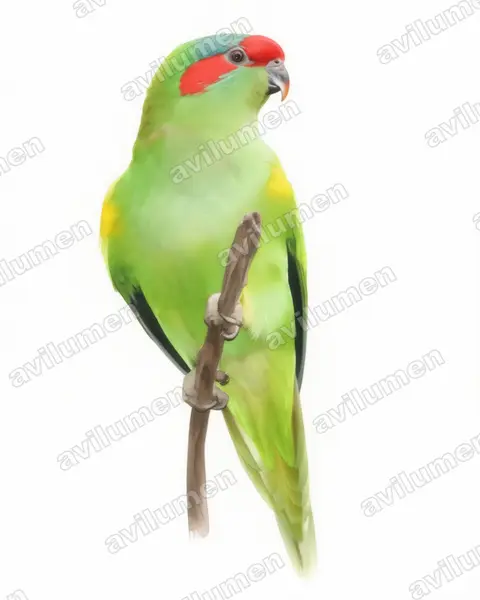
Watercolor 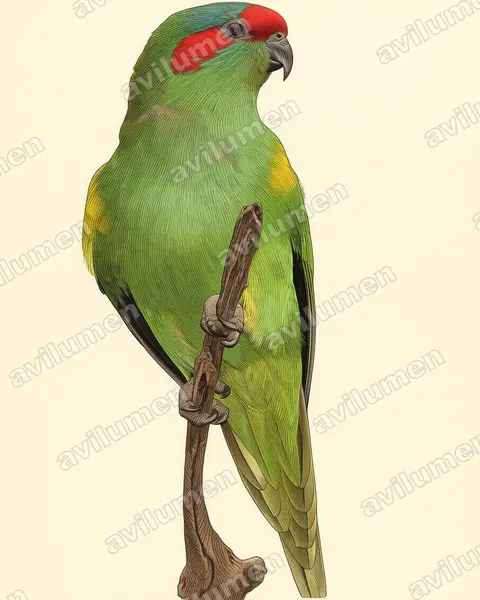
Vintage plate 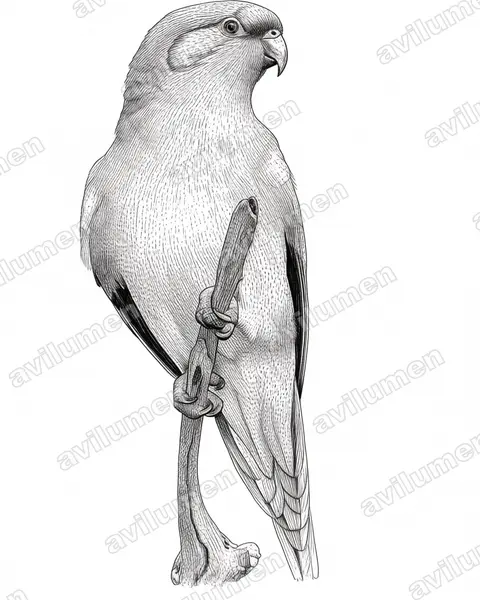
Ink 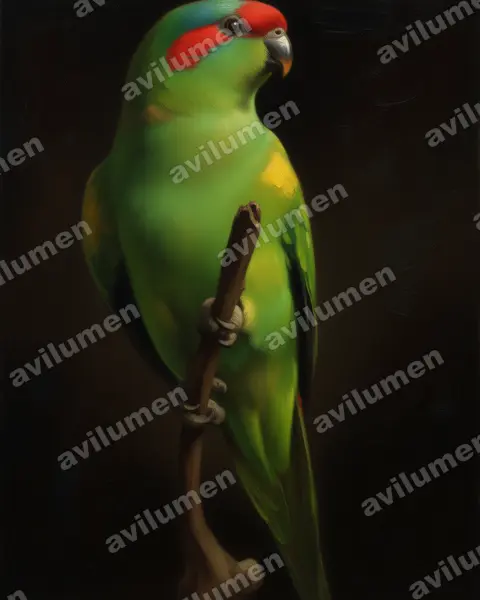
Oil 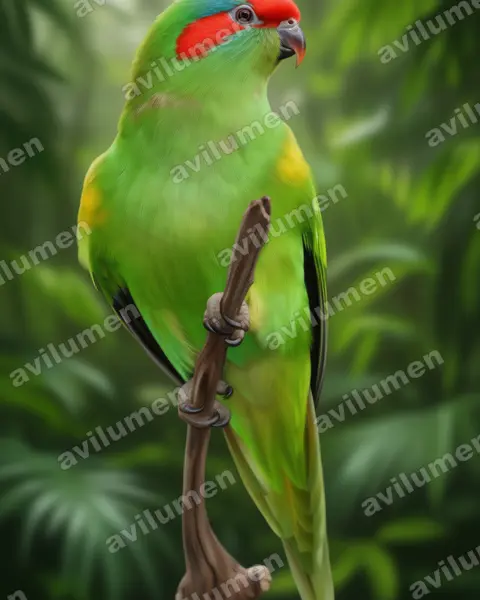
Realistic 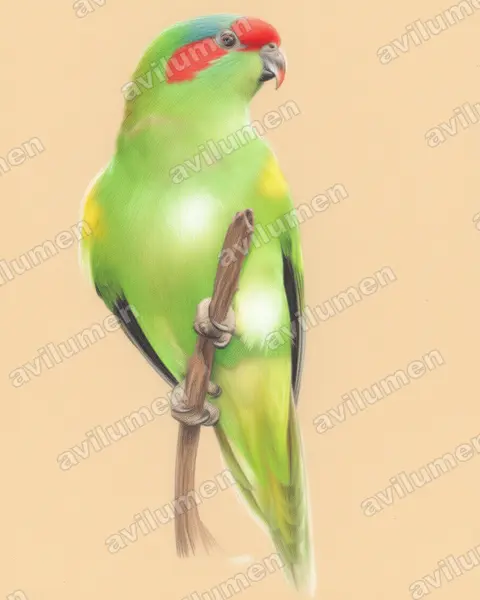
Colored pencil
Illustrations based on the photograph by Fir0002 (GFDL 1.2), from Wikimedia Commons.
Digital editions
HD Digital Art Pack — Musk Lorikeet
Digital download: 6 high-resolution illustrations of the Musk Lorikeet (Glossopsitta concinna), print-ready. This is a digital file; no animal or physical item is included.
AI Avatar — Musk Lorikeet
Generate an avatar fusing your face with the Musk Lorikeet (Glossopsitta concinna). Delivered digitally in 8K, watermark-free. Digital product; no animals are sold or brokered.
Instant download. No live birds are sold.
Frequently asked questions
- Is Glossopsitta concinna (Musk Lorikeet) endangered?
- The IUCN Red List places Glossopsitta concinna, commonly known as the Musk Lorikeet, in the «Least concern» category. «Least concern» means it is not currently threatened.
- Where does Glossopsitta concinna (Musk Lorikeet) live?
- Glossopsitta concinna (Musk Lorikeet) is found in Australia.
- What family does Glossopsitta concinna (Musk Lorikeet) belong to?
- Glossopsitta concinna (Musk Lorikeet) belongs to the family Psittacidae, in the order Psittaciformes.
- What colour is Glossopsitta concinna (Musk Lorikeet)?
- The plumage of Glossopsitta concinna (Musk Lorikeet) combines these colours: Green.
More from the same family
 Near threatened
Yellow-faced Parrot
Alipiopsitta xanthops
The yellow-faced parrot, formerly also known as the yellow-faced amazon, is the only species of the genus Alipiopsitta. It is a Neotropical parrot, and was classified in the genus Amazona for many years. It is a predominantly green and yellow-plumaged bird with a yellow head. It is a semi-nomadic species found in the cerrado region of Brazil and adjacent Bolivia.
from $1.99
 Least concern
Moluccan King Parrot
Alisterus amboinensis
The Moluccan king parrot is a parrot endemic to Peleng Island, Maluku, and West Papua in Indonesia. It is sometimes referred to as the Ambon king parrot or Amboina king parrot, but this is potentially misleading, as it is found on numerous other islands than Ambon. The male and female are similar in appearance, with a predominantly red head and underparts, green wings, and blue back and tail.
from $1.99
 Least concern
Papuan King Parrot
Alisterus chloropterus
The Papuan king parrot, also known as the green-winged king parrot, is a species of parrot in the family Psittaculidae found in New Guinea. Its natural habitats are subtropical or tropical moist lowland forest and subtropical or tropical moist montane forest.
from $1.99
 Least concern
Australian King Parrot
Alisterus scapularis
The Australian king parrot is a species of parrot endemic to eastern Australia ranging from Cooktown in Queensland to Port Campbell in Victoria. Found in humid and heavily forested upland regions of the eastern portion of the continent, including eucalyptus wooded areas in and directly adjacent to subtropical and temperate rainforest. They feed on fruits and seeds gathered from trees or on the ground.
from $1.99