Norfolk Kaka
Nestor productus
Avilumen editorial team ·

The Norfolk kākā is an extinct species of large parrot, belonging to the parrot family Nestoridae. The birds were about 38 cm long, with mostly olive-brown upperparts, reddish-orange cheeks and throat, straw-coloured breast, thighs, rump and lower abdomen dark orange and a prominent beak. It inhabited the rocks and treetops of Norfolk Island and adjacent Phillip Island. It was a relative of the New Zealand kākā.
The Norfolk kākā (Nestor productus) is an extinct species of large parrot, belonging to the parrot family Nestoridae. The birds were about 38 cm long, with mostly olive-brown upperparts, reddish-orange cheeks and throat, straw-coloured breast, thighs, rump and lower abdomen dark orange and a prominent beak. It inhabited the rocks and treetops of Norfolk Island and adjacent Phillip Island. It was a relative of the New Zealand kākā.
Taxonomy
The Norfolk kākā was first described by the naturalist Johann Reinhold Forster and his son Georg following the discovery of Norfolk Island by James Cook on 10 October 1774. The description was only published in 1844. Around 1790, John Hunter depicted a bird on a kangaroo apple (Solanum aviculare). The bird was formally described by John Gould in 1836, from a specimen at the Zoological Society of London. Originally, the individuals from Norfolk Island and Philip Island were considered two separate species, Nestor norfolcensis (described by August von Pelzeln in 1860) and Nestor productus, respectively, but direct comparison of specimens of both islands showed that they were the same species.
The Norfolk kākā was first described by John Gould in 1836 as Plyctolophus productus.
Behaviour and ecology
Little is known of the bird's biology. It was said to have lived both on the ground and in tall trees, feeding on flowering shrubs and trees. The call was described by Gould as "hoarse, quacking, inharmonious noise, sometimes resembling the barking of a dog".
Extinction
The Polynesians who lived on the Island for some time before the arrival of the Europeans, hunted the kākā for food before disappearing from the island around the 1600s. It was also hunted for food and trapped as a pet after the arrival of the first settlers in 1788. The species' population suffered heavily after a penal colony was maintained from 1788 to 1814, and again from 1825 to 1854. The species likely became extinct in the wild in the early nineteenth century some time during the period of this second penal colony. It was not recorded by Ensign Abel D. W. Best on either Norfolk or Phillip Island in his 1838/1839 diary entries. As Best collected specimens for ornithology, including the Norfolk parakeet (which he called "lories", being similar in shape), it is hard to accept that he would not have documented this much more attractive quarry, had the kākā still been present. The last bird in captivity died in London in 1851.
Skins
At least 16 specimens survive.
Forshaw has measurements of seven skins, one male, one female and five of unknown sex.
Naturalis in Leiden has 2 skins; one male (RMNH 110.061) and one female (RMNH 110.068). Both individuals originate from Philip Island. The male skin was acquired in 1863 long after the species' assumed disappearance, but it is unknown how it came to Leiden. It is more likely, given Phillip Island was already overrun with feral pigs, rabbits, goats and chicken in late 1838, that the 1863 specimen was purchased from another collection. The single unsexed individual from Philip Island at the Zoölogisch Museum (ZMA 3164) has been obtained before 1860, and originate probably from the same batch as the two specimens at Naturalis in Leiden. An old list of the specimens of birds present in the British Museum of Natural History list two individuals, both from Philip Island. One of the two specimens came from Bell's collection.
Text adapted from Wikipedia · CC BY-SA 4.0
Taxonomy
- Order
- Psittaciformes
- Family
- Nestoridae
- Genus
- Nestor
- Conservation status
- Extinct
Listen to its call
No recording yet
Illustration gallery
6 illustrations of Nestor productus (Norfolk Kaka) in different styles, true to its real plumage. Shown watermarked; the art pack includes the high-resolution originals, ready to print.
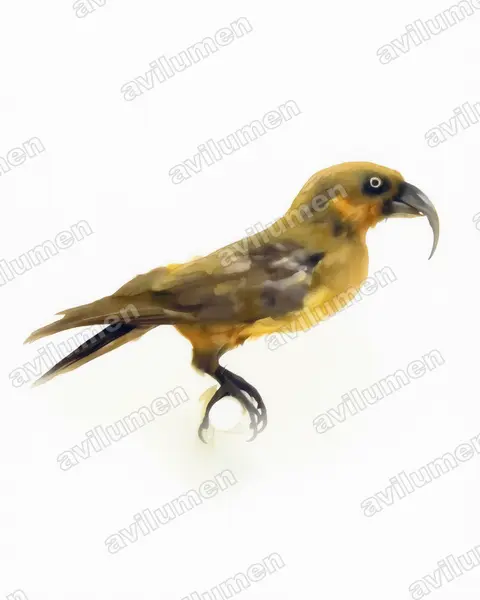
Watercolor 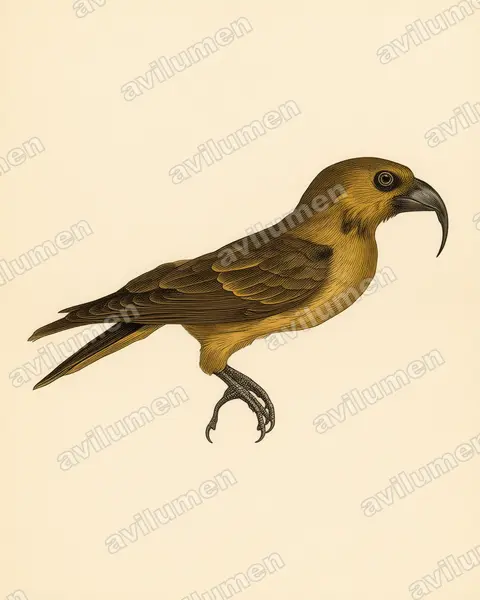
Vintage plate 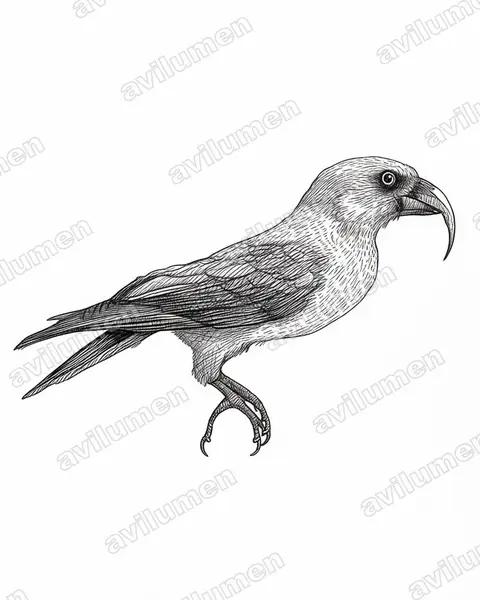
Ink 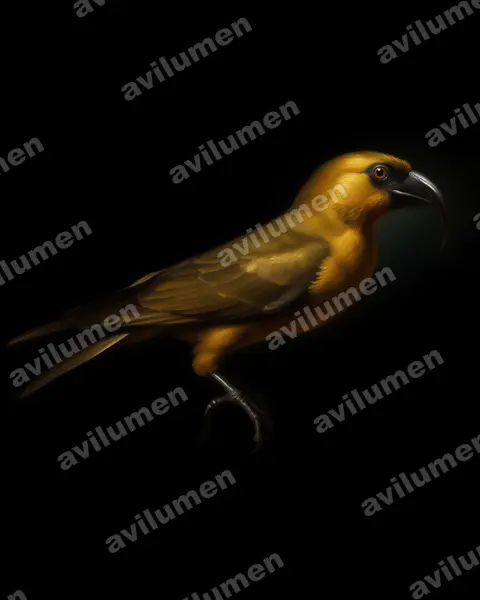
Oil 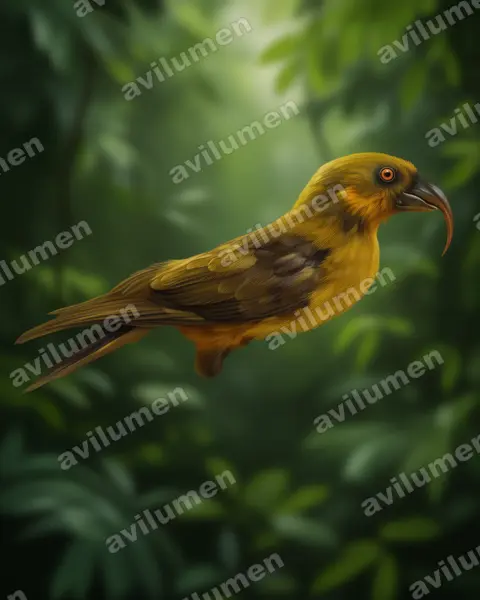
Realistic 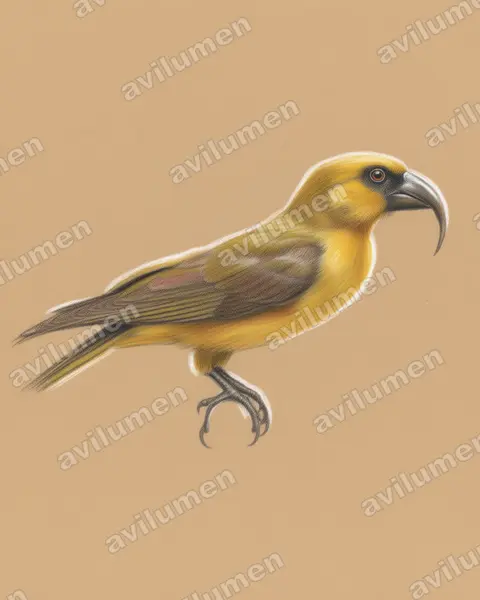
Colored pencil
Illustrations based on the photograph by John Mosbaugh (CC BY 2.0), from Wikimedia Commons.
Digital editions
HD Digital Art Pack — Norfolk Kaka
Digital download: 6 high-resolution illustrations of the Norfolk Kaka (Nestor productus), print-ready. This is a digital file; no animal or physical item is included.
AI Avatar — Norfolk Kaka
Generate an avatar fusing your face with the Norfolk Kaka (Nestor productus). Delivered digitally in 8K, watermark-free. Digital product; no animals are sold or brokered.
Instant download. No live birds are sold.
Frequently asked questions
- Is Nestor productus (Norfolk Kaka) endangered?
- The IUCN Red List places Nestor productus, commonly known as the Norfolk Kaka, in the «Extinct» category. «Extinct» means no individual is known to remain alive.
- What family does Nestor productus (Norfolk Kaka) belong to?
- Nestor productus (Norfolk Kaka) belongs to the family Nestoridae, in the order Psittaciformes.
- What colour is Nestor productus (Norfolk Kaka)?
- The plumage of Nestor productus (Norfolk Kaka) combines these colours: Brown, Orange, and Red.
More from the same family
 Extinct
Chatham kākā
Nestor chathamensis
The Chatham kākā or Chatham Island kākā is an extinct parrot species previously found on the Chatham Islands, New Zealand. The first individuals were thought to belong to the New Zealand kākā, but detailed examination of the subfossil bones showed that they actually belong to a separate endemic species.
from $1.99
 Vulnerable
Kākā
Nestor meridionalis
The New Zealand kākā is a large species of parrot of the family Strigopidae found in native forests of New Zealand. The species is often known by the abbreviated name kākā, although it shares this name with the Norfolk kākā and Chatham kākā, both recently extinct. Two subspecies of New Zealand kākā are recognised.
from $1.99
 Endangered
Kea
Nestor notabilis
The kea is a species of large parrot in the family Strigopidae that is endemic to the forested and alpine regions of the South Island of New Zealand. About 48 cm (19 in) long, it is mostly olive-green, with brilliant orange under its wings, and has a large, narrow, curved, grey-brown upper beak. Its omnivorous diet consists mainly of roots, leaves, berries, nectar, and insects, but also includes carrion.
from $1.99