Nocturnal Curassow
Nothocrax urumutum
Avilumen editorial team ·

The nocturnal curassow is a species of bird in the family Cracidae, the chachalacas, guans, and curassows. It is found in Brazil, Colombia, Ecuador, Peru, and Venezuela.
The nocturnal curassow (Nothocrax urumutum) is a species of bird in the family Cracidae, the chachalacas, guans, and curassows. It is found in Brazil, Colombia, Ecuador, Peru, and Venezuela.
Taxonomy and systematics
The nocturnal curassow was originally placed in genus Crax but genetic data confirm that Nothocrax is a valid genus. It is the only member of its genus and has no subspecies.
Description
The nocturnal curassow is the smallest curassow at 50 to 57.5 cm (1.6 to 1.9 ft) long. One bird weighed 1,250 g (2.8 lb). It is also unique with its mostly rufous and chestnut plumage, as other curassows are mostly black. Its crest is flat and blackish, its ventral area buffy, and the tips of its tail feathers are paler than the rest. Its brownish-orange eye is surrounded by bare skin, greenish-yellow above and black below. The bill is reddish-orange and the legs gray.
Distribution and habitat
The nocturnal curassow is found in middle and upper Amazonia, from far southern Venezuela, southeastern Colombia, eastern Ecuador, and northeastern Peru into western and central Brazil. It inhabits terra firme forest and flooded forests (both permanent and seasonal). It favors low lying, gentle, terrain, often near blackwater rivers. It is typically found below 850 m (2,800 ft) but has been recorded as high as about 1,500 m (4,900 ft) in Ecuador.
Behavior
Belying its name, the nocturnal curassow is active in daylight as well as night and twilight, though it sings only at night.
Feeding
The nocturnal curassow forages singly or in groups of up to four birds, at dawn, dusk, and the few hours after or before them. It feeds on the ground, apparently entirely on vegetable matter though its diet has not been extensively studied.
Breeding
The nocturnal curassow's breeding season has not been determined, but breeding activity has been noted between October and February. It makes a large loosely woven nest from sticks and palm leaves lined with twigs and dried leaves. Nests have been found high in trees and vines and also on stumps and logs near the ground. The clutch size is two eggs.
Vocalization
The nocturnal curassow sings only at night, primarily on clear dark nights in dry weather. Its song is "a series of seven, low-pitched, highly resonant notes...rendered 'hmm-hmm-hmmmm, hmm hmm-hmmm, hmmph!'." Sometimes several birds will counter-sing.
Status
The IUCN has assessed the nocturnal curassow as being of Least Concern. Much of its range in western Amazonia remains intact and its mostly nocturnal habits apparently lead to less hunting pressure than other Cracids experience.
Text adapted from Wikipedia · CC BY-SA 4.0
Where it lives
Plumage colours
Distribution

Taxonomy
- Order
- Galliformes
- Family
- Cracidae
- Genus
- Nothocrax
- Conservation status
- Least concern
Listen to its call
No recording yet
Illustration gallery
6 illustrations of Nothocrax urumutum (Nocturnal Curassow) in different styles, true to its real plumage. Shown watermarked; the art pack includes the high-resolution originals, ready to print.
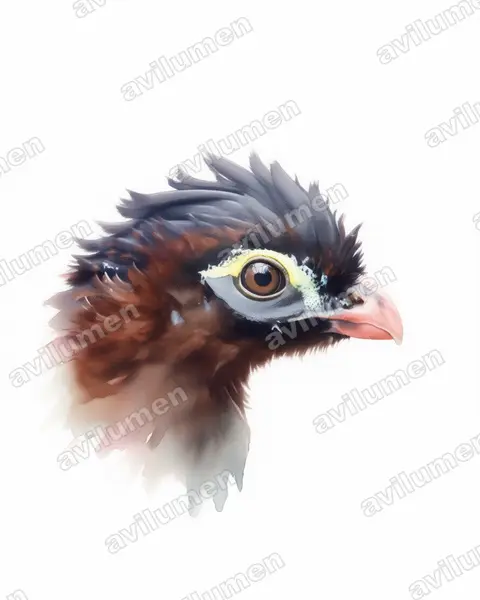
Watercolor 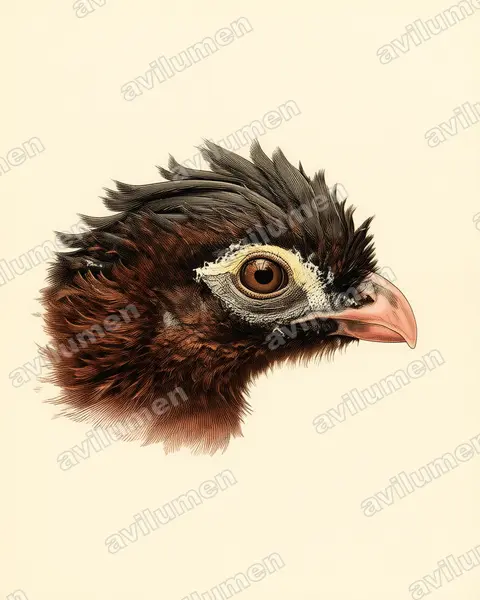
Vintage plate 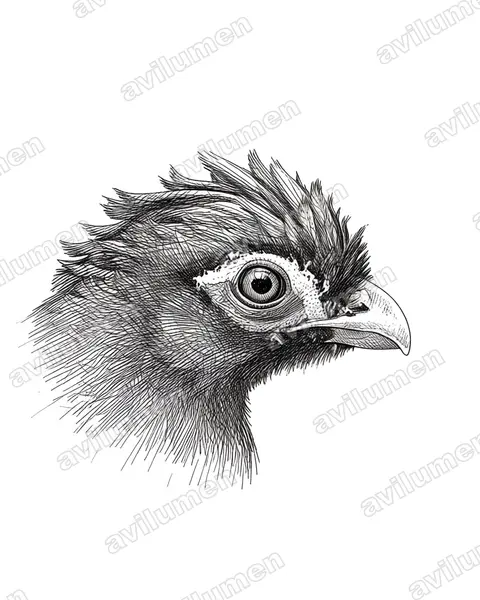
Ink 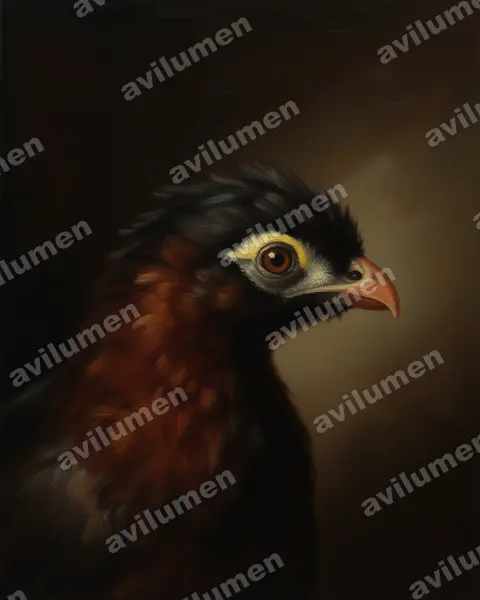
Oil 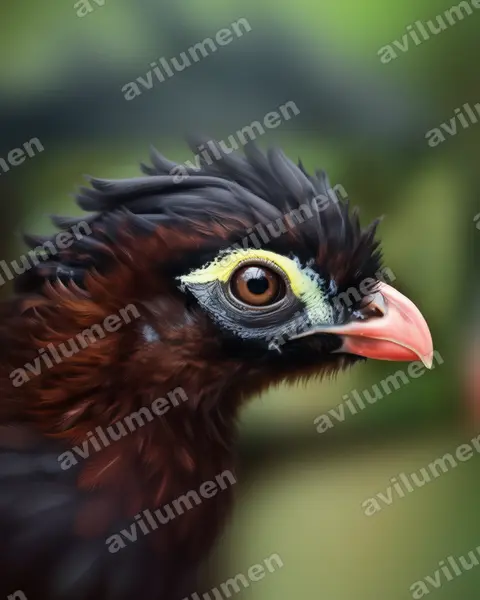
Realistic 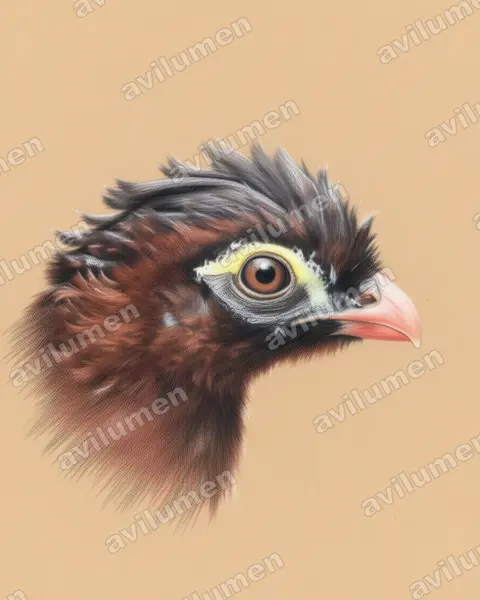
Colored pencil
Illustrations based on the photograph by Jelle Oostrom from Netherlands (CC BY-SA 2.0), from Wikimedia Commons.
Digital editions
HD Digital Art Pack — Nocturnal Curassow
Digital download: 6 high-resolution illustrations of the Nocturnal Curassow (Nothocrax urumutum), print-ready. This is a digital file; no animal or physical item is included.
AI Avatar — Nocturnal Curassow
Generate an avatar fusing your face with the Nocturnal Curassow (Nothocrax urumutum). Delivered digitally in 8K, watermark-free. Digital product; no animals are sold or brokered.
Instant download. No live birds are sold.
Frequently asked questions
- Is Nothocrax urumutum (Nocturnal Curassow) endangered?
- The IUCN Red List places Nothocrax urumutum, commonly known as the Nocturnal Curassow, in the «Least concern» category. «Least concern» means it is not currently threatened.
- Where does Nothocrax urumutum (Nocturnal Curassow) live?
- Nothocrax urumutum (Nocturnal Curassow) is found in Brazil and South America.
- What family does Nothocrax urumutum (Nocturnal Curassow) belong to?
- Nothocrax urumutum (Nocturnal Curassow) belongs to the family Cracidae, in the order Galliformes.
- What colour is Nothocrax urumutum (Nocturnal Curassow)?
- The plumage of Nothocrax urumutum (Nocturnal Curassow) combines these colours: Black.
More from the same family
 Least concern
Wattled Guan
Aburria aburri
The wattled guan is a species of bird in the family Cracidae. It is a fairly large black cracid with blue-based, black-tipped beak and a long, red-and-yellow wattle.
from $1.99
 Least concern
Sickle-winged Guan
Chamaepetes goudotii
The sickle-winged guan is a species of bird in the chachalaca, guan, and curassow family Cracidae. It is found in Bolivia, Colombia, Ecuador, and Peru.
from $1.99
 Least concern
Black Guan
Chamaepetes unicolor
The black guan is a species of bird in the chachalaca, guan, and curassow family Cracidae. It is found in Costa Rica and Panama.
from $1.99
 Critically endangered
Blue-billed Curassow
Crax alberti
The blue-billed curassow is a species of bird in the family Cracidae, the chachalacas, guans, and curassows. It is endemic to Colombia.
from $1.99