Sooty-capped Hermit
Phaethornis augusti
Avilumen editorial team ·

The sooty-capped hermit is a species of bird in the family Trochilidae, the hummingbirds. It is found in Brazil, Colombia, French Guiana, Guyana, Suriname, and Venezuela.
The sooty-capped hermit (Phaethornis augusti) is a species of bird in the family Trochilidae, the hummingbirds. It is found in Brazil, Colombia, French Guiana, Guyana, Suriname, and Venezuela.
Taxonomy and systematics
The sooty-capped hermit is closely related to the planalto hermit (P. pretrei) and may form a superspecies with it. Three subspecies of sooty-capped hermit are recognized, the nominate P. a. augusti, P. a. curiosus, and P. a incanescens. A fourth proposed subspecies P. a. vicarius, in the Colombian Andes, cannot be separated from the nominate.
Description
The sooty-capped hermit is about 14 to 15 cm (5.5 to 5.9 in) long. Males weigh 4.5 to 6 g (0.16 to 0.21 oz) and females 4 to 5 g (0.14 to 0.18 oz). They are mostly grayish brown above with a rufous rump and uppertail coverts. The next-to-inner tail feathers are longer than the others and all have white tips. Their underparts are gray. The face has a black "mask" with a white supercilium and gular stripe. The subspecies differ slightly in the intensity of the breast and uppertail covert colors and the size of the gular stripe. What was once thought to be a separate species P. fumosus was determined to be a melanistic morph of the nominate sooty-capped hermit.
Distribution and habitat
Major taxonomic systems place the nominate subspecies of sooty-capped hermit in Venezuela's Coastal Range and eastern Andes and south on the eastern slope of Colombia's Eastern Andes; P. a. curiosus in the isolated Sierra Nevada de Santa Marta of northeastern Colombia; and P. a incanescens on the tepuis of southern Venezuela, western Guyana, and Brazil's Roraima state. The South American Classification Committee (SACC) of the American Ornithological Society places the species in those four countries and also French Guiana and Suriname.
Movement
The sooty-capped hermit is thought to be mostly sedentary, but some seasonal vertical movement has been documented.
Feeding
The sooty-capped hermit is a "trap-line" feeder like other hermit hummingbirds, visiting a circuit of flowering plants for nectar. It also consumes small arthropods, and has been observed catching them in buildings.
Breeding
Active nests of the sooty-capped hermit have been found in Venezuela between February and July and also between September and December. The nest is a cone-shaped cup; a typical one was made of moss and spider web with pieces of dried mud on the outer wall. It was suspended by a single stout cable of spider silk from a nail in a storehouse. Nests may be reused multiple times within a season. The clutch size is two eggs.
Vocalization
The sooty-capped hermit's song is "a continuously repeated phrase consisting of 2–3 high notes followed by 2–3 somewhat lower ones, e.g. 'tsee-tsee-tsee-sew-sew....tsee-tsee-tsee-sew-sew...'." The male sings from a perch at a lek while wagging its tail. It also makes a "rather monotonous 'tseet'" call.
Status
The IUCN has assessed the sooty-capped hermit as being of Least Concern; though its population size is unknown it is believed to be stable. It is considered locally uncommon to common and seems "to adapt well to habitats modified by man".
Text adapted from Wikipedia · CC BY-SA 4.0
Where it lives
Distribution

Taxonomy
- Order
- Apodiformes
- Family
- Trochilidae
- Genus
- Phaethornis
- Conservation status
- Least concern
Listen to its call
No recording yet
Illustration gallery
6 illustrations of Phaethornis augusti (Sooty-capped Hermit) in different styles, true to its real plumage. Shown watermarked; the art pack includes the high-resolution originals, ready to print.
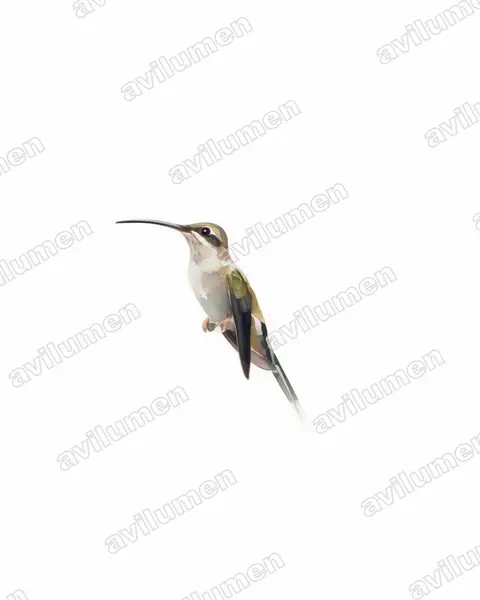
Watercolor 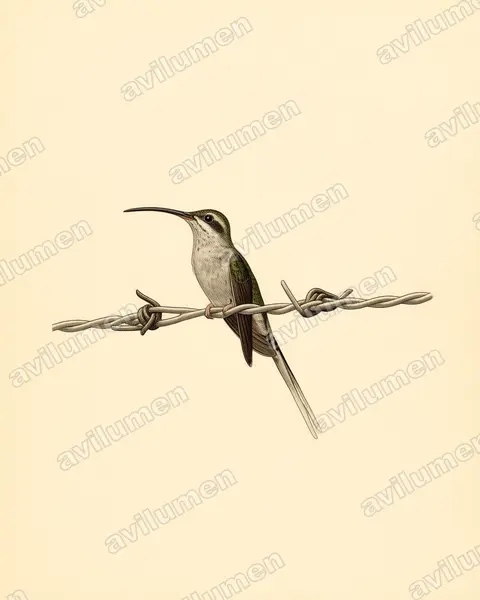
Vintage plate 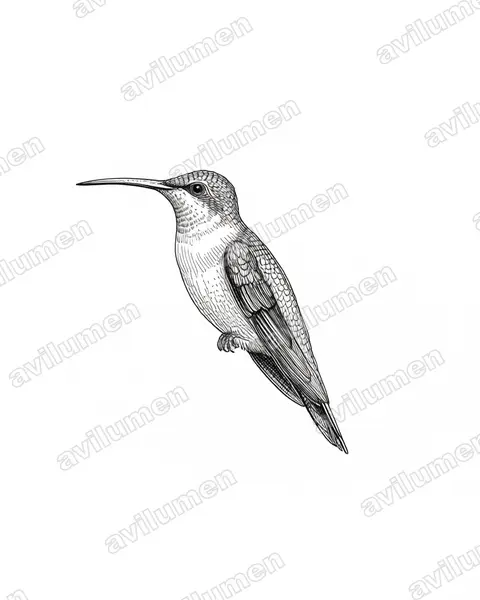
Ink 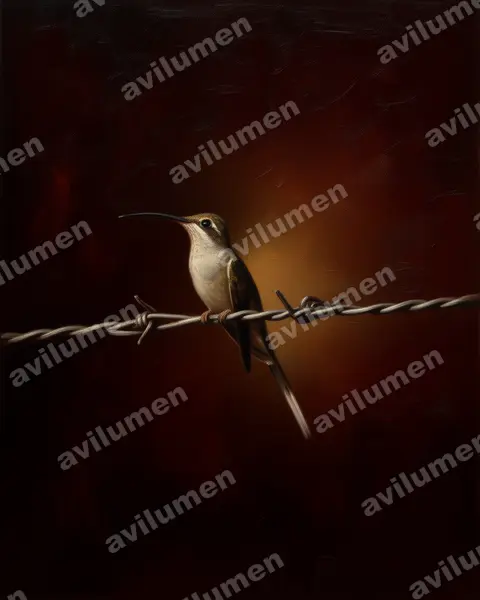
Oil 
Realistic 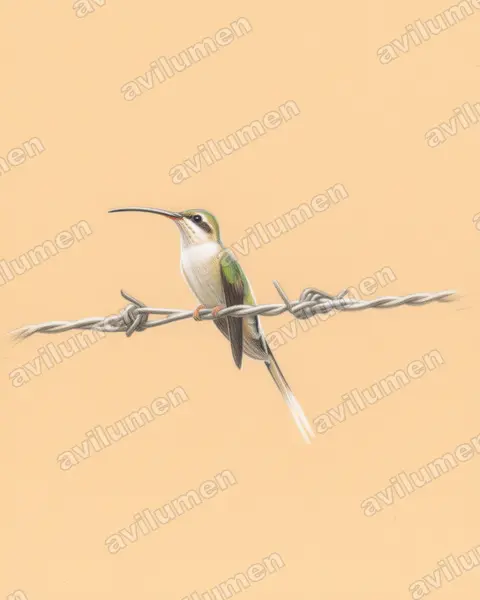
Colored pencil
Illustrations based on the photograph by Dario Taraborelli (CC0), from Wikimedia Commons.
Digital editions
HD Digital Art Pack — Sooty-capped Hermit
Digital download: 6 high-resolution illustrations of the Sooty-capped Hermit (Phaethornis augusti), print-ready. This is a digital file; no animal or physical item is included.
AI Avatar — Sooty-capped Hermit
Generate an avatar fusing your face with the Sooty-capped Hermit (Phaethornis augusti). Delivered digitally in 8K, watermark-free. Digital product; no animals are sold or brokered.
Instant download. No live birds are sold.
Frequently asked questions
- Is Phaethornis augusti (Sooty-capped Hermit) endangered?
- The IUCN Red List places Phaethornis augusti, commonly known as the Sooty-capped Hermit, in the «Least concern» category. «Least concern» means it is not currently threatened.
- Where does Phaethornis augusti (Sooty-capped Hermit) live?
- Phaethornis augusti (Sooty-capped Hermit) is found in Brazil and South America.
- What family does Phaethornis augusti (Sooty-capped Hermit) belong to?
- Phaethornis augusti (Sooty-capped Hermit) belongs to the family Trochilidae, in the order Apodiformes.
- What colour is Phaethornis augusti (Sooty-capped Hermit)?
- The plumage of Phaethornis augusti (Sooty-capped Hermit) combines these colours: Brown and Green.
More from the same family
 Least concern
Emerald-chinned Hummingbird
Abeillia abeillei
The emerald-chinned hummingbird is a species of hummingbird in the "emeralds", tribe Trochilini of subfamily Trochilinae.
from $1.99
 Least concern
Speckled hummingbird
Adelomyia melanogenys
The speckled hummingbird is a species of hummingbird. It is the only member of the genus Adelomyia. It inhabits Neotropical montane cloud forests at elevations of 1,000–2,500 meters and is confined to the Andes of Argentina, Bolivia, Peru, Ecuador, Colombia and Venezuela; as well as to some isolated montane forests in western Ecuador and Venezuela.
from $1.99
 Vulnerable
Purple-backed sunbeam
Aglaeactis aliciae
The purple-backed sunbeam is a bird species in the family Trochilidae. It is found only in Peru.
from $1.99
 Near threatened
White-tufted sunbeam
Aglaeactis castelnaudii
The white-tufted sunbeam is a species of hummingbird in the family Trochilidae. It is found only in Peru. Its natural habitats are subtropical or tropical moist montane forest and subtropical or tropical high-altitude shrubland.
from $1.99