Brown Lory
Chalcopsitta duivenbodei
Avilumen editorial team ·

The brown lory, also called Duyvenbode's lory, is a species of parrot in the family Psittaculidae native to northern New Guinea.
The brown lory (Chalcopsitta duivenbodei), also called Duyvenbode's lory, is a species of parrot in the family Psittaculidae native to northern New Guinea.
Taxonomy
The brown lory is one of three species in the genus Chalcopsitta. Within the genus, it is basal to the two other species.
The generic name comes from the Greek khalkos, meaning bronze, and the Modern Latin psitta, meaning parrot. The specific epithet commemorates the Dutch merchant Maarten Dirk van Renesse van Duivenbode.
The species is monotypic. Populations from northeastern New Guinea are sometimes treated as a distinct subspecies, C. d. syringanuchalis, on the basis of differences in plumage. Birds from the Sepik River area have also been proposed as a separate subspecies C. d. intermedia, but are almost universally subsumed into the nominate or (where two subspecies are recognised) into syringanuchalis.
Description
The brown lory has a black beak, yellow-streaked face, white tail and mostly dark brown plumage.
Breeding
Breeding occurs in April. In captivity, clutches were of two eggs, with an incubation period of 24 days and a nestling period of nearly 11 weeks.
Habitat and conservation
The brown lory is found in northern New Guinea.
Its natural habitat is subtropical or tropical moist lowland forests, with elevations up to 150 m (492 ft). It is considered generally uncommon in its range, though it is locally common in certain areas (such as the Puwani River area south of Vanimo).
Status
The species is listed as least-concern by the IUCN. However, its population is thought to be declining. The overall population is estimated at 50,000 individuals.
Text adapted from Wikipedia · CC BY-SA 4.0
Plumage colours
Taxonomy
- Order
- Psittaciformes
- Family
- Psittacidae
- Genus
- Chalcopsitta
- Conservation status
- Least concern
Listen to its call
No recording yet
Care guide
Lory and Lorikeet Care Guide: Nectar Diet and Housing
How to care for lories and rainbow lorikeets: nectar and pollen diet, hygiene, cage setup, health, behavior and CITES legal status for lorikeet owners.
Read the guide →Illustration gallery
6 illustrations of Chalcopsitta duivenbodei (Brown Lory) in different styles, true to its real plumage. Shown watermarked; the art pack includes the high-resolution originals, ready to print.
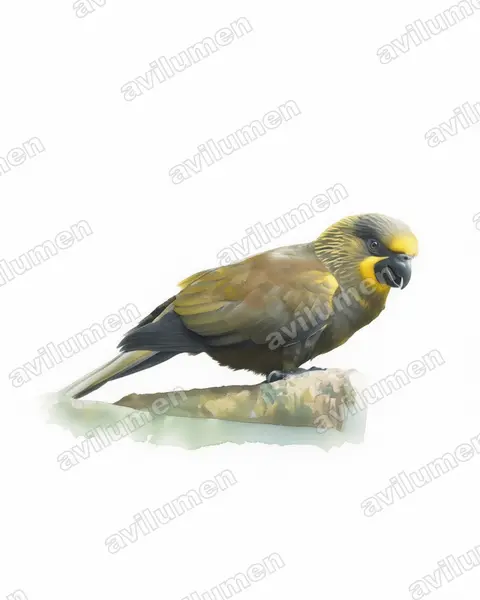
Watercolor 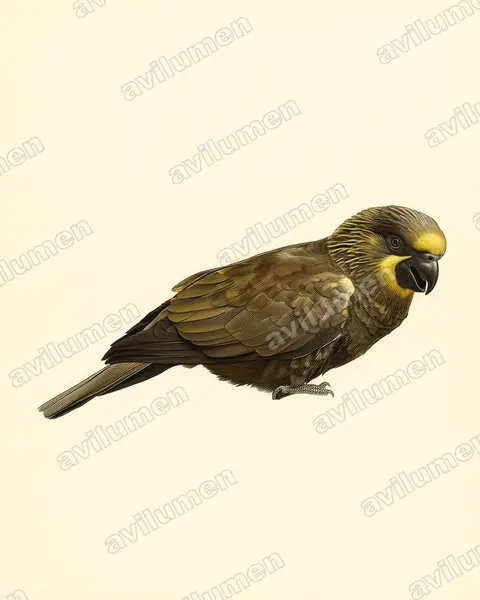
Vintage plate 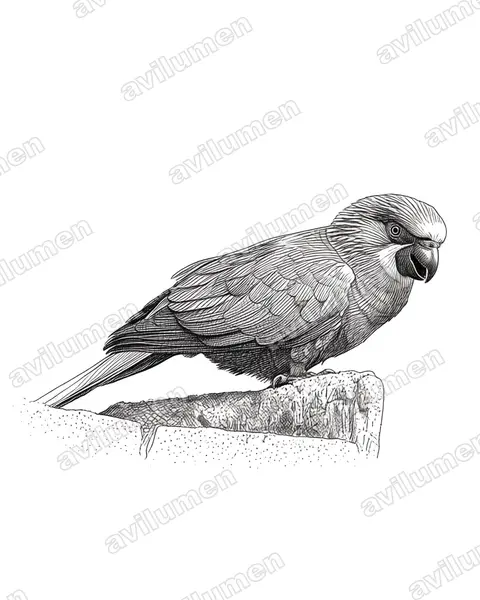
Ink 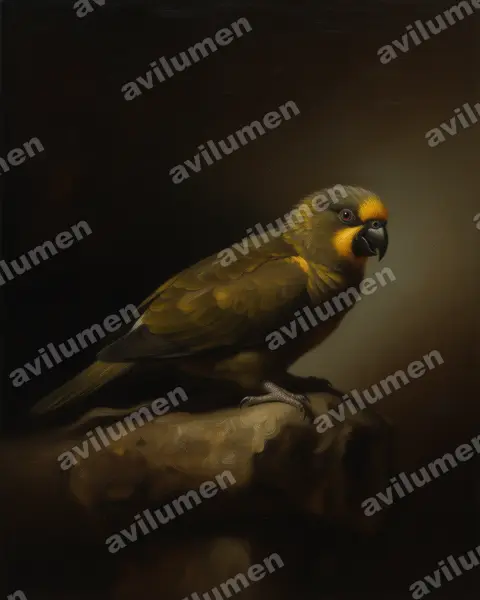
Oil 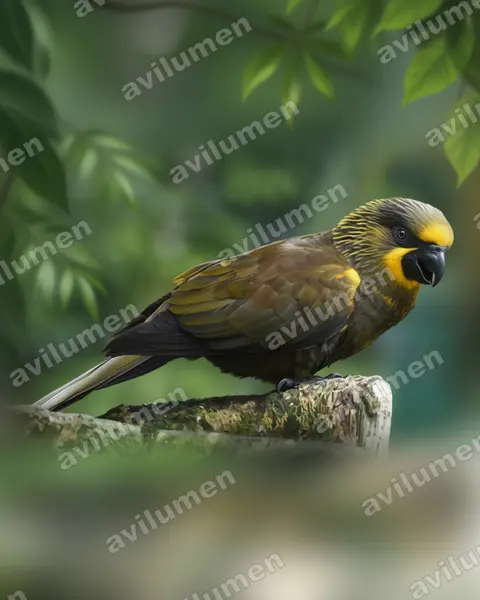
Realistic 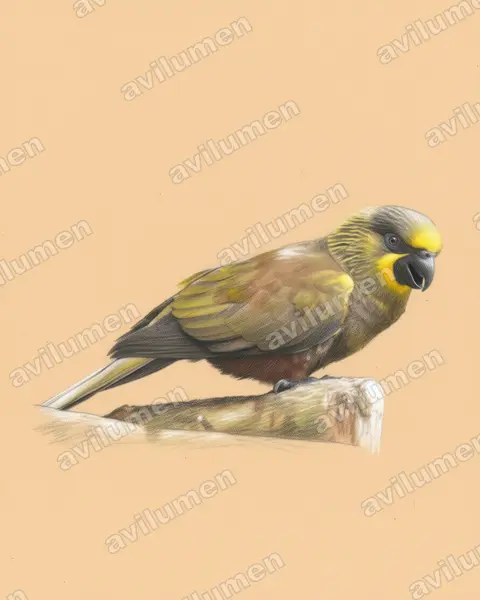
Colored pencil
Illustrations based on the photograph by nico (CC BY-SA 3.0), from Wikimedia Commons.
Digital editions
HD Digital Art Pack — Brown Lory
Digital download: 6 high-resolution illustrations of the Brown Lory (Chalcopsitta duivenbodei), print-ready. This is a digital file; no animal or physical item is included.
AI Avatar — Brown Lory
Generate an avatar fusing your face with the Brown Lory (Chalcopsitta duivenbodei). Delivered digitally in 8K, watermark-free. Digital product; no animals are sold or brokered.
Instant download. No live birds are sold.
Frequently asked questions
- Is Chalcopsitta duivenbodei (Brown Lory) endangered?
- The IUCN Red List places Chalcopsitta duivenbodei, commonly known as the Brown Lory, in the «Least concern» category. «Least concern» means it is not currently threatened.
- What family does Chalcopsitta duivenbodei (Brown Lory) belong to?
- Chalcopsitta duivenbodei (Brown Lory) belongs to the family Psittacidae, in the order Psittaciformes.
- What colour is Chalcopsitta duivenbodei (Brown Lory)?
- The plumage of Chalcopsitta duivenbodei (Brown Lory) combines these colours: Brown.
More from the same family
 Near threatened
Yellow-faced Parrot
Alipiopsitta xanthops
The yellow-faced parrot, formerly also known as the yellow-faced amazon, is the only species of the genus Alipiopsitta. It is a Neotropical parrot, and was classified in the genus Amazona for many years. It is a predominantly green and yellow-plumaged bird with a yellow head. It is a semi-nomadic species found in the cerrado region of Brazil and adjacent Bolivia.
from $1.99
 Least concern
Moluccan King Parrot
Alisterus amboinensis
The Moluccan king parrot is a parrot endemic to Peleng Island, Maluku, and West Papua in Indonesia. It is sometimes referred to as the Ambon king parrot or Amboina king parrot, but this is potentially misleading, as it is found on numerous other islands than Ambon. The male and female are similar in appearance, with a predominantly red head and underparts, green wings, and blue back and tail.
from $1.99
 Least concern
Papuan King Parrot
Alisterus chloropterus
The Papuan king parrot, also known as the green-winged king parrot, is a species of parrot in the family Psittaculidae found in New Guinea. Its natural habitats are subtropical or tropical moist lowland forest and subtropical or tropical moist montane forest.
from $1.99
 Least concern
Australian King Parrot
Alisterus scapularis
The Australian king parrot is a species of parrot endemic to eastern Australia ranging from Cooktown in Queensland to Port Campbell in Victoria. Found in humid and heavily forested upland regions of the eastern portion of the continent, including eucalyptus wooded areas in and directly adjacent to subtropical and temperate rainforest. They feed on fruits and seeds gathered from trees or on the ground.
from $1.99