Mexican Parrotlet
Forpus cyanopygius
Avilumen editorial team ·

The Mexican parrotlet, also known as the turquoise-rumped parrotlet or the Mexican blue-rumped parrotlet, is a species of parrot in the family Psittacidae.
The Mexican parrotlet (Forpus cyanopygius), also known as the turquoise-rumped parrotlet or the Mexican blue-rumped parrotlet, is a species of parrot in the family Psittacidae.
There are two subspecies: Grayson's parrotlet or the Tres Marias parrotlet (F. c. insularis) and F. c. cyanopygius.
Distribution and habitat
Mexican parrotlets are endemic to western Mexico. Their range extends from southern Sonora to Colima. This species is the northernmost member of the genus Forpus. Though they are non-migratory, they wander throughout their range to follow the blooming and growth patterns of the plants they prefer to feed on.
Natural habitats are subtropical or tropical dry scrublands, deciduous forests, open grasslands with scattered trees, heavily degraded former forest, plantations, and woodlands along watercourses. They are not found at altitudes higher than 1,300 metres (4,300 ft) above sea level.
Conservation
According to the IUCN Red List, Mexican parrotlets are Near Threatened. The population is estimated to be 50,000 or greater, but it is decreasing due to a combination of the illegal hunting and trapping of wild individuals and habitat loss. Based on records created before 1995, there were approximately 208,000 individuals in Mexico. According to records from 1996 to 2013, around 107,000 remain, which represents a 48.4% drop in population.
Threats
It is estimated that up to 8,000 individuals are illegally captured for the pet trade every year. There are no current conservation measures in place, but many areas across the Mexican parrotlet's range are already protected.
Social
Mexican parrotlets are highly social and gregarious birds, most often found in flocks of 4–30 individuals made up of pairs and family groups. When flying in these flocks, they fly quickly and in relatively tight formations. They create a variety of squeaky, excited-sounding chirps while perched or in flight. While feeding, they make occasional squawks.
Reproduction
Mexican parrotlets typically breed between May and July, and lay clutches of up to 3 small, white eggs. They are typically incubated for at least 19 days, and chicks fledge 4–5 weeks after hatching. Mexican parrotlets can live to be over 20 years old. Mexican parrotlets usually nest in tree cavities, cacti, and other similar structures.
Diet
Mexican parrotlets most commonly eat seeds, grass seeds, berries, and Ficus (fig) fruits, which may be ripe or half-ripe. They forage both on the ground and in trees and shrubs as large flocks. They are known to wander frequently in search of food, making regional population estimates difficult.
Aviculture
Mexican parrotlets are uncommon, though not unheard of, in aviculture. Because of their protections, they cannot legally be captured from the wild and sold as pets, so the captive population relies on breeding programs.
Text adapted from Wikipedia · CC BY-SA 4.0
Distribution

Taxonomy
- Order
- Psittaciformes
- Family
- Psittacidae
- Genus
- Forpus
- Conservation status
- Near threatened
Listen to its call
No recording yet
Care guide
Budgie, Conure and Parakeet Care Guide
How to care for budgies, conures, parrotlets, ringnecks and other parakeets: diet, cage setup, health, behavior, breeding and legal status for owners.
Read the guide →Illustration gallery
6 illustrations of Forpus cyanopygius (Mexican Parrotlet) in different styles, true to its real plumage. Shown watermarked; the art pack includes the high-resolution originals, ready to print.
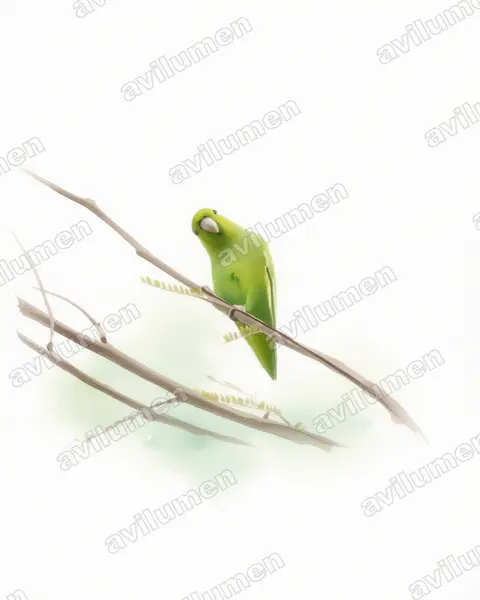
Watercolor 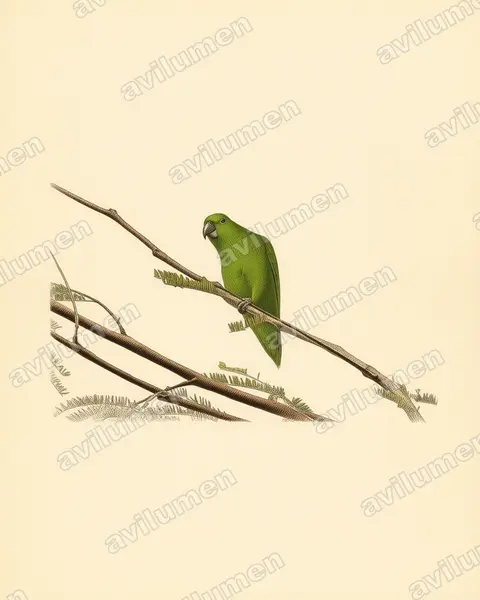
Vintage plate 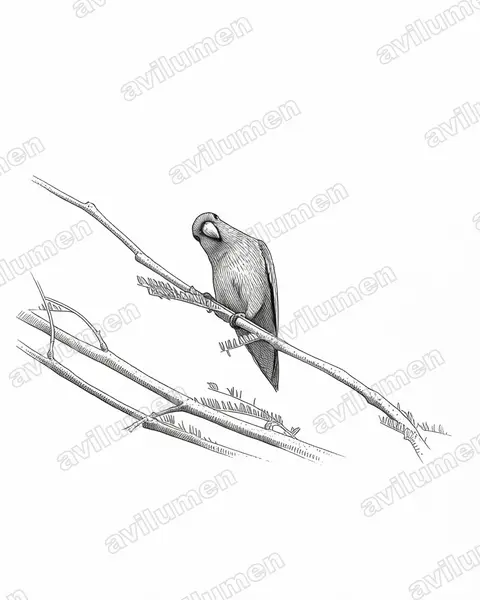
Ink 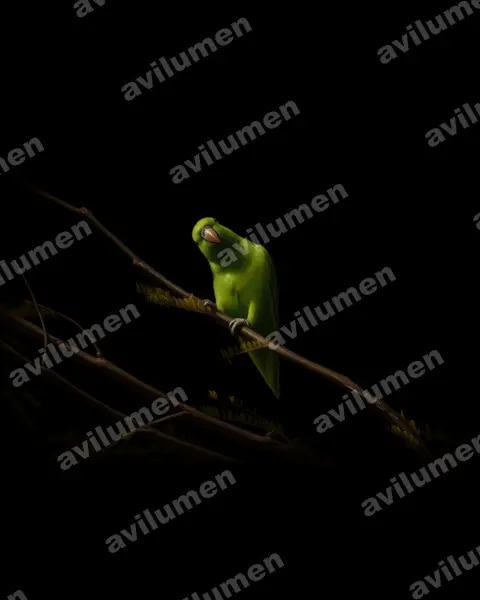
Oil 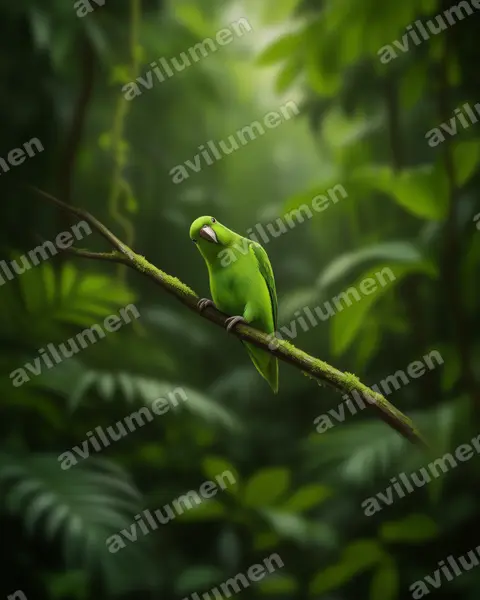
Realistic 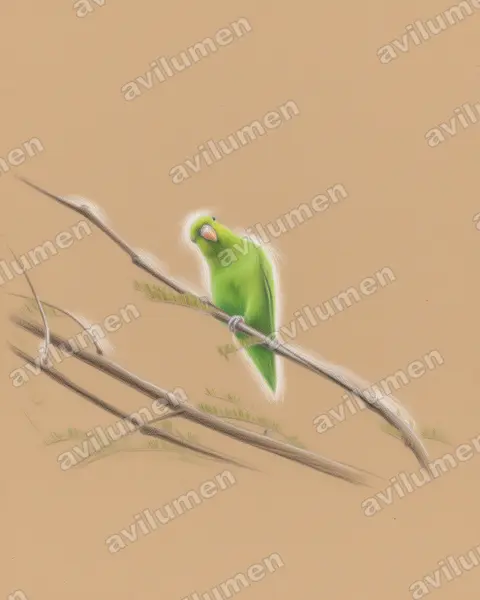
Colored pencil
Illustrations based on the photograph by Ron Knight from Seaford, East Sussex, United Kingdom (CC BY 2.0), from Wikimedia Commons.
Digital editions
HD Digital Art Pack — Mexican Parrotlet
Digital download: 6 high-resolution illustrations of the Mexican Parrotlet (Forpus cyanopygius), print-ready. This is a digital file; no animal or physical item is included.
AI Avatar — Mexican Parrotlet
Generate an avatar fusing your face with the Mexican Parrotlet (Forpus cyanopygius). Delivered digitally in 8K, watermark-free. Digital product; no animals are sold or brokered.
Instant download. No live birds are sold.
Frequently asked questions
- Is Forpus cyanopygius (Mexican Parrotlet) endangered?
- The IUCN Red List places Forpus cyanopygius, commonly known as the Mexican Parrotlet, in the «Near threatened» category. «Near threatened» means it is not threatened yet, but is close to becoming so.
- What family does Forpus cyanopygius (Mexican Parrotlet) belong to?
- Forpus cyanopygius (Mexican Parrotlet) belongs to the family Psittacidae, in the order Psittaciformes.
- What colour is Forpus cyanopygius (Mexican Parrotlet)?
- The plumage of Forpus cyanopygius (Mexican Parrotlet) combines these colours: Blue and Green.
More from the same family
 Near threatened
Yellow-faced Parrot
Alipiopsitta xanthops
The yellow-faced parrot, formerly also known as the yellow-faced amazon, is the only species of the genus Alipiopsitta. It is a Neotropical parrot, and was classified in the genus Amazona for many years. It is a predominantly green and yellow-plumaged bird with a yellow head. It is a semi-nomadic species found in the cerrado region of Brazil and adjacent Bolivia.
from $1.99
 Least concern
Moluccan King Parrot
Alisterus amboinensis
The Moluccan king parrot is a parrot endemic to Peleng Island, Maluku, and West Papua in Indonesia. It is sometimes referred to as the Ambon king parrot or Amboina king parrot, but this is potentially misleading, as it is found on numerous other islands than Ambon. The male and female are similar in appearance, with a predominantly red head and underparts, green wings, and blue back and tail.
from $1.99
 Least concern
Papuan King Parrot
Alisterus chloropterus
The Papuan king parrot, also known as the green-winged king parrot, is a species of parrot in the family Psittaculidae found in New Guinea. Its natural habitats are subtropical or tropical moist lowland forest and subtropical or tropical moist montane forest.
from $1.99
 Least concern
Australian King Parrot
Alisterus scapularis
The Australian king parrot is a species of parrot endemic to eastern Australia ranging from Cooktown in Queensland to Port Campbell in Victoria. Found in humid and heavily forested upland regions of the eastern portion of the continent, including eucalyptus wooded areas in and directly adjacent to subtropical and temperate rainforest. They feed on fruits and seeds gathered from trees or on the ground.
from $1.99