Harpy eagle
Harpia harpyja
Avilumen editorial team ·

The harpy eagle is a large neotropical species of eagle. It is also called the American harpy eagle to distinguish it from the Papuan eagle, which is sometimes known as the New Guinea harpy eagle or Papuan harpy eagle. It is the largest bird of prey throughout its range, and among the largest extant species of eagles in the world. It usually inhabits tropical lowland rainforests in the upper (emergent) canopy layer.
The harpy eagle (Harpia harpyja) is a large neotropical species of eagle. It is also called the American harpy eagle to distinguish it from the Papuan eagle, which is sometimes known as the New Guinea harpy eagle or Papuan harpy eagle. It is the largest bird of prey throughout its range, and among the largest extant species of eagles in the world. It usually inhabits tropical lowland rainforests in the upper (emergent) canopy layer. Destruction of its natural habitat has caused it to vanish from many parts of its former range, and it is nearly extirpated from much of Central America. It is the only member of the genus Harpia, which, together with Harpyopsis, Macheiramphus and Morphnus, forms the subfamily Harpiinae.
Taxonomy
The harpy eagle was first described by Carl Linnaeus in his landmark 1758 10th edition of Systema Naturae as Vultur harpyja, after the mythological beast harpy. It is now the only species placed in the genus Harpia that was introduced in 1816 by the French ornithologist Louis Pierre Vieillot. The harpy eagle is most closely related to the crested eagle (Morphnus guianensis), the Papuan eagle (Harpyopsis novaeguineae) and the bat hawk (Macheiramphus alcinus), the four composing the subfamily Harpiinae within the large family Accipitridae. Previously thought to be closely related, the Philippine eagle has been shown by DNA analysis to belong elsewhere in the raptor family, as it is related to the Circaetinae.
The specific name harpyja and the word "harpy" in the common name both come from Ancient Greek harpyia (ἅρπυια). They refer to the harpies of Ancient Greek mythology. These were wind spirits who flew the dead to Hades or Tartarus, purported to have the lower body and talons of a raptor and the head of a woman, standing anywhere from the height of a tall child to as high as a grown man; some depictions have the creatures possessing an eagle-like body with the exposed breasts of an elderly female human, a giant wingspan and the head of a grotesque, sharp-toothed, mutant eagle—something more akin to a goblin with wings.
Distribution and habitat
Relatively rare and elusive throughout its range, the harpy eagle is found from southern Mexico (incl. Chiapas, Oaxaca and the Yucatán states) and south through Central America, into South America to as far south as Argentina. They can still be seen by tourists and locals in Costa Rica and Panama. As their preferred habitat is rainforest, they nest and hunt predominantly in the emergent layer. The eagle is most common in Brazil, where it is found across the entire country. With the exception of some areas of the aforementioned Panama and Costa Rica, the species is nearly extinct in Central America, likely due to the logging industry's decimation of much of the Meso-American rainforests. Their habitat is expected to decline further due to climate change.
The harpy eagle prefers tropical, lowland rainforests and may also choose to nest within such areas from the canopy to the emergent vegetation. They typically occur below an elevation of 900 m (3,000 ft), but have been recorded at elevations up to 2,000 m (6,560 ft). Within the forests, they hunt in the canopy or, rarely, on the ground, and perch on emergent trees to scout for prey. They do not generally occur in disturbed areas, avoiding humans whenever possible, but regularly visit semi-open forest and pasture mosaic, in hunting forays. Harpies, however, can be found flying over forest borders in a variety of habitats, such as cerrados, caatingas, buriti palm stands, cultivated fields, and cities. They have recently been found in areas where high-grade forestry is practiced.
Description
The upperside of the harpy eagle is covered with slate-black feathers, and the underside is mostly white, except for the feathered tarsi, which are striped black. A broad black band across the upper breast separates the gray head from the white belly. The head is pale grey, and is crowned with a double crest. The upperside of the tail is black with three gray bands, while the underside of it is black with three white bands. The irises are gray or brown or red, the cere and bill are black or blackish and the tarsi and toes are yellow. The plumage of males and females is identical. The tarsus is up to 13 cm (5.1 in) long.
Size
Female harpy eagles typically weigh 6 to 9 kg (13 to 20 lb). One source states that adult females can weigh up to 10 kg (22 lb). An exceptionally large captive female, "Jezebel", weighed 12.3 kg (27 lb). Being captive, however, this large female may not be representative of the weight possible in wild harpy eagles due to differences in the food availability. The male, in comparison, is much smaller and may range in weight from 4 to 6 kg (8.8 to 13.2 lb). The average weight of adult males has been reported as 4.4 to 4.8 kg (9.7 to 10.6 lb) against an average of 7.3 to 8.3 kg (16 to 18 lb) for adult females, a 35% or higher difference in mean body mass. Harpy eagles may measure from 86.5 to 107 cm (34.1 to 42.1 in) in total length and have a wingspan of 176 to 224 cm (69 to 88 in). Among the standard measurements, the wing chord measures 54–63 cm (21–25 in), the tail measures 37–42 cm (15–17 in), the tarsus is 11.4–13 cm (4.5–5.1 in) long, and the exposed culmen from the cere (the beak) is 4.2 to 6.5 cm (1.7 to 2.6 in). Mean talon size is 8.6 cm (3.4 in) in males, and 12.3 cm (4.8 in) in females.
It is sometimes cited as the largest eagle alongside the Philippine eagle, which is somewhat longer on average (between sexes averaging 100 cm (39 in)) but weighs slightly less, and the Steller's sea eagle, which is perhaps slightly heavier on average (mean of three unsexed birds was 7.75 kg (17.1 lb)).
The harpy eagle may be the largest bird species to reside in Central America, though large water birds such as American white pelicans (Pelecanus erythrorhynchos) and jabirus (Jabiru mycteria) have scarcely lower mean body masses. The wingspan of the harpy eagle is relatively small, though the wings are quite broad, an adaptation that increases maneuverability in forested habitats and is shared by other raptors in similar habitats. The wingspan of the harpy eagle is surpassed by several large eagles that live in more open habitats, such as those in the Haliaeetus and Aquila genera. The extinct Haast's eagle was significantly larger than all extant eagles, including the harpy.
Vocalization
This species is largely silent away from the nest. There, the adults give a penetrating, weak, melancholy scream, with the incubating males' call described as "whispy screaming or wailing". The females' calls while incubating are similar, but are lower-pitched. While approaching the nest with food, the male calls out "rapid chirps, goose-like calls, and occasional sharp screams". Vocalization in both parents decreases as the nestlings age, while the nestlings become more vocal. The nestlings call chi-chi-chi...chi-chi-chi-chi, seemingly in alarm in response to rain or direct sunlight. When humans approach the nest, the nestlings have been described as uttering croaks, quacks, and whistles.
Feeding
Full grown harpy eagles are at the top of a food chain. They possess the largest talons of any living eagle and have been recorded as carrying prey weighing up to roughly half of their own body weight. This allows them to snatch from tree branches live sloths and other large prey items. Most commonly, harpy eagles use perch hunting, in which they scan for prey activity while briefly perched between short flights from tree to tree. Upon spotting prey, the eagle quickly dives and grabs it. Sometimes, harpy eagles are "sit-and-wait" predators (common in forest-dwelling raptors), perching for long periods on a high point near an opening, a river, or a salt lick, where many mammals go to attain nutrients. On occasion, they may also hunt by flying within or above the canopy. They have also been observed tail-chasing: pursuing another bird in flight, rapidly dodging among trees and branches, a predation style common to hawks (genus Accipiter) that hunt birds.
A recent literature review and research using camera traps list a total of 116 prey species. Its main prey are tree-dwelling mammals, and a majority of the diet has been shown to focus on sloths. Research conducted by Aguiar-Silva between 2003 and 2005 in a nesting site in Parintins, Amazonas, Brazil, collected remains from prey offered to the nestling by its parents. The researchers found that 79% of the harpy's prey was accounted for by sloths from two species: 39% brown-throated sloth (Bradypus variegatus), and 40% Linnaeus's two-toed sloth (Choloepus didactylus). Similar research in Panama, where two captive-bred subadults were released, found that 52% of the male's captures and 54% of the female's were of two sloth species: brown-throated sloth and Hoffmann's two-toed sloth (Choloepus hoffmanni). Harpy eagles are capable of hunting all size of sloths, including full-grown adult two-toed sloths weighing up to 9 kg (20 lb).
Another major prey of harpy eagles is monkeys. At several nests in Guyana, monkeys made up about 37% of the prey remains found at the nests. Similarly, cebid monkeys made up 35% of the remains found at 10 nests in Amazonian Ecuador. Monkeys regularly taken include capuchin monkeys, woolly monkeys, saki monkeys, howler monkeys, titi monkeys, squirrel monkeys, and spider monkeys. Smaller monkeys, such as tamarins and marmosets, are, however, seemingly ignored as prey by this species. Small monkeys typically weighing between 1 and 4 kg (2.2 and 8.8 lb), such as Wedge-capped capuchin (Cebus olivaceus), tufted capuchin (Sapajus apella), and white-faced saki (Pithecia pithecia) are the most frequently taken. Larger howler monkeys are also taken, mainly Colombian red howler (Alouatta seniculus), but also Guyanan red howler (Alouatta macconnelli) and mantled howler (Alouatta palliata). These monkeys typically weigh between 4.4 to 8.6 kg (9.7 to 19.0 lb) and female harpy eagles can prey on all ages and sexes, while male harpy eagles tend to focus on juveniles. In one study, breeding harpy eagles hunted Yucatán black howler (Alouatta pigra), the largest howler monkey which can weigh between 6.4 and 11.3 kg (14 and 25 lb), although the ages of the monkeys taken by these eagles are unknown. Nevertheless, adults of other large monkeys can be taken by female harpy eagles, including gray woolly monkey (Lagothrix lagothricha cana) and Peruvian spider monkey (Ateles chamek), and red-faced spider monkey (Ateles paniscus) which can weigh around 5.8 to 9.4 kg (13 to 21 lb) and possibly exceeding 10 to 11 kg (22 to 24 lb) in large males.
Other partially arboreal and even land mammals are also preyed on given the opportunity. In the Pantanal, a pair of nesting eagles preyed largely on the porcupine (Coendou prehensilis) and the agouti (Dasyprocta azarae). Both species of tamanduas (Tamandua mexicana & T. tetradactyla) are taken and armadillos, especially nine-banded armadillo (Dasypus novemcinctus) are also taken, as well as carnivores such as olingos (Barraricyon), kinkajous (Potos flavus), coatis (Nasua nasua & N. narcia), tayras (Eira barbara), and occasionally margays (Leopardus wiedii) and crab-eating foxes (Cerdocyon thous). In one instant, an adult greater grison (Galictis vittata) was killed and partly consumed by subadult female harpy eagle. Those carnivoran prey species usually weigh around 1.4 to 7.2 kg (3.1 to 15.9 lb), but there is a report that harpy eagles prey on possibly larger carnivores such as ocelot (Leopardus pardalis) and adult crab-eating raccoon respectively. Other mammals, such as young peccaries, deer fawns, squirrels and opossums are additionally taken.
The eagle may also attack bird species such as macaws: At the Parintins research site, the red-and-green macaw (Ara chloropterus) made up for 0.4% of the prey base, with other birds amounting to 4.6%. Other parrots have also been preyed on, as well as cracids such as curassows and other birds like seriemas. In one occasion, dependent juvenile male eagle quickly learned how to hunt black vultures (Coragyps atratus) and accounted for 9 of our 10 records of harpy predation on vultures. Additional prey items reported include reptiles such as iguanas, tegus, snakes, and amphisbaenids. In Suriname, green iguanas (Iguana iguana) can be important prey source, and predation on yellow-footed tortoise (Chelonoidis denticulata) have been recorded twice.
The eagle has been recorded as taking domestic livestock, including chickens, lambs, goats, and young pigs, but this is extremely rare under normal circumstances. They control the population of mesopredators such as capuchin monkeys, which prey extensively on bird's eggs and which (if not naturally controlled) may cause local extinctions of sensitive species.
Males usually take relatively smaller prey, with a typical range of 0.5 to 2.5 kg (1.1 to 5.5 lb) or about half their own weight. The larger females take larger prey, with a minimum recorded prey weight of around 2.7 kg (6.0 lb). Adult female harpies regularly grab large male howler or spider monkeys or mature sloths weighing 6 to 9 kg (13 to 20 lb) in flight and fly off without landing, an enormous feat of strength. Prey items taken to the nest by the parents are normally medium-sized, having been recorded from 1 to 4 kg (2.2 to 8.8 lb). The prey brought to the nest by males averaged 1.5 kg (3.3 lb), while the prey brought to the nest by females averaged 3.2 kg (7.1 lb). In another study, floaters (i.e. birds not engaging in breeding at that time) were found to take larger prey, averaging 4.24 kg (9.3 lb), than those that were nesting, for which prey averaged 3.64 kg (8.0 lb), with prey species estimated to weigh a mean of 1.08 kg (2.4 lb) (for common opossum) to 10.1 kg (22 lb) (for adult crab-eating raccoon). Overall, harpy eagle prey weigh between 0.3 and 6.5 kg (0.66 and 14.33 lb), with the mea
Text adapted from Wikipedia · CC BY-SA 4.0
Where it lives
Distribution

Taxonomy
- Order
- Accipitriformes
- Family
- Accipitridae
- Genus
- Harpia
- Conservation status
- Vulnerable
Listen to its call
No recording yet
Illustration gallery
6 illustrations of Harpia harpyja (Harpy eagle) in different styles, true to its real plumage. Shown watermarked; the art pack includes the high-resolution originals, ready to print.
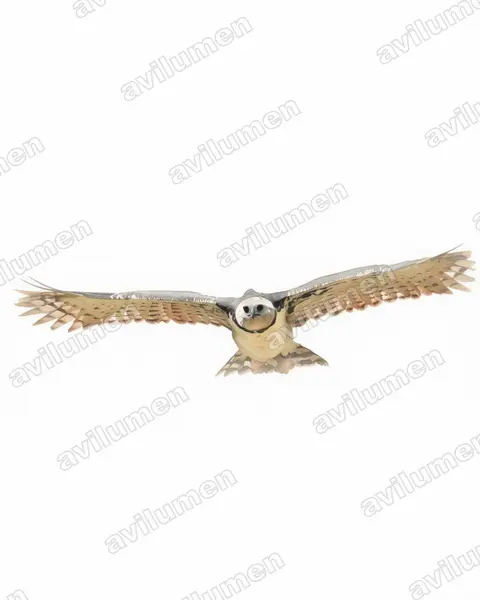
Watercolor 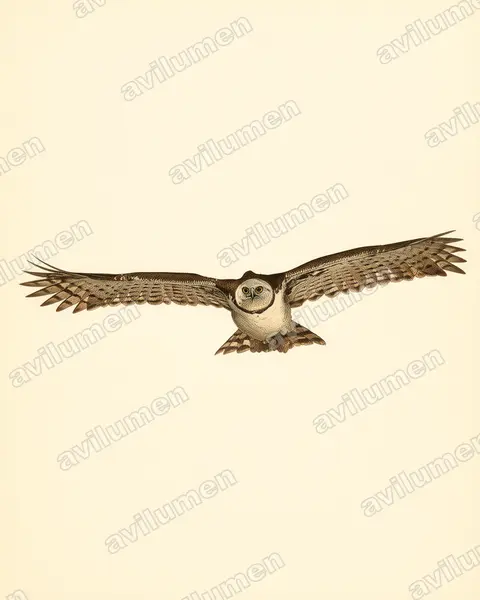
Vintage plate 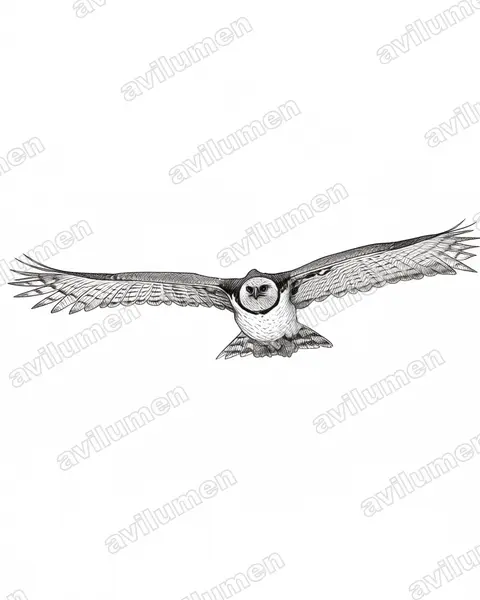
Ink 
Oil 
Realistic 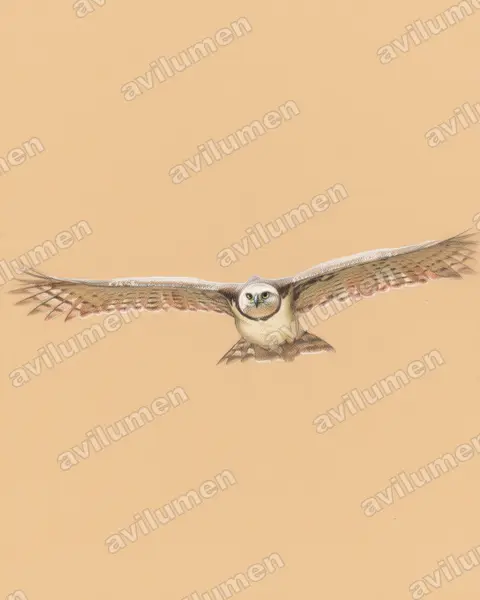
Colored pencil
Illustrations based on the photograph by Mdf (CC BY-SA 3.0), from Wikimedia Commons.
Digital editions
HD Digital Art Pack — Harpy eagle
Digital download: 6 high-resolution illustrations of the Harpy eagle (Harpia harpyja), print-ready. This is a digital file; no animal or physical item is included.
AI Avatar — Harpy eagle
Generate an avatar fusing your face with the Harpy eagle (Harpia harpyja). Delivered digitally in 8K, watermark-free. Digital product; no animals are sold or brokered.
Instant download. No live birds are sold.
Frequently asked questions
- Is Harpia harpyja (Harpy eagle) endangered?
- The IUCN Red List places Harpia harpyja, commonly known as the Harpy eagle, in the «Vulnerable» category. «Vulnerable» means it faces a high risk of extinction in the medium term.
- Where does Harpia harpyja (Harpy eagle) live?
- Harpia harpyja (Harpy eagle) is found in Brazil and South America.
- What family does Harpia harpyja (Harpy eagle) belong to?
- Harpia harpyja (Harpy eagle) belongs to the family Accipitridae, in the order Accipitriformes.
- What colour is Harpia harpyja (Harpy eagle)?
- The plumage of Harpia harpyja (Harpy eagle) combines these colours: Grey, White, and Black.