Locust finch
Paludipasser locustella
Avilumen editorial team ·

The locust finch or locustfinch is a species of waxbill found in south-central and south-eastern Africa. It is the only species in the genus Paludipasser. It is sometimes placed in the genus Ortygospiza.
The locust finch or locustfinch (Paludipasser locustella) is a species of waxbill found in south-central and south-eastern Africa. It is the only species in the genus Paludipasser. It is sometimes placed in the genus Ortygospiza.
Taxonomy
The locust finch was first formally described in 1909 by the English naturalist and entomologist Sheffield Airey Neave with the type, a subadult male, being collected at the Upper Luansenshi River, north-east of Bangweolo, Northern Rhodesia, i.e. Zambia. Neave placed it in the monotypic genus Paludipasser within the waxbill family Estrildidae, but it has also been placed in the same genus as the quailfinch, Ortygospiza.
Description
The locust finch is similar to the quailfinch but males have a red face, throat and breast with rufous wings and black body with white spots but with a plain back belly. The females also have rufous wings and lack the white face markings of female quailfinches while immatures have black and brown streaks on the upperparts and browner underparts than females. This species has a body which is 9 to 10 cm (3.5 to 3.9 in) in length.
Distribution and habitat
It is mainly native to the Uele River basin, Zambia and Malawi.
The locust finch has been recorded in south-east Cameroon, Republic of Congo, the Democratic Republic of Congo south through Zambia, Angola, Tanzania, Malawi, Mozambique, Zimbabwe and Botswana. In Botswana, Zimbabwe and Mozambique this is a rather rare species. There are unconfirmed reports of at least two pairs breeding on the Jos Plateau of northern Nigeria, this would be a very significant range extension for this species. The preferred habitat is damp, thinly vegetated patches within grasslands close to water in sandy spoild areas, like sandveld.
Biology
The locust finch is a terrestrial species and perching is almost unknown. Its preferred habitat as prone to drying out in the dry season and at these times these birds can be nomadic. They are normally encountered in pairs but when drought conditions are severe they can gather in small flock of up to 10 birds. In southern Africa eggs are laid from January to May, i.e. during the rainy season with most egg laying at the height of the rainy season in January and February. This is a difficult species to locate due to its terrestrial habits and tendency to flyy long distances when flushed, like a quail.
Threats
The locust finch was previously listed as near threatened. However, due to lack of information, it was suggested that it remains widespread and locally common, and there is no evidence of significant declines. The population of this species may have declined for the past few decades due to a series of droughts in the 1980s. It is threatened by the cage-bird trade and loss of marshland habitat, partly due to dry periods.
Text adapted from Wikipedia · CC BY-SA 4.0
Taxonomy
- Order
- Passeriformes
- Family
- Estrildidae
- Genus
- Paludipasser
- Conservation status
- Least concern
Listen to its call
No recording yet
Care guide
Canary and Finch Care Guide: Diet, Housing and Breeding
How to care for canaries, zebra finches, Gouldian finches and other finches: diet, flight cage setup, health, song and breeding. A guide for bird keepers.
Read the guide →Illustration gallery
6 illustrations of Paludipasser locustella (Locust finch) in different styles, true to its real plumage. Shown watermarked; the art pack includes the high-resolution originals, ready to print.
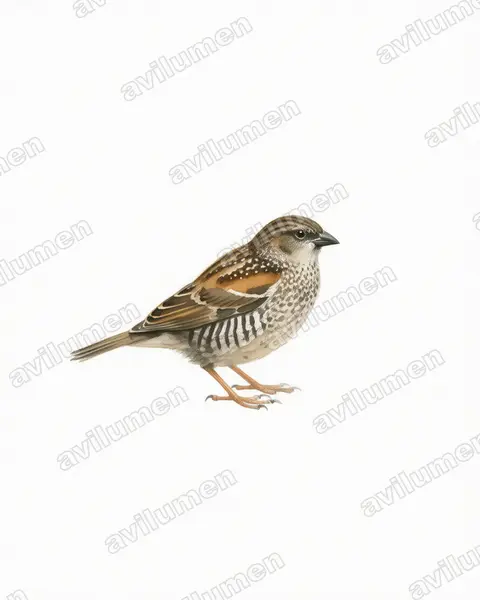
Watercolor 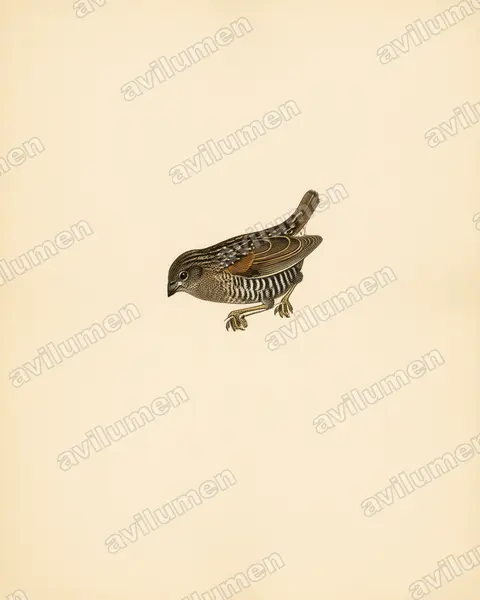
Vintage plate 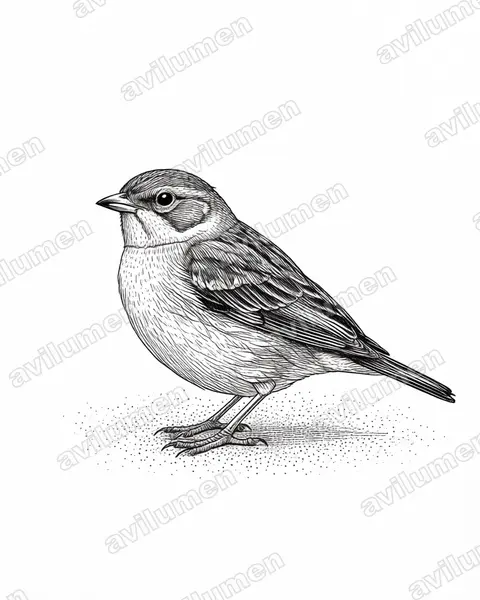
Ink 
Oil 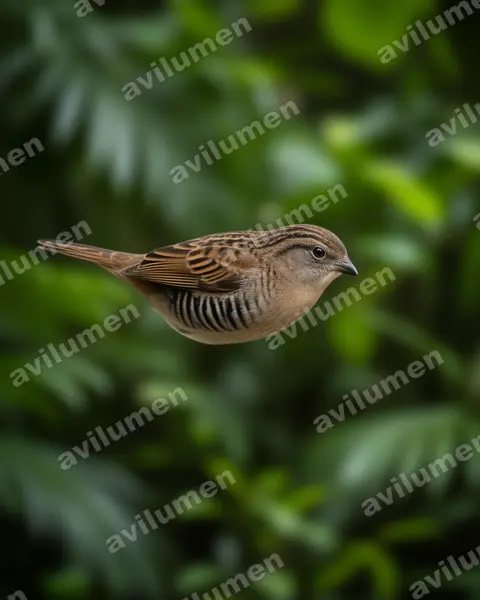
Realistic 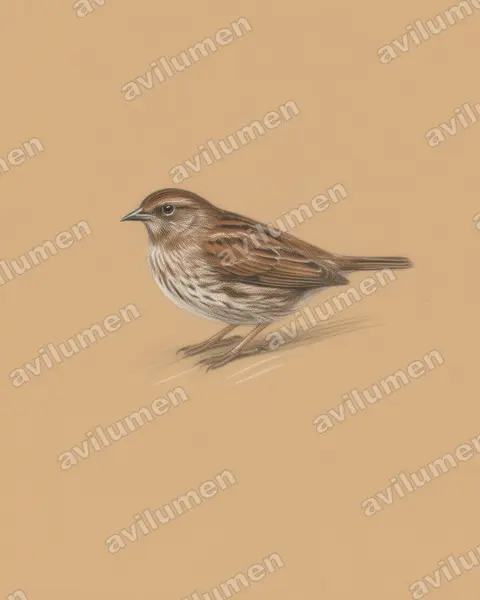
Colored pencil
Illustrations based on the photograph by Henrik Gronvold (Public domain), from Wikimedia Commons.
Digital editions
HD Digital Art Pack — Locust finch
Digital download: 6 high-resolution illustrations of the Locust finch (Paludipasser locustella), print-ready. This is a digital file; no animal or physical item is included.
AI Avatar — Locust finch
Generate an avatar fusing your face with the Locust finch (Paludipasser locustella). Delivered digitally in 8K, watermark-free. Digital product; no animals are sold or brokered.
Instant download. No live birds are sold.
Frequently asked questions
- Is Paludipasser locustella (Locust finch) endangered?
- The IUCN Red List places Paludipasser locustella, commonly known as the Locust finch, in the «Least concern» category. «Least concern» means it is not currently threatened.
- Where does Paludipasser locustella (Locust finch) live?
- Paludipasser locustella (Locust finch) is found in Africa.
- What family does Paludipasser locustella (Locust finch) belong to?
- Paludipasser locustella (Locust finch) belongs to the family Estrildidae, in the order Passeriformes.
- What colour is Paludipasser locustella (Locust finch)?
- The plumage of Paludipasser locustella (Locust finch) combines these colours: Brown and Grey.
More from the same family
 Least concern
Red-headed finch
Amadina erythrocephala
The red-headed finch is a common species of estrildid finch found in Africa. It has an estimated global extent of occurrence of 1,600,000 km2 (620,000 sq mi). It is found in Angola, Botswana, Lesotho, Namibia, South Africa and Zimbabwe.
from $1.99
 Least concern
Cut-throat finch
Amadina fasciata
The cut-throat finch is a common species of estrildid finch found throughout Africa; it is also known as the bearded finch, the ribbon finch, the cut throat, and the weaver finch.
from $1.99
 Least concern
Red avadavat
Amandava amandava
The red avadavat, red munia or strawberry finch, is a sparrow-sized bird of the family Estrildidae. It is found in the open fields and grasslands of tropical Asia and is popular as a cage bird due to the colourful plumage of the males in their breeding season. It breeds in the Indian subcontinent in the monsoon season.
from $1.99
 Vulnerable
Green avadavat
Amandava formosa
The green avadavat or green munia is a species of Estrildid finch with green and yellow on the body, a bright red bill and black "zebra stripes" on the flanks. They are endemic to the Indian subcontinent and were formerly popular as cagebirds. The name "avadavat" is a corruption of the name the city of Ahmedabad in Gujarat, India, which was a centre of bird trade.
from $1.99