Princess Parrot
Polytelis alexandrae
Avilumen editorial team ·

The colourful princess parrot is an Australian bird of the parrot family. Its name was given in honour of Princess Alexandra of Denmark, who in 1863 married the Prince of Wales Edward VII and eventually became Queen of the United Kingdom. Other names for the species include: Queen Alexandra parrot, Alexandra's parakeet, Princess of Wales parakeet, rose-throated parakeet, and spinifex parrot.
The colourful princess parrot (Polytelis alexandrae) is an Australian bird of the parrot family. Its name was given in honour of Princess Alexandra of Denmark, who in 1863 married the Prince of Wales Edward VII and eventually became Queen of the United Kingdom. Other names for the species include: Queen Alexandra parrot (or parakeet), Alexandra's parakeet, Princess of Wales parakeet, rose-throated parakeet, and spinifex parrot. Their plumage is mostly green with a pink throat, bluish crown and rump, and bright green shoulders.
Description
The princess parrot is a medium-sized parrot, 34 to 46 cm long and weighing between 110 and 120 g. The plumage is mostly green with a pink throat, bluish crown, and bright green shoulders. The rump is blue and the tail is long and narrow. The males have longer tail feathers and brighter coloring than females. The male also has a coral-red beak, while the female's is duller and has a greyish crown. Another difference is that the male has an orange iris, while the female's is much browner. In addition, the male of the species has a longer, projecting extension from the end of the 3rd primary (flight) feather on each side. This projection is called a 'spatula' or 'spatule' and appears in mature male birds.
Behaviour
This species is nomadic, arriving in small groups to breed and then disappearing. It is one of Australia's least known parrots because it is so elusive, even though it is spread across the interior of Australia. It inhabits arid woodland and scrub with spinifex, eucalypts, acacias, etc. They are unusual among parrots in engaging in mobbing behaviour against predators. They feed on the seeds of grasses and shrubs.
Breeding
Four to six white eggs are laid which are incubated for 19 days. The chicks leave the nest about 35 days after hatching. These parakeets are truly opportunistic breeders, with pairs choosing to nest when food is plentiful. They nest in a hollow in an eucalypt or desert oak.
Agriculture
The princess parrot can make loud calls. Their life span is thought to be as long as 30 years. Under the right circumstances, they are able to bond to more than one member of the host family. These birds have a short range of mimicking ability, yet some have the ability to "talk". They are a favourite among many aviculturists and pet owners because of their looks and personality. Their diet consists of reasonable sized seeds and grasses that have seeds. They can be constipated if given bread or seeds that are small or become wet, they can become ill if seed bowls are contaminated by rats or mice so are best fed on an inverted ceramic pot with the bowl on top not wider than the top as they will dislodge the feed bowl.
There are three common color mutations of this parakeet. These colours are Lutino, Blue, and Albino (combination of Blue and Lutino). The natural, or 'normal' color is green. There are two types of blue, one blue winged and the second is bright blue wings and bright blue head.
Text adapted from Wikipedia · CC BY-SA 4.0
Where it lives
Plumage colours
Taxonomy
- Order
- Psittaciformes
- Family
- Psittacidae
- Genus
- Polytelis
- Conservation status
- Near threatened
Listen to its call
No recording yet
Care guide
Budgie, Conure and Parakeet Care Guide
How to care for budgies, conures, parrotlets, ringnecks and other parakeets: diet, cage setup, health, behavior, breeding and legal status for owners.
Read the guide →Illustration gallery
6 illustrations of Polytelis alexandrae (Princess Parrot) in different styles, true to its real plumage. Shown watermarked; the art pack includes the high-resolution originals, ready to print.
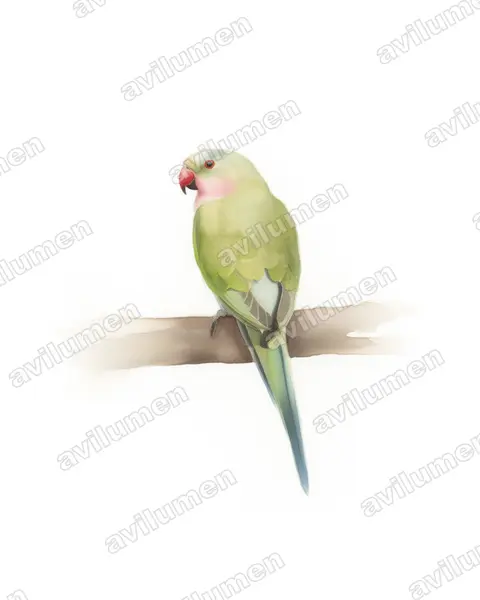
Watercolor 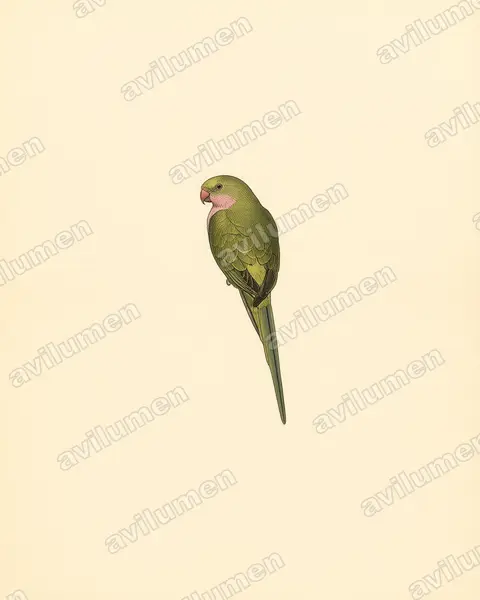
Vintage plate 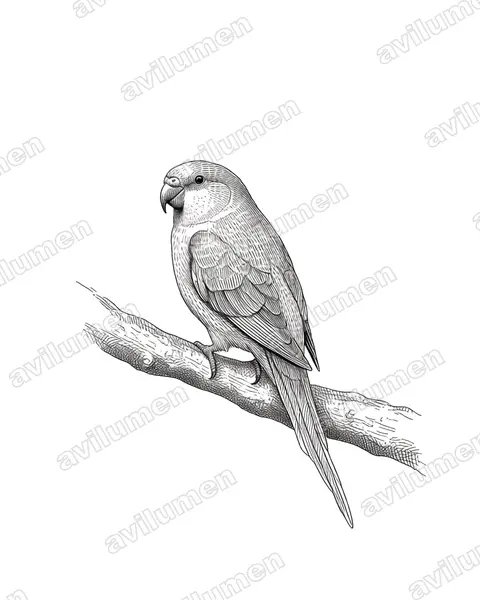
Ink 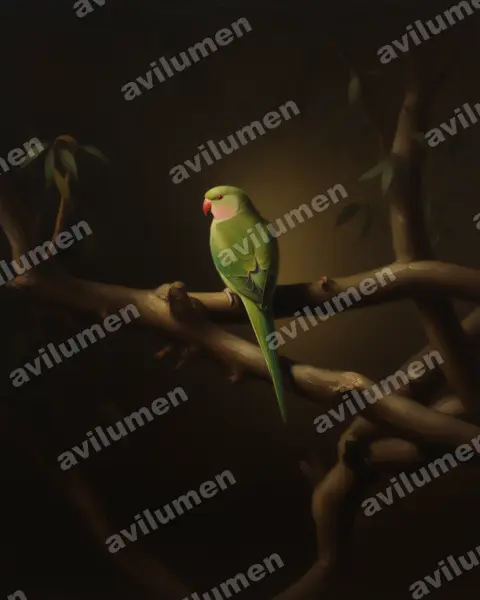
Oil 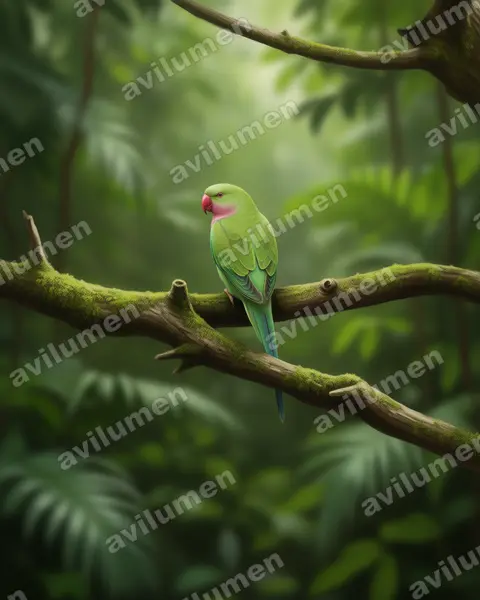
Realistic 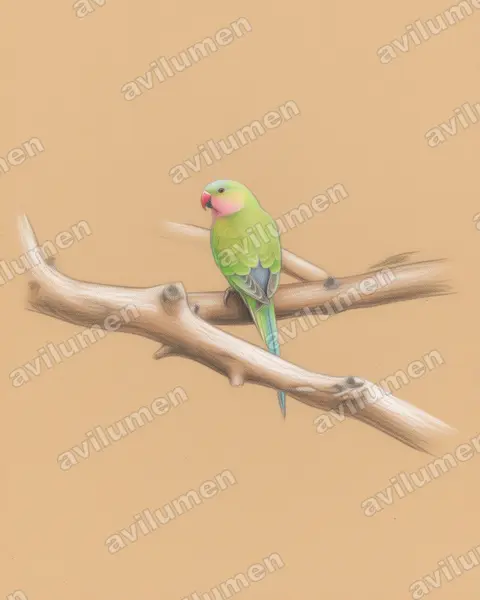
Colored pencil
Illustrations based on the photograph by Christopher Watson (http://www.comebirdwatching.blogspot.com/) (CC BY-SA 3.0), from Wikimedia Commons.
Digital editions
HD Digital Art Pack — Princess Parrot
Digital download: 6 high-resolution illustrations of the Princess Parrot (Polytelis alexandrae), print-ready. This is a digital file; no animal or physical item is included.
AI Avatar — Princess Parrot
Generate an avatar fusing your face with the Princess Parrot (Polytelis alexandrae). Delivered digitally in 8K, watermark-free. Digital product; no animals are sold or brokered.
Instant download. No live birds are sold.
Frequently asked questions
- Is Polytelis alexandrae (Princess Parrot) endangered?
- The IUCN Red List places Polytelis alexandrae, commonly known as the Princess Parrot, in the «Near threatened» category. «Near threatened» means it is not threatened yet, but is close to becoming so.
- Where does Polytelis alexandrae (Princess Parrot) live?
- Polytelis alexandrae (Princess Parrot) is found in Australia.
- What family does Polytelis alexandrae (Princess Parrot) belong to?
- Polytelis alexandrae (Princess Parrot) belongs to the family Psittacidae, in the order Psittaciformes.
- What colour is Polytelis alexandrae (Princess Parrot)?
- The plumage of Polytelis alexandrae (Princess Parrot) combines these colours: Multicoloured.
More from the same family
 Near threatened
Yellow-faced Parrot
Alipiopsitta xanthops
The yellow-faced parrot, formerly also known as the yellow-faced amazon, is the only species of the genus Alipiopsitta. It is a Neotropical parrot, and was classified in the genus Amazona for many years. It is a predominantly green and yellow-plumaged bird with a yellow head. It is a semi-nomadic species found in the cerrado region of Brazil and adjacent Bolivia.
from $1.99
 Least concern
Moluccan King Parrot
Alisterus amboinensis
The Moluccan king parrot is a parrot endemic to Peleng Island, Maluku, and West Papua in Indonesia. It is sometimes referred to as the Ambon king parrot or Amboina king parrot, but this is potentially misleading, as it is found on numerous other islands than Ambon. The male and female are similar in appearance, with a predominantly red head and underparts, green wings, and blue back and tail.
from $1.99
 Least concern
Papuan King Parrot
Alisterus chloropterus
The Papuan king parrot, also known as the green-winged king parrot, is a species of parrot in the family Psittaculidae found in New Guinea. Its natural habitats are subtropical or tropical moist lowland forest and subtropical or tropical moist montane forest.
from $1.99
 Least concern
Australian King Parrot
Alisterus scapularis
The Australian king parrot is a species of parrot endemic to eastern Australia ranging from Cooktown in Queensland to Port Campbell in Victoria. Found in humid and heavily forested upland regions of the eastern portion of the continent, including eucalyptus wooded areas in and directly adjacent to subtropical and temperate rainforest. They feed on fruits and seeds gathered from trees or on the ground.
from $1.99