Rose-faced Parrot
Pyrilia pulchra
Avilumen editorial team ·

The rose-faced parrot is a species of bird in subfamily Arinae of the family Psittacidae, the African and New World parrots. It is found in Colombia and Ecuador.
The rose-faced parrot (Pyrilia pulchra) is a species of bird in subfamily Arinae of the family Psittacidae, the African and New World parrots. It is found in Colombia and Ecuador.
Taxonomy and systematics
The rose-faced parrot and the other six members of genus Pyrilia were until the early 21st century included in genus Pionopsitta with the pileated parrot (P. pileata). The rose-faced parrot has at times been treated as a subspecies of the brown-hooded parrot (Pyrilia haematotis) and they are now considered sister species. The rose-faced parrot is monotypic.
Description
The rose-faced parrot is 21.5 to 23 cm (8.5 to 9.1 in) long. Adults have a reddish brown crown and are pinkish rose from their lores across most of their face. Their nape and breast are dull olive-yellow. Most of the rest of their body is green, with orange and yellow on the bend of the wing, mostly black flight feathers, and blue on the tips of the tail feathers. Their bill is pale creamy whitish. Immature birds are much like adults but with limited rose on the face.
Distribution and habitat
The rose-faced parrot is found from the central part of Colombia's Chocó Department south through western Ecuador into El Oro Province. It inhabits humid to wet forest, mature secondary forest, plantations, and more open areas with scattered trees. Specimens living in forest tend to stay in the canopy. In elevation it mostly occurs below 1,200 m (3,900 ft) but locally is found as high as 2,100 m (6,900 ft).
Movement
The rose-faced parrot might make some seasonal movements but details are lacking.
Feeding
Almost nothing is known about the rose-faced parrot's feeding behavior or diet, but it has been recorded eating small fruit and cultivated bananas.
Breeding
The rose-faced parrot breeds between January and March in the northern part of its range and in November-December in the south. Nothing else is known about its breeding biology.
Vocalization
The rose-faced parrot's flight call is "a harsh, far-carrying 'shreek! shreek!'." It also makes "mostly harsh calls and various gurgling and squeaking notes" when perched.
Status
The IUCN has assessed the rose-faced parrot as being of Least Concern. It has a somewhat restricted range, and though its population size is not known it is believed to be stable. No immediate threats have been identified. "Uncommon and local, but sometimes fairly numerous and capable of doing damage to banana crops."
Text adapted from Wikipedia · CC BY-SA 4.0
Where it lives
Distribution

Taxonomy
- Order
- Psittaciformes
- Family
- Psittacidae
- Genus
- Pyrilia
- Conservation status
- Least concern
Listen to its call
No recording yet
Care guide
Amazon, African Grey and Eclectus Parrot Care Guide
How to care for Amazon parrots, African greys, eclectus and pionus: diet, cage setup, health, behavior and CITES requirements for medium and large parrots.
Read the guide →Illustration gallery
6 illustrations of Pyrilia pulchra (Rose-faced Parrot) in different styles, true to its real plumage. Shown watermarked; the art pack includes the high-resolution originals, ready to print.
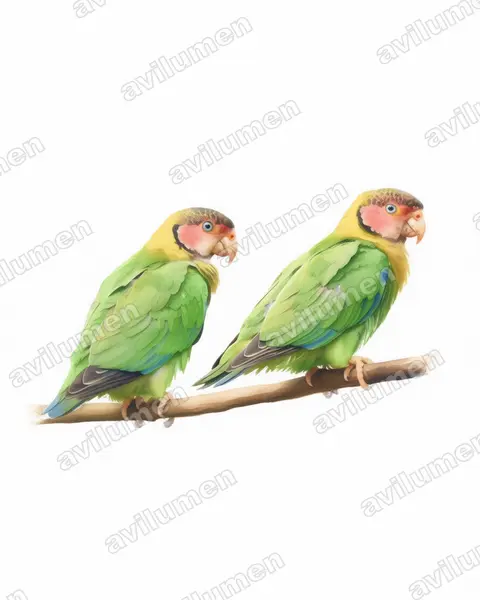
Watercolor 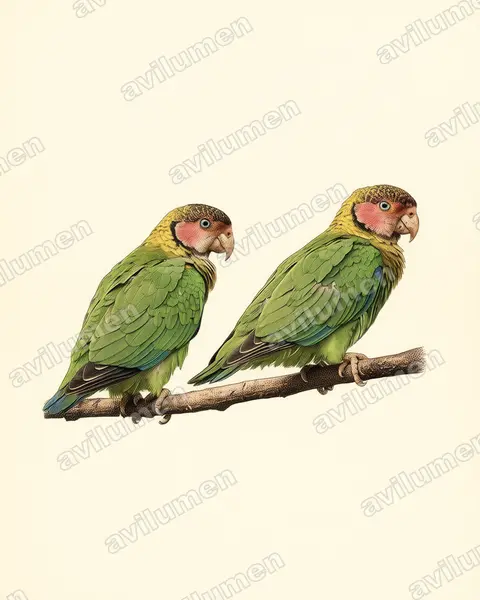
Vintage plate 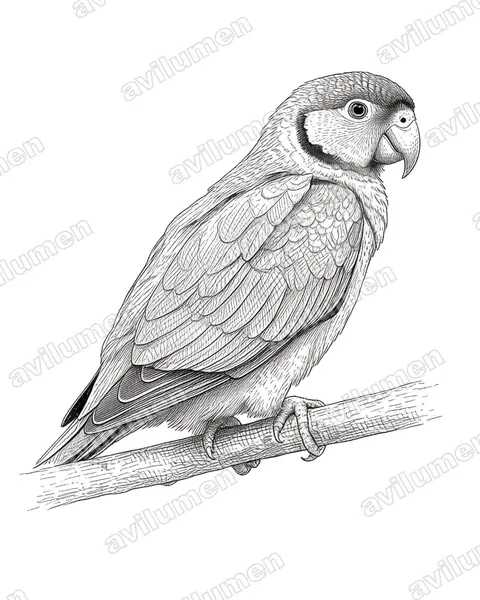
Ink 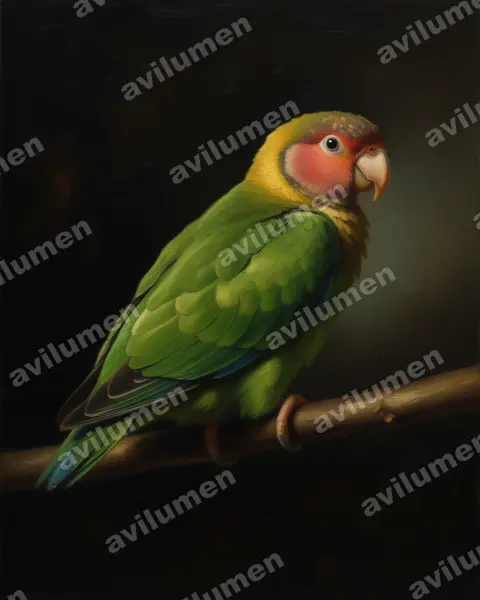
Oil 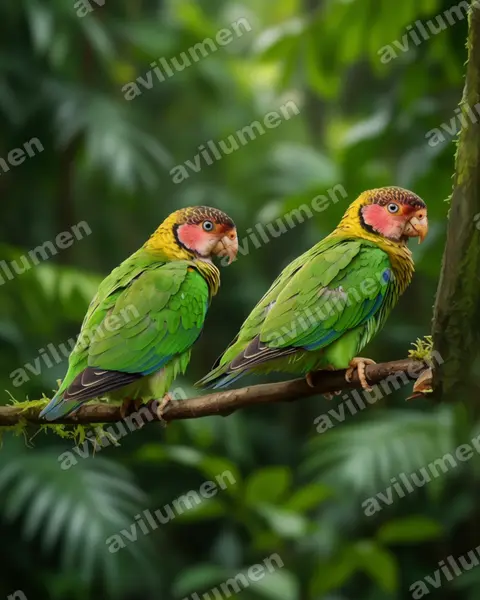
Realistic 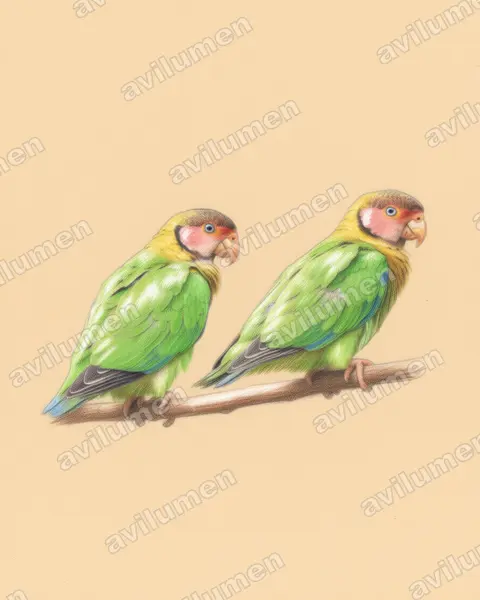
Colored pencil
Illustrations based on the photograph by Bärbel Miemietz (CC BY-SA 4.0), from Wikimedia Commons.
Digital editions
HD Digital Art Pack — Rose-faced Parrot
Digital download: 6 high-resolution illustrations of the Rose-faced Parrot (Pyrilia pulchra), print-ready. This is a digital file; no animal or physical item is included.
AI Avatar — Rose-faced Parrot
Generate an avatar fusing your face with the Rose-faced Parrot (Pyrilia pulchra). Delivered digitally in 8K, watermark-free. Digital product; no animals are sold or brokered.
Instant download. No live birds are sold.
Frequently asked questions
- Is Pyrilia pulchra (Rose-faced Parrot) endangered?
- The IUCN Red List places Pyrilia pulchra, commonly known as the Rose-faced Parrot, in the «Least concern» category. «Least concern» means it is not currently threatened.
- Where does Pyrilia pulchra (Rose-faced Parrot) live?
- Pyrilia pulchra (Rose-faced Parrot) is found in South America.
- What family does Pyrilia pulchra (Rose-faced Parrot) belong to?
- Pyrilia pulchra (Rose-faced Parrot) belongs to the family Psittacidae, in the order Psittaciformes.
- What colour is Pyrilia pulchra (Rose-faced Parrot)?
- The plumage of Pyrilia pulchra (Rose-faced Parrot) combines these colours: Pink and Green.
More from the same family
 Near threatened
Yellow-faced Parrot
Alipiopsitta xanthops
The yellow-faced parrot, formerly also known as the yellow-faced amazon, is the only species of the genus Alipiopsitta. It is a Neotropical parrot, and was classified in the genus Amazona for many years. It is a predominantly green and yellow-plumaged bird with a yellow head. It is a semi-nomadic species found in the cerrado region of Brazil and adjacent Bolivia.
from $1.99
 Least concern
Moluccan King Parrot
Alisterus amboinensis
The Moluccan king parrot is a parrot endemic to Peleng Island, Maluku, and West Papua in Indonesia. It is sometimes referred to as the Ambon king parrot or Amboina king parrot, but this is potentially misleading, as it is found on numerous other islands than Ambon. The male and female are similar in appearance, with a predominantly red head and underparts, green wings, and blue back and tail.
from $1.99
 Least concern
Papuan King Parrot
Alisterus chloropterus
The Papuan king parrot, also known as the green-winged king parrot, is a species of parrot in the family Psittaculidae found in New Guinea. Its natural habitats are subtropical or tropical moist lowland forest and subtropical or tropical moist montane forest.
from $1.99
 Least concern
Australian King Parrot
Alisterus scapularis
The Australian king parrot is a species of parrot endemic to eastern Australia ranging from Cooktown in Queensland to Port Campbell in Victoria. Found in humid and heavily forested upland regions of the eastern portion of the continent, including eucalyptus wooded areas in and directly adjacent to subtropical and temperate rainforest. They feed on fruits and seeds gathered from trees or on the ground.
from $1.99