Orange-winged pytilia
Pytilia afra
Avilumen editorial team ·

The orange-winged pytilia, also known as the golden-backed pytilia, is a species of estrildid finch found in Africa. It has a wide range and the International Union for Conservation of Nature has assessed it as being of least concern.
The orange-winged pytilia (Pytilia afra), also known as the golden-backed pytilia, is a species of estrildid finch found in Africa. It has a wide range and the International Union for Conservation of Nature has assessed it as being of least concern.
Taxonomy
The orange-winged pytilia was formally described in 1789 by the German naturalist Johann Friedrich Gmelin in his revised and expanded edition of Carl Linnaeus's Systema Naturae. He placed it with the finches in the genus Fringilla and coined the binomial name Fringilla afra. Gmelin gave the locality as Angola. The specific epithet is from Latin afer meaning "Africa". Gmelin based his account on the "red-faced finch" that had been described and illustrated in 1776 by the English naturalist Peter Brown. The orange-winged pytilia is now one of five pytilias placed in the genus Pytilia that was introduced in 1837 by the English naturalist William Swainson. The species is monotypic: no subspecies are recognised.
Description
The orange-winged pytilia is 11 cm (4.3 in) long and weighs 14–15 g (0.49–0.53 oz). The male's forehead, face and chin are red, and its crown and nape are grey. Its back is green, with an olive tinge. Its greater coverts are orange, and its primary coverts and flight feathers are blackish-brown, with orange edges. Its rump is crimson. The outer webs of its tail are red, and the inner webs are brown. Its throat and upper breast are pale grey, and its breast is olive. There are off-white bars on its breast and belly. Its legs are pale pink or pinkish-brown. Its eyes are orange or red, and its beak is red. The female has a greyish head, with no red. Its back and wings are duller than the male, and the bars on its underparts are broader. The immature bird is like the female, but is drabber.
Distribution and habitat
This pytilia is found in Angola, Botswana, Burundi, the Republic of Congo, the Democratic Republic of the Congo, Ethiopia, Kenya, Malawi, Mozambique, Rwanda, South Africa, South Sudan, Tanzania, Uganda, Zambia and Zimbabwe. It has an estimated global extent of occurrence of 8,160,000 km2 (3,150,000 sq mi). Its habitat is edges of forests, miombo woodland and wooded grasslands, usually in moist areas. It is found at elevations up to 1,800 m (5,900 ft) above sea level.
Behaviour and ecology
The orange-winged pytilia is found in small flocks, and can form larger, looser flocks when it is not breeding. It feeds on the ground, eating seeds and probably also insects. In the non-breeding season, it can move great distances to find food. Its call is seee, and its song is quickly repeated whistles. The orange-winged pytilia is parasitised by the broad-tailed paradise whydah, which mimics its call. The orange-winged pytilia's breeding season is April to May in the southeastern Congo Basin, January to May in Zambia and Zimbabwe, March to June in Malawi, and April to June in Tanzania. The eggs weigh approximately 1.42 g (0.050 oz), and those of the brood parasite weigh about 15% more, at 1.64 g (0.058 oz). The pytilia's incubation period is 12 to 13 days, and the nestling period is 21 days.
Status
Because the species has a large range and a stable population trend, the IUCN has classified the species as being of least concern. It may be captured and used as caged birds.
Text adapted from Wikipedia · CC BY-SA 4.0
Taxonomy
- Order
- Passeriformes
- Family
- Estrildidae
- Genus
- Pytilia
- Conservation status
- Least concern
Listen to its call
No recording yet
Care guide
Canary and Finch Care Guide: Diet, Housing and Breeding
How to care for canaries, zebra finches, Gouldian finches and other finches: diet, flight cage setup, health, song and breeding. A guide for bird keepers.
Read the guide →Illustration gallery
6 illustrations of Pytilia afra (Orange-winged pytilia) in different styles, true to its real plumage. Shown watermarked; the art pack includes the high-resolution originals, ready to print.
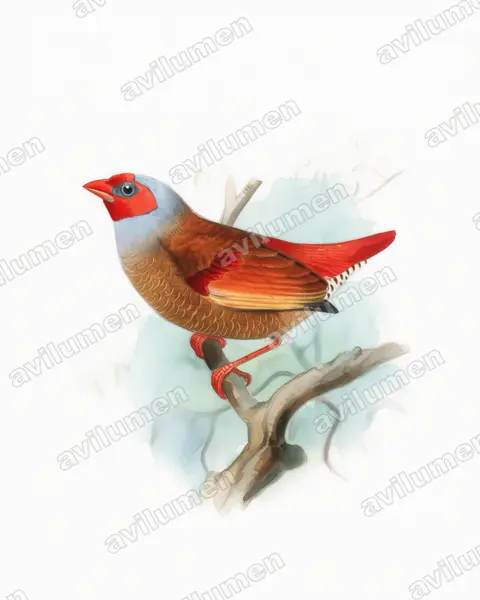
Watercolor 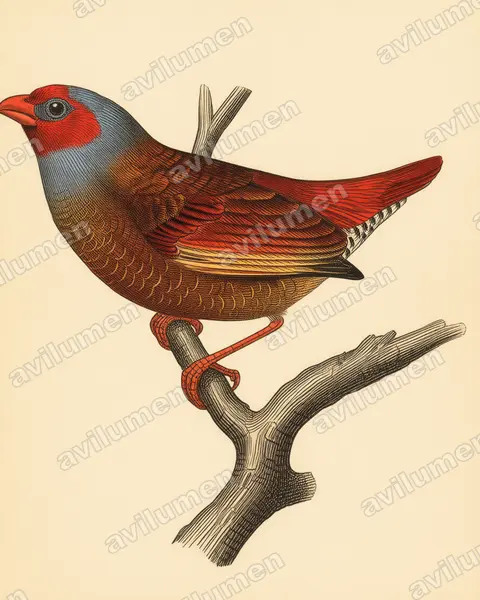
Vintage plate 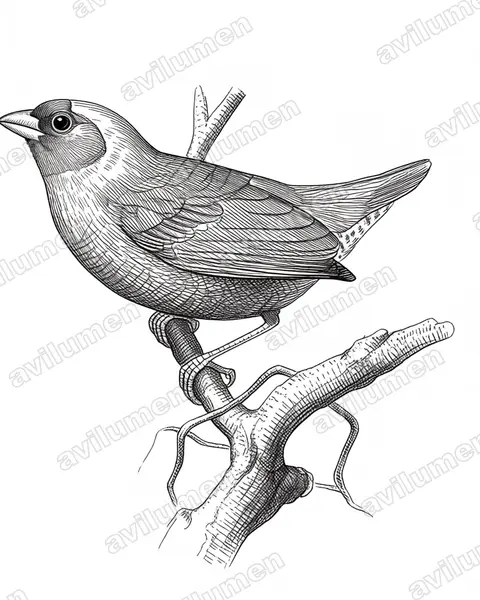
Ink 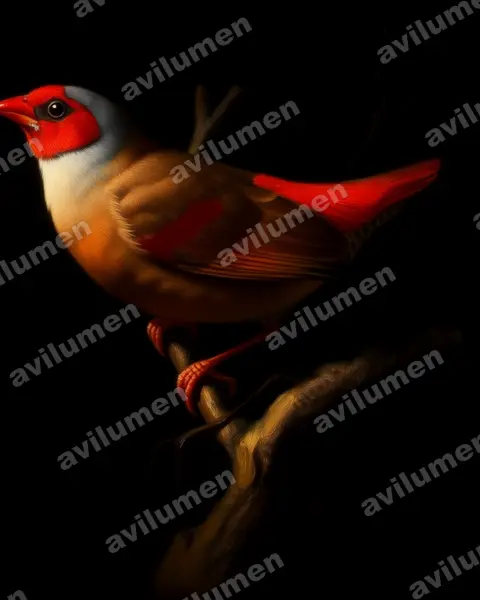
Oil 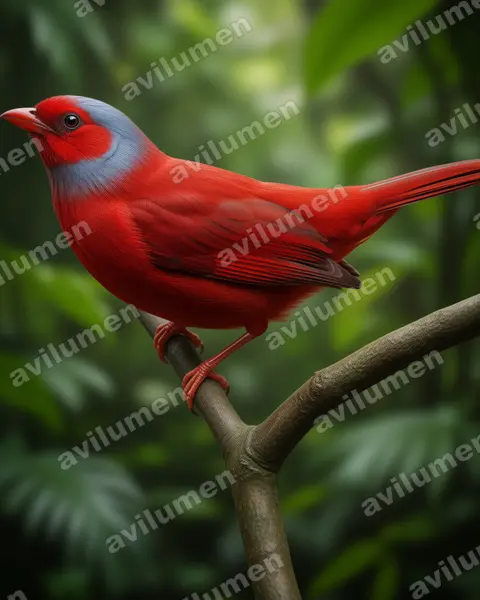
Realistic 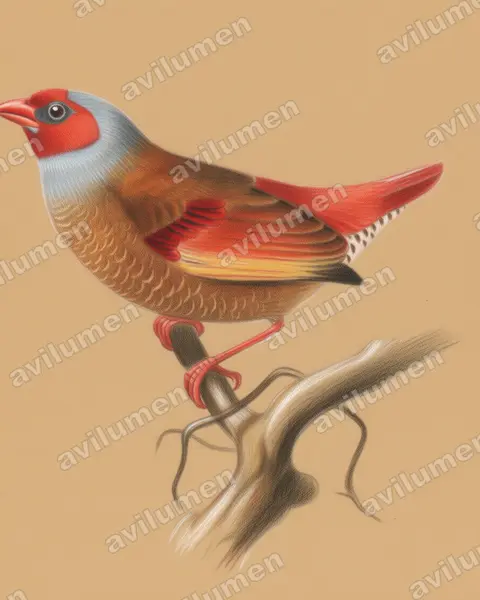
Colored pencil
Illustrations based on the photograph by ViduaPyteliaSmit.jpg: Joseph Smit derivative work: Shyamal (talk) (Public domain), from Wikimedia Commons.
Digital editions
HD Digital Art Pack — Orange-winged pytilia
Digital download: 6 high-resolution illustrations of the Orange-winged pytilia (Pytilia afra), print-ready. This is a digital file; no animal or physical item is included.
AI Avatar — Orange-winged pytilia
Generate an avatar fusing your face with the Orange-winged pytilia (Pytilia afra). Delivered digitally in 8K, watermark-free. Digital product; no animals are sold or brokered.
Instant download. No live birds are sold.
Frequently asked questions
- Is Pytilia afra (Orange-winged pytilia) endangered?
- The IUCN Red List places Pytilia afra, commonly known as the Orange-winged pytilia, in the «Least concern» category. «Least concern» means it is not currently threatened.
- Where does Pytilia afra (Orange-winged pytilia) live?
- Pytilia afra (Orange-winged pytilia) is found in Africa.
- What family does Pytilia afra (Orange-winged pytilia) belong to?
- Pytilia afra (Orange-winged pytilia) belongs to the family Estrildidae, in the order Passeriformes.
- What colour is Pytilia afra (Orange-winged pytilia)?
- The plumage of Pytilia afra (Orange-winged pytilia) combines these colours: Yellow and Orange.
More from the same family
 Least concern
Red-headed finch
Amadina erythrocephala
The red-headed finch is a common species of estrildid finch found in Africa. It has an estimated global extent of occurrence of 1,600,000 km2 (620,000 sq mi). It is found in Angola, Botswana, Lesotho, Namibia, South Africa and Zimbabwe.
from $1.99
 Least concern
Cut-throat finch
Amadina fasciata
The cut-throat finch is a common species of estrildid finch found throughout Africa; it is also known as the bearded finch, the ribbon finch, the cut throat, and the weaver finch.
from $1.99
 Least concern
Red avadavat
Amandava amandava
The red avadavat, red munia or strawberry finch, is a sparrow-sized bird of the family Estrildidae. It is found in the open fields and grasslands of tropical Asia and is popular as a cage bird due to the colourful plumage of the males in their breeding season. It breeds in the Indian subcontinent in the monsoon season.
from $1.99
 Vulnerable
Green avadavat
Amandava formosa
The green avadavat or green munia is a species of Estrildid finch with green and yellow on the body, a bright red bill and black "zebra stripes" on the flanks. They are endemic to the Indian subcontinent and were formerly popular as cagebirds. The name "avadavat" is a corruption of the name the city of Ahmedabad in Gujarat, India, which was a centre of bird trade.
from $1.99