Great-billed Parrot
Tanygnathus megalorynchos
Avilumen editorial team ·

The great-billed parrot also known as Moluccan parrot or island parrot, is a medium-sized, approximately 38 cm long, green parrot with a massive red bill, cream iris, blackish shoulders, olive green back, pale blue rump and yellowish green underparts. The female is typically smaller than the male, but otherwise the sexes are similar.
The great-billed parrot (Tanygnathus megalorynchos) also known as Moluccan parrot or island parrot, is a medium-sized, approximately 38 cm long, green parrot with a massive red bill, cream iris, blackish shoulders, olive green back, pale blue rump and yellowish green underparts. The female is typically smaller than the male, but otherwise the sexes are similar.
The great-billed parrot is found in forest, woodland and mangrove in the south-east Asian islands of Maluku, Raja Ampat, Talaud, Sangir, Sarangani, the Lesser Sundas, and nearby small islands. The diet consists mainly of fruits.
It remains widespread and locally fairly common, and consequently has been rated as least concern on the IUCN Red List of Threatened Species.
Taxonomy
The great-billed parrot was described by the French polymath Georges-Louis Leclerc, Comte de Buffon in 1780 in his Histoire Naturelle des Oiseaux from a specimen collected in New Guinea. The bird was also illustrated in a hand-coloured plate engraved by François-Nicolas Martinet in the Planches Enluminées D'Histoire Naturelle which was produced under the supervision of Edme-Louis Daubenton to accompany Buffon's text. Neither the plate caption nor Buffon's description included a scientific name but in 1783 the Dutch naturalist Pieter Boddaert coined the binomial name Psittacus megalorynchos in his catalogue of the Planches Enluminées. The great-billed parrot is now placed in the genus Tanygnathus that was introduced by the German naturalist Johann Wagler in 1832. The generic name combines the Ancient Greek words tanuō "to stretch out" and gnathos "jaw". The specific epithet megalorynchos combines the Ancient Greek megalos "great" and rhunkhos "bill".
Five subspecies are recognized:
T. m. megalorhynchus (Boddaert, 1783) – Sulawesi and nearby islands to Maluku and west Papuan islands
T. m. affinis Wallace, 1863 – south Maluku Islands
T. m. sumbensis Meyer, 1882 – Sumba (east Lesser Sunda Islands)
T. m. hellmayri Mayr, 1944 – Rote Island, Semau and southwest Timor (east Lesser Sundas)
T. m. subaffinis P. L. Sclater, 1883 – Babar and Tanimbar Islands
Text adapted from Wikipedia · CC BY-SA 4.0
Taxonomy
- Order
- Psittaciformes
- Family
- Psittacidae
- Genus
- Tanygnathus
- Conservation status
- Least concern
Listen to its call
No recording yet
Care guide
Amazon, African Grey and Eclectus Parrot Care Guide
How to care for Amazon parrots, African greys, eclectus and pionus: diet, cage setup, health, behavior and CITES requirements for medium and large parrots.
Read the guide →Illustration gallery
6 illustrations of Tanygnathus megalorynchos (Great-billed Parrot) in different styles, true to its real plumage. Shown watermarked; the art pack includes the high-resolution originals, ready to print.
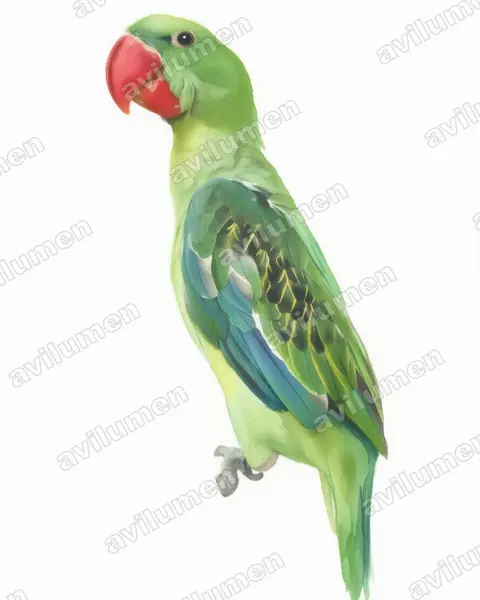
Watercolor 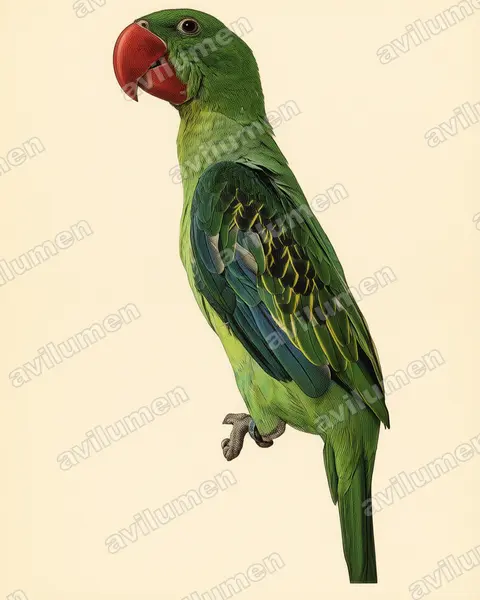
Vintage plate 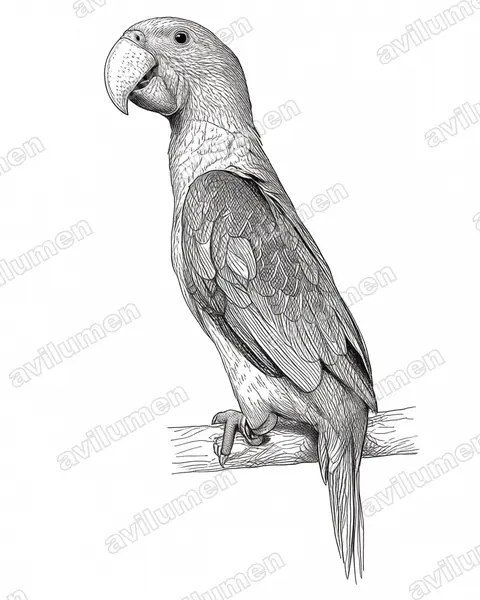
Ink 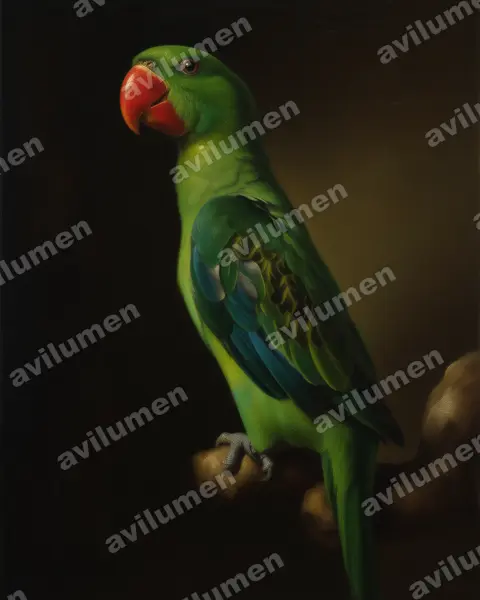
Oil 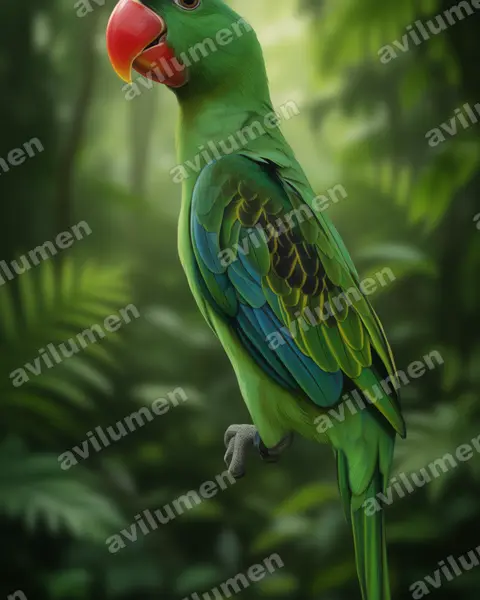
Realistic 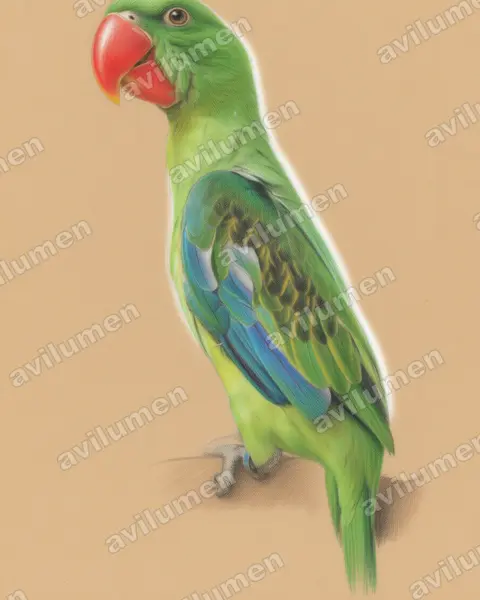
Colored pencil
Illustrations based on the photograph by TJ Lin (CC BY-SA 2.0), from Wikimedia Commons.
Digital editions
HD Digital Art Pack — Great-billed Parrot
Digital download: 6 high-resolution illustrations of the Great-billed Parrot (Tanygnathus megalorynchos), print-ready. This is a digital file; no animal or physical item is included.
AI Avatar — Great-billed Parrot
Generate an avatar fusing your face with the Great-billed Parrot (Tanygnathus megalorynchos). Delivered digitally in 8K, watermark-free. Digital product; no animals are sold or brokered.
Instant download. No live birds are sold.
Frequently asked questions
- Is Tanygnathus megalorynchos (Great-billed Parrot) endangered?
- The IUCN Red List places Tanygnathus megalorynchos, commonly known as the Great-billed Parrot, in the «Least concern» category. «Least concern» means it is not currently threatened.
- What family does Tanygnathus megalorynchos (Great-billed Parrot) belong to?
- Tanygnathus megalorynchos (Great-billed Parrot) belongs to the family Psittacidae, in the order Psittaciformes.
- What colour is Tanygnathus megalorynchos (Great-billed Parrot)?
- The plumage of Tanygnathus megalorynchos (Great-billed Parrot) combines these colours: Green and Red.
More from the same family
 Near threatened
Yellow-faced Parrot
Alipiopsitta xanthops
The yellow-faced parrot, formerly also known as the yellow-faced amazon, is the only species of the genus Alipiopsitta. It is a Neotropical parrot, and was classified in the genus Amazona for many years. It is a predominantly green and yellow-plumaged bird with a yellow head. It is a semi-nomadic species found in the cerrado region of Brazil and adjacent Bolivia.
from $1.99
 Least concern
Moluccan King Parrot
Alisterus amboinensis
The Moluccan king parrot is a parrot endemic to Peleng Island, Maluku, and West Papua in Indonesia. It is sometimes referred to as the Ambon king parrot or Amboina king parrot, but this is potentially misleading, as it is found on numerous other islands than Ambon. The male and female are similar in appearance, with a predominantly red head and underparts, green wings, and blue back and tail.
from $1.99
 Least concern
Papuan King Parrot
Alisterus chloropterus
The Papuan king parrot, also known as the green-winged king parrot, is a species of parrot in the family Psittaculidae found in New Guinea. Its natural habitats are subtropical or tropical moist lowland forest and subtropical or tropical moist montane forest.
from $1.99
 Least concern
Australian King Parrot
Alisterus scapularis
The Australian king parrot is a species of parrot endemic to eastern Australia ranging from Cooktown in Queensland to Port Campbell in Victoria. Found in humid and heavily forested upland regions of the eastern portion of the continent, including eucalyptus wooded areas in and directly adjacent to subtropical and temperate rainforest. They feed on fruits and seeds gathered from trees or on the ground.
from $1.99