Lesser Vasa Parrot
Coracopsis nigra
Avilumen editorial team ·

The lesser vasa parrot or black parrot is a black coloured parrot endemic to most of Madagascar. It is one of four species of vasa parrots, the others being the greater vasa parrot, the Seychelles black parrot, and the Comoros black parrot. The latter two were formerly considered conspecific with the lesser vasa parrot.
The lesser vasa parrot or black parrot (Coracopsis nigra) is a black coloured parrot endemic to most of Madagascar. It is one of four species of vasa parrots, the others being the greater vasa parrot (C. vasa), the Seychelles black parrot (C. barklyi), and the Comoros black parrot (C. sibilans). The latter two were formerly considered conspecific with the lesser vasa parrot.
Lesser vasa parrots inhabit the mangrove swamps and evergreen forests of Madagascar. They eat seeds, blossoms and fruit - especially berries and mangos.
They build their nests in tree hollows and go through courtship in February. During this time, the female may shed the feathers on her head giving it a yellowish tone. The male's beak may also turn white during this time.
Taxonomy
In 1743, the English naturalist George Edwards included a picture and a description of the lesser vasa parrot in his A Natural History of Uncommon Birds. He used the English name "Black Parrot from Madagascar". His drawing was made from a live bird owned by the Duke of Richmond. When in 1758 the Swedish naturalist Carl Linnaeus updated his Systema Naturae for the tenth edition, he placed the lesser vasa parrot with all the other parrots in the genus Psittacus. Linnaeus included a brief description, coined the binomial name Psittacus niger and cited Edwards's work. The specific epithet niger is Latin meaning "black". The lesser vasa parrot is now placed in the genus Coracopsis that was introduced in 1832 by the German ornithologist Johann Georg Wagler.
Two subspecies are recognised:
C. n. libs Bangs 1927 – west, south Madagascar
C. n. nigra (Linnaeus, 1758) – east Madagascar
The Seychelles black parrot (C. barklyi) and Comoros black parrot (C. sibilans) were formerly considered subspecies, but were later split as distinct species.
A 2011 genetic study found the Mascarene parrot from Réunion to be nested among the subspecies of the lesser vasa parrot from Madagascar and nearby islands, and therefore not related to the Psittacula parrots. It also found that the Mascarene parrot line diverged 4.6 to 9 million years ago, prior to the formation of Réunion, indicating this must have happened elsewhere. The cladogram accompanying the study is shown below:
Another group of scientists later acknowledged the finding, but pointed out that the sample might have been damaged, and that further testing was needed before the issue could be fully resolved. They also noted that if Mascarinus was confirmed to be embedded within the genus Coracopsis, the latter would become a junior synonym, since the former name is older. Hume has expressed surprise by these findings, due to the anatomical similarities between the Mascarene parrot and other parrots from the islands that are believed to be psittaculines. However, a later study found that the placement of Mascarinus within Coracopsis was likely a result of cross-contamination of genetic material from the lesser vasa parrot during the study, debunking this placement, and supporting them as being two distinct, unrelated genera within different subfamilies.
Text adapted from Wikipedia · CC BY-SA 4.0
Where it lives
Plumage colours
Taxonomy
- Order
- Psittaciformes
- Family
- Psittacidae
- Genus
- Coracopsis
- Conservation status
- Least concern
Listen to its call
No recording yet
Care guide
Amazon, African Grey and Eclectus Parrot Care Guide
How to care for Amazon parrots, African greys, eclectus and pionus: diet, cage setup, health, behavior and CITES requirements for medium and large parrots.
Read the guide →Illustration gallery
6 illustrations of Coracopsis nigra (Lesser Vasa Parrot) in different styles, true to its real plumage. Shown watermarked; the art pack includes the high-resolution originals, ready to print.
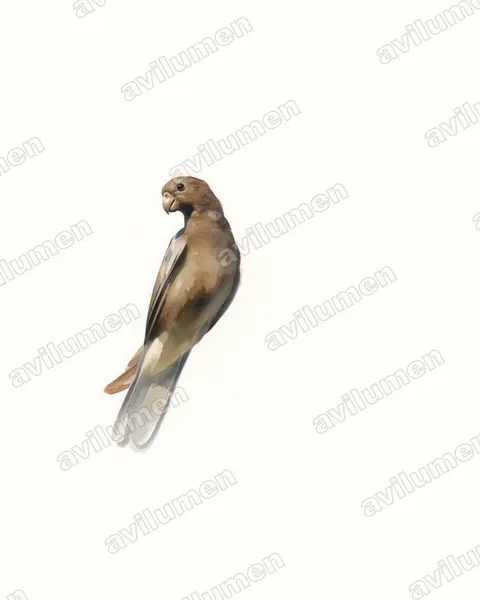
Watercolor 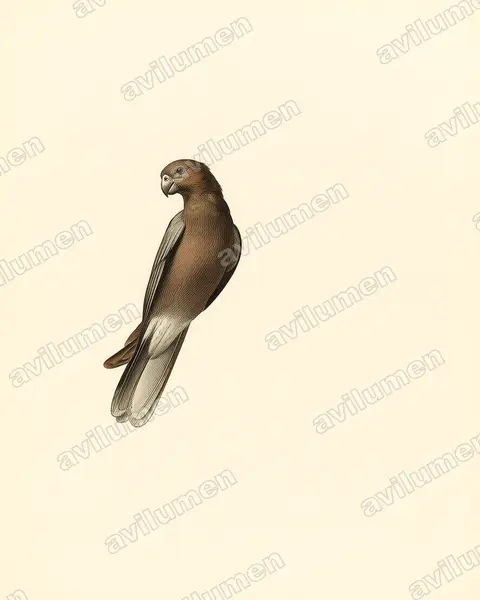
Vintage plate 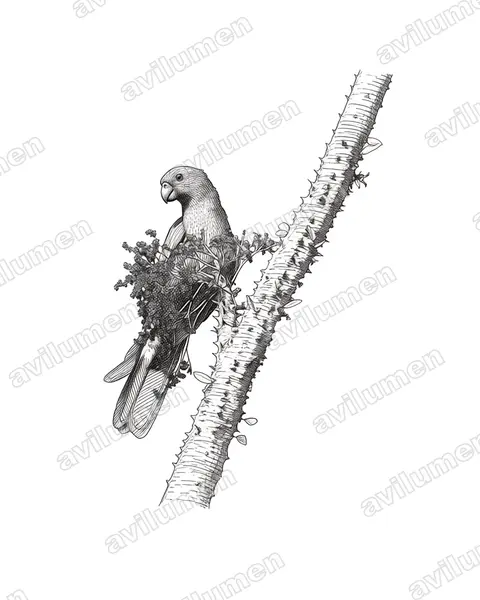
Ink 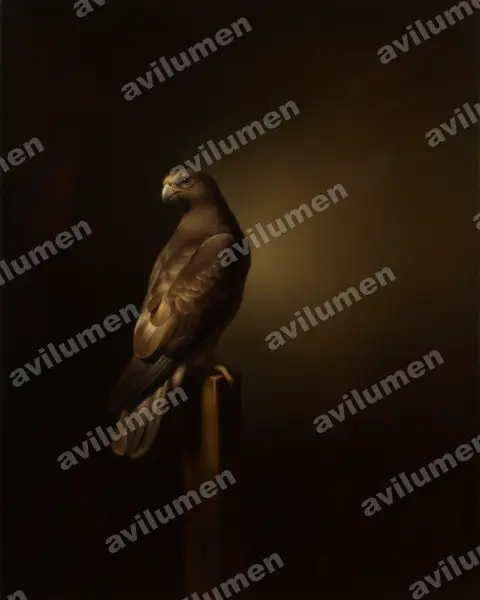
Oil 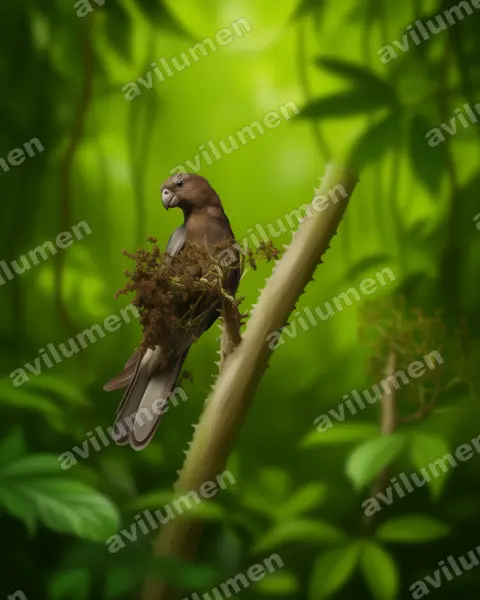
Realistic 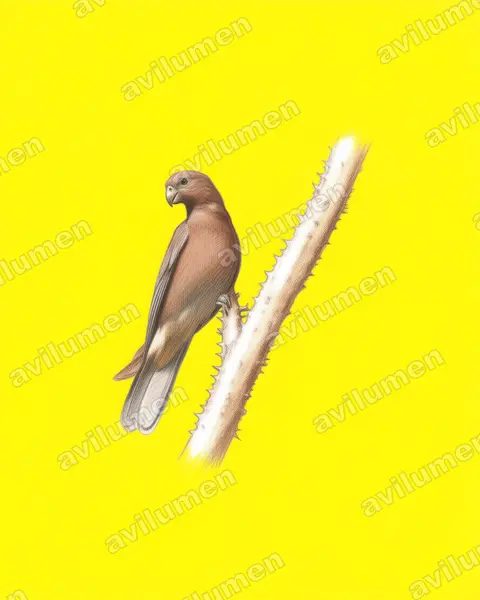
Colored pencil
Illustrations based on the photograph by Gerhard mauracher (CC BY-SA 4.0), from Wikimedia Commons.
Digital editions
HD Digital Art Pack — Lesser Vasa Parrot
Digital download: 6 high-resolution illustrations of the Lesser Vasa Parrot (Coracopsis nigra), print-ready. This is a digital file; no animal or physical item is included.
AI Avatar — Lesser Vasa Parrot
Generate an avatar fusing your face with the Lesser Vasa Parrot (Coracopsis nigra). Delivered digitally in 8K, watermark-free. Digital product; no animals are sold or brokered.
Instant download. No live birds are sold.
Frequently asked questions
- Is Coracopsis nigra (Lesser Vasa Parrot) endangered?
- The IUCN Red List places Coracopsis nigra, commonly known as the Lesser Vasa Parrot, in the «Least concern» category. «Least concern» means it is not currently threatened.
- Where does Coracopsis nigra (Lesser Vasa Parrot) live?
- Coracopsis nigra (Lesser Vasa Parrot) is found in Africa and Madagascar.
- What family does Coracopsis nigra (Lesser Vasa Parrot) belong to?
- Coracopsis nigra (Lesser Vasa Parrot) belongs to the family Psittacidae, in the order Psittaciformes.
- What colour is Coracopsis nigra (Lesser Vasa Parrot)?
- The plumage of Coracopsis nigra (Lesser Vasa Parrot) combines these colours: Black.
More from the same family
 Near threatened
Yellow-faced Parrot
Alipiopsitta xanthops
The yellow-faced parrot, formerly also known as the yellow-faced amazon, is the only species of the genus Alipiopsitta. It is a Neotropical parrot, and was classified in the genus Amazona for many years. It is a predominantly green and yellow-plumaged bird with a yellow head. It is a semi-nomadic species found in the cerrado region of Brazil and adjacent Bolivia.
from $1.99
 Least concern
Moluccan King Parrot
Alisterus amboinensis
The Moluccan king parrot is a parrot endemic to Peleng Island, Maluku, and West Papua in Indonesia. It is sometimes referred to as the Ambon king parrot or Amboina king parrot, but this is potentially misleading, as it is found on numerous other islands than Ambon. The male and female are similar in appearance, with a predominantly red head and underparts, green wings, and blue back and tail.
from $1.99
 Least concern
Papuan King Parrot
Alisterus chloropterus
The Papuan king parrot, also known as the green-winged king parrot, is a species of parrot in the family Psittaculidae found in New Guinea. Its natural habitats are subtropical or tropical moist lowland forest and subtropical or tropical moist montane forest.
from $1.99
 Least concern
Australian King Parrot
Alisterus scapularis
The Australian king parrot is a species of parrot endemic to eastern Australia ranging from Cooktown in Queensland to Port Campbell in Victoria. Found in humid and heavily forested upland regions of the eastern portion of the continent, including eucalyptus wooded areas in and directly adjacent to subtropical and temperate rainforest. They feed on fruits and seeds gathered from trees or on the ground.
from $1.99