Chatham Parakeet
Cyanoramphus forbesi
Avilumen editorial team ·

The Chatham Islands parakeet, also known as Forbes' parakeet, is a rare parakeet endemic to the Chatham Islands group, New Zealand. This parakeet is one of New Zealand's rarest birds and is classified as Vulnerable on the IUCN Red List, as a result of a range of threats to the species survival, including habitat loss, predation, and hybridization.
The Chatham Islands parakeet (Cyanoramphus forbesi), also known as Forbes' parakeet, is a rare parakeet endemic to the Chatham Islands group, New Zealand. This parakeet is one of New Zealand's rarest birds and is classified as Vulnerable on the IUCN Red List, as a result of a range of threats to the species survival, including habitat loss, predation, and hybridization. A number of conservation methods have been employed to assist the recovery of this species, and currently the population trend is considered stable.
Taxonomy
Walter Rothschild described the species in 1893.
"Chatham Islands parakeet" has been designated the official name by the International Ornithologists' Union (IOC).
Forbes' parakeet is one of ten species in the genus Cyanoramphus, a genus consisting of parakeets from New Zealand and surrounding islands. Originally classified as a distinct species (Cyanoramphus forbesi) Forbes' parakeet was later thought to be a subspecies of the Yellow-crowned Parakeet Cyanoramphus auriceps and was renamed Cyanoramphus auriceps forbesi. Forbes' Parakeet has since been the subject of a range of molecular tests to determine the correct classification of the bird. These tests have resulted in C. forbesi being reinstated as a separate species to C. auriceps, on the basis of genetic variations, as well as morphological differences such as size and vocalisations.
Hybridisation
Mitochondrial DNA analysis and microsatellite genetic markers have both indicated a high degree of hybridisation between Forbes' parakeet and the Chatham Island Red-crowned Parakeet (Cyanoramphus novaezelandiae chathamensis), which is also found on Mangere Island in the Chatham Islands.
Description
Forbes' parakeets are medium-sized parakeets, with long tails and orange-red eyes. Plumage is bright green, with a red band across the forehead (but not reaching the eyes) and a yellow forecrown. The lores are also green, and the bird has some red plumage on the sides of the rump, and violet-blue outer primaries and wing coverts. The female parakeet is slightly smaller than the male, which is also reflected in her smaller bill size.
Forbes' parakeet is easily distinguished from the Chatham Island Red-crowned Parakeet by its golden-yellow forecrown, as like its name suggests the Chatham Island Red-crowned parakeet has a red forecrown. It is also distinguishable from the Yellow-crowned parakeet (Cyanoramphus auriceps) despite looking quite similar, as C. auriceps is not found in the Chatham Islands.
Distribution and habitat
Forbes' parakeet is found only on Mangere and Little Mangere (Tapuaenuku) Islands in the Chatham Islands group. The Chatham Islands are sovereign land of New Zealand, and lay to the South-east of Wellington.
Historically, Forbes' parakeet was documented in the 1800s to have travelled to nearby Pitt Island and southern Chatham Island. The species was extinct on Mangere Island by 1930 as a result of significant deforestation. However, the species persisted on Little Mangere Island, until recolonizing Mangere Island in the 1960s after the removal of introduced species (such as cats, rabbits and grazing livestock) and after the native vegetation had a chance to grow back.
The parakeet is found in dense forest and scrub, and utilizes tree hollows and rock crevices to nest.
Conservation
Forbes' parakeet is absolutely protected under New Zealand's Wildlife Act 1953. The species is also listed under Appendix I of the Convention on International Trade in Endangered Species of Wild Fauna and Flora (CITES) meaning international export/import (including parts and derivatives) is regulated.
Forbes' parakeet has faced a number of threats to its survival, with the population once falling as low as 20–30 individuals. These threats include deforestation and habitat destruction, the introduction of predators, and the fact that the entire population is confined to two small islands in the Chatham Islands group-Mangere and Little Mangere Islands, which are only 112ha and 16ha respectively.
Massive deforestation of Mangere Island has had a significant impact on the population of Forbes' parakeet, as the environmental boundaries (like differing habitat preference) that once separated Forbes' parakeet from the Chatham Island Red-crowned parakeet were no longer in place. Deforestation and the creation of open farmland meant Forbes' parakeet was being deprived of the forest habitat it prefers. As the Chatham Island Red-crowned parakeet was better able to adapt to these new changes in habitat than Forbes' parakeet, they were able to colonize new areas of the island, including habitat that was previously only occupied by Forbes' parakeet. As a result, competition for habitat and breeding resources (such as mates) has driven the increased rate of hybridisation between these two species, effectively affecting the genetic makeup of the population of both of these Cyanoramphus species. This is particularly threatening to the C. forbesi population as it is not found anywhere else and therefore runs the risk of essentially being bred out as a species.
To prevent the further genetic loss of Forbes' parakeet due to hybridisation, both hybrids and Chatham Island Red-crowned parakeets were culled on Mangere Island as of 1976. These culls took place routinely until the population of hybrid birds and C. n. chathamensis reached levels that were considered not to be an immediate threat to the C. forbesi population. Eliminating these birds also reduced the amount of competition for resources like food and habitat, and gave Forbes' parakeet numbers a chance to increase. Currently the population of hybrid birds is monitored, and culls will resume if the number of hybrid birds on Mangere Island reaches 10% of the total number of parakeets on the island. The islands inhabited by Forbes' parakeet have also undergone reforestation efforts (of approximately 6000 trees annually since 1976) to boost natural habitat for the species and to add a degree of separation between them and C. n. chathamensis species which prefer more open habitat when given the choice.
Behaviour
Forbes' parakeet are typically seen singly or in pairs, but rarely in groups. The birds are considered sedentary, and remain at a single nesting site throughout the year.
Diet
The diet of Forbes' parakeets consists of invertebrates, flowers, seeds, leaves, fruit, shoots and bark. They have been noted feeding in the forest canopy and on the forest floor, as well as in trees, shrubs or other plants when fruiting, seeding or flowering. Forbes' parakeet feeds both individually and in groups with conspecifics, as well as with Chatham Island Red-crowned Parakeets and hybrids of the two species.
Reproduction
Forbes' parakeet nest in hollows of dead or living trees, and breed between October and March. The birds become quite territorial of boundaries when breeding, chasing other birds away from the area and making loud vocalisations. The female bird will stay in the nest during incubation, and the male will bring her food. Clutch size is between 2-9 eggs, and once the eggs hatch both the male and the female adult birds will share parental care of the offspring. When provided with nest boxes, the species has a high rate of chick mortality, though it is unclear why this may be the case.
Text adapted from Wikipedia · CC BY-SA 4.0
Where it lives
Plumage colours
Taxonomy
- Order
- Psittaciformes
- Family
- Psittacidae
- Genus
- Cyanoramphus
- Conservation status
- Vulnerable
Listen to its call
No recording yet
Care guide
Budgie, Conure and Parakeet Care Guide
How to care for budgies, conures, parrotlets, ringnecks and other parakeets: diet, cage setup, health, behavior, breeding and legal status for owners.
Read the guide →Illustration gallery
6 illustrations of Cyanoramphus forbesi (Chatham Parakeet) in different styles, true to its real plumage. Shown watermarked; the art pack includes the high-resolution originals, ready to print.
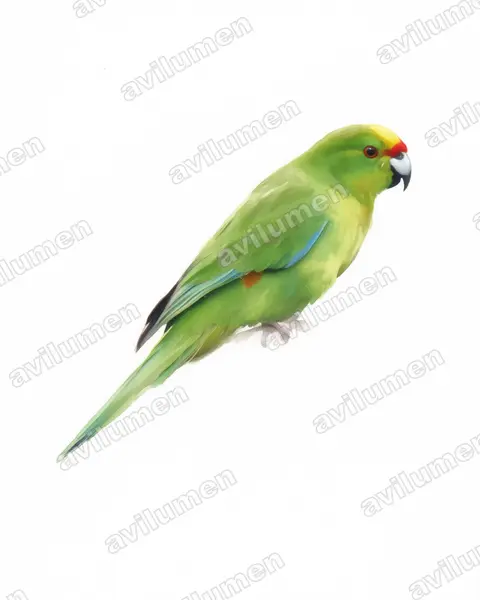
Watercolor 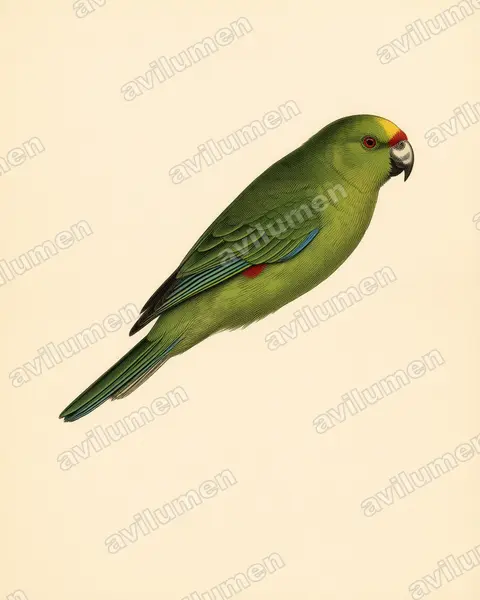
Vintage plate 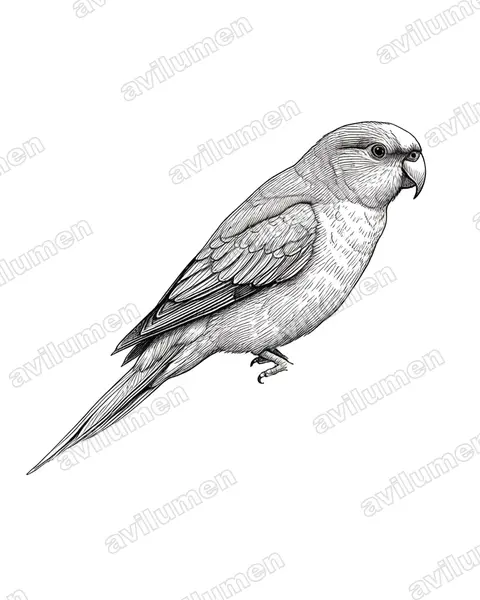
Ink 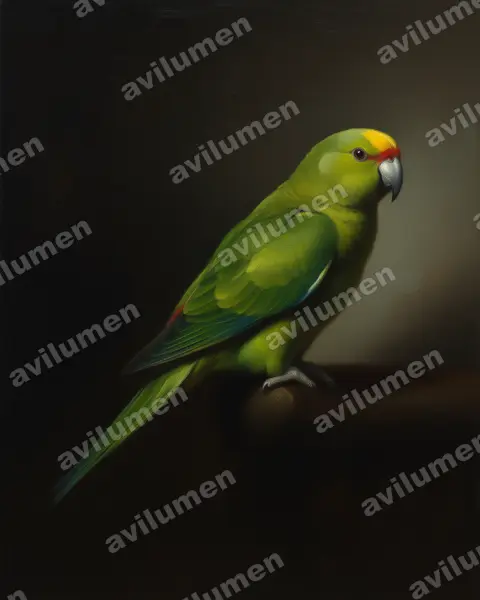
Oil 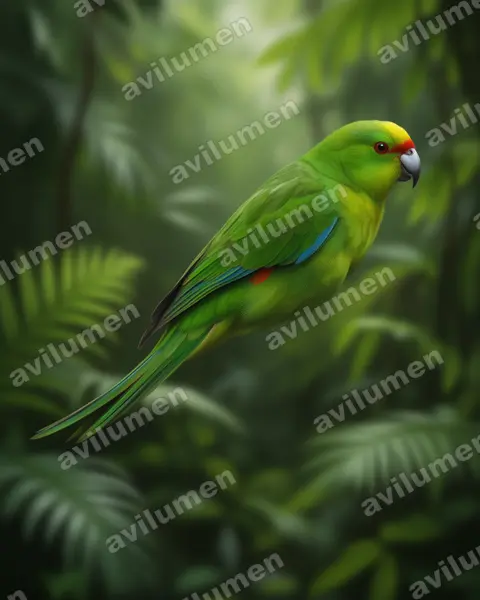
Realistic 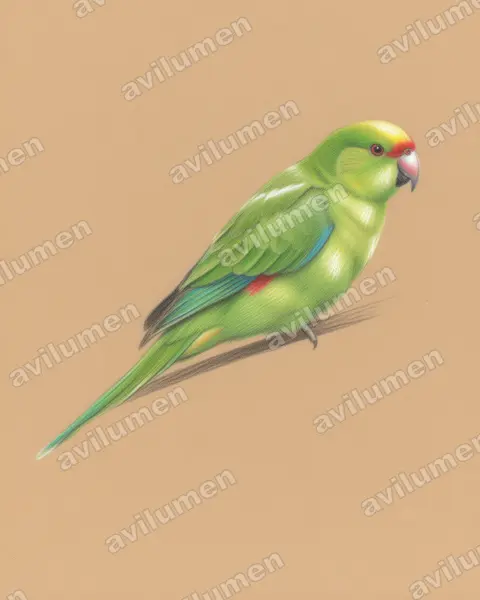
Colored pencil
Illustrations based on the photograph by Mark Anderson (CC BY-SA 4.0), from Wikimedia Commons.
Digital editions
HD Digital Art Pack — Chatham Parakeet
Digital download: 6 high-resolution illustrations of the Chatham Parakeet (Cyanoramphus forbesi), print-ready. This is a digital file; no animal or physical item is included.
AI Avatar — Chatham Parakeet
Generate an avatar fusing your face with the Chatham Parakeet (Cyanoramphus forbesi). Delivered digitally in 8K, watermark-free. Digital product; no animals are sold or brokered.
Instant download. No live birds are sold.
Frequently asked questions
- Is Cyanoramphus forbesi (Chatham Parakeet) endangered?
- The IUCN Red List places Cyanoramphus forbesi, commonly known as the Chatham Parakeet, in the «Vulnerable» category. «Vulnerable» means it faces a high risk of extinction in the medium term.
- Where does Cyanoramphus forbesi (Chatham Parakeet) live?
- Cyanoramphus forbesi (Chatham Parakeet) is found in New Zealand.
- What family does Cyanoramphus forbesi (Chatham Parakeet) belong to?
- Cyanoramphus forbesi (Chatham Parakeet) belongs to the family Psittacidae, in the order Psittaciformes.
- What colour is Cyanoramphus forbesi (Chatham Parakeet)?
- The plumage of Cyanoramphus forbesi (Chatham Parakeet) combines these colours: Green.
More from the same family
 Near threatened
Yellow-faced Parrot
Alipiopsitta xanthops
The yellow-faced parrot, formerly also known as the yellow-faced amazon, is the only species of the genus Alipiopsitta. It is a Neotropical parrot, and was classified in the genus Amazona for many years. It is a predominantly green and yellow-plumaged bird with a yellow head. It is a semi-nomadic species found in the cerrado region of Brazil and adjacent Bolivia.
from $1.99
 Least concern
Moluccan King Parrot
Alisterus amboinensis
The Moluccan king parrot is a parrot endemic to Peleng Island, Maluku, and West Papua in Indonesia. It is sometimes referred to as the Ambon king parrot or Amboina king parrot, but this is potentially misleading, as it is found on numerous other islands than Ambon. The male and female are similar in appearance, with a predominantly red head and underparts, green wings, and blue back and tail.
from $1.99
 Least concern
Papuan King Parrot
Alisterus chloropterus
The Papuan king parrot, also known as the green-winged king parrot, is a species of parrot in the family Psittaculidae found in New Guinea. Its natural habitats are subtropical or tropical moist lowland forest and subtropical or tropical moist montane forest.
from $1.99
 Least concern
Australian King Parrot
Alisterus scapularis
The Australian king parrot is a species of parrot endemic to eastern Australia ranging from Cooktown in Queensland to Port Campbell in Victoria. Found in humid and heavily forested upland regions of the eastern portion of the continent, including eucalyptus wooded areas in and directly adjacent to subtropical and temperate rainforest. They feed on fruits and seeds gathered from trees or on the ground.
from $1.99