Grey-breasted Parakeet
Pyrrhura griseipectus
Avilumen editorial team ·

The grey-breasted parakeet is an Endangered species of bird in subfamily Arinae of the family Psittacidae, the African and New World parrots. Long thought to be endemic to Ceará in northeastern Brazil, it has also been documented in Bahia.
The grey-breasted parakeet (Pyrrhura griseipectus) is an Endangered species of bird in subfamily Arinae of the family Psittacidae, the African and New World parrots. Long thought to be endemic to Ceará in northeastern Brazil, it has also been documented in Bahia.
Taxonomy and systematics
Until the early 2000s the grey-breasted parakeet was considered a subspecies of the white-eared parakeet (P. leucotis), which is also called maroon-faced parakeet. There is some thought that the specific epithet griseipectus should be replaced by anaca, which was originally applied to another parakeet, but which appears to have priority.
Description
The grey-breasted parakeet is 20 to 23 cm (7.9 to 9.1 in) long. The sexes are the same. Adults have a brown crown, a plum-red face, and white ear coverts. Their upperparts are mostly green with a red-brown rump. Their chin, throat, and the sides of their neck are grayish with a scaly appearance. The center of their belly is red-brown and the rest of their underparts are green. Their wing is mostly green with a red shoulder and bluish flight feathers. Their tail is red-brown. Immatures are similar to adults.
Distribution and habitat
As of 2020 the grey-breasted parakeet was known in only three sites in the Brazilian state of Ceará: Serra do Baturité, Quixadá, and Ibaretama. Its historical range included at least 15 locations in Ceará, Alagoas, Pernambuco, and Rio Grande do Norte. A 2022 publication documented a flock in Bahia, approximately 800 km (500 mi) south of the Ceará sites. It also identified earlier photographs taken in Bahia of birds that at the time were identified as the white-eared (or maroon-faced) parakeet. The Ceará population inhabits patches of tall humid forest within otherwise dry caatinga and in granite- or sandstone-dominated areas. It is almost always found above 500 m (1,600 ft) of elevation. The Bahia birds were found near the coast in mangroves, restinga, and abandoned coconut plantations.
Movement
The grey-breasted parakeet is not known to have any pattern of movement.
Feeding
The grey-breasted parakeet forages for fruits and seeds in the forest canopy.
Breeding
The grey-breasted parakeet's breeding season is not fully known but in Ceará includes February and March. It nests in cavities in trees and in rocks, and also uses nest boxes erected by conservation projects. The clutch size can be as high as seven eggs. The incubation period, time to fledging, and details of parental care are not known.
Vocalization
The grey-breasted parakeet's call is a "piercing, fast, chattering 't'kreet-kreet-wik-kreet-krit'."
Status
The IUCN originally assessed the grey-breasted parakeet as Critically Endangered but in 2017 revised the status to Endangered. It occupies very small enclaves and has an estimated population of between about 400 and 600 mature individuals. As a result of intensive conservation efforts including the provision of nest boxes the population is believed to be increasing at all three known locations. Most of what had been its forest habitat has been converted to agriculture, especially coffee farming. An ongoing threat is illegal trapping for the pet trade, both domestic and international, though the rate of it has apparently lessened since the early 2000s. The lack of natural nest cavities has somewhat been offset by the provision of nest boxes. The authors of the 2022 publication note that their discovery in Bahia "suggests that the species has considerable ecological plasticity and supports both the possibility of a larger former distribution and its potential capability to use 'new' habitats".
Text adapted from Wikipedia · CC BY-SA 4.0
Where it lives
Distribution

Taxonomy
- Order
- Psittaciformes
- Family
- Psittacidae
- Genus
- Pyrrhura
- Conservation status
- Endangered
Listen to its call
No recording yet
Care guide
Budgie, Conure and Parakeet Care Guide
How to care for budgies, conures, parrotlets, ringnecks and other parakeets: diet, cage setup, health, behavior, breeding and legal status for owners.
Read the guide →Illustration gallery
6 illustrations of Pyrrhura griseipectus (Grey-breasted Parakeet) in different styles, true to its real plumage. Shown watermarked; the art pack includes the high-resolution originals, ready to print.
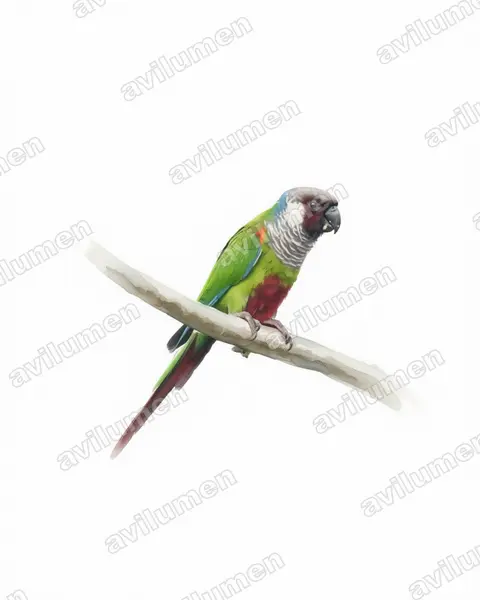
Watercolor 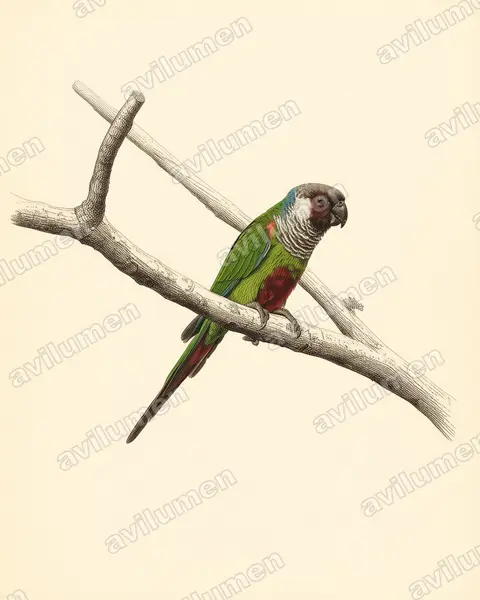
Vintage plate 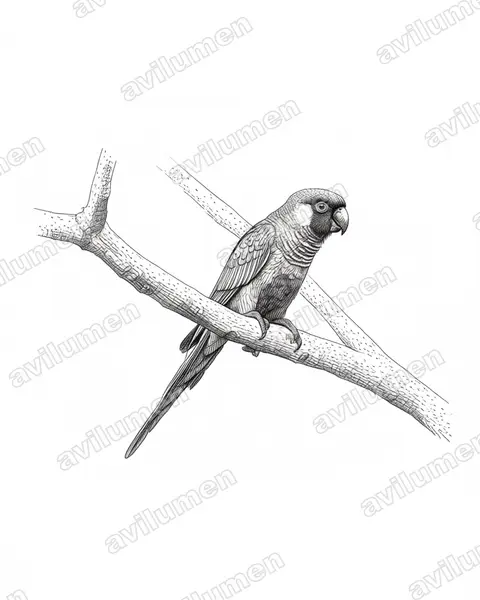
Ink 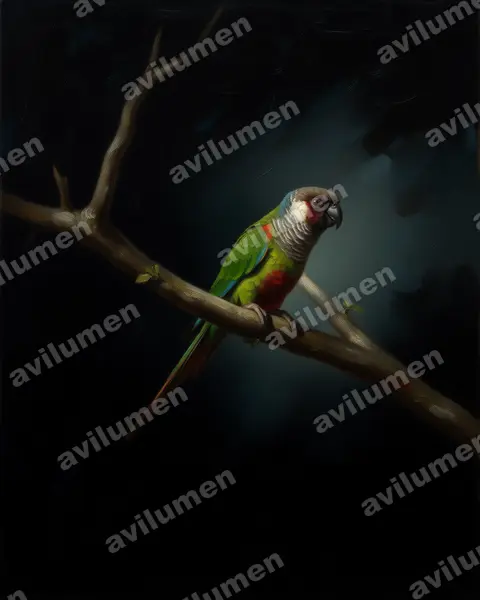
Oil 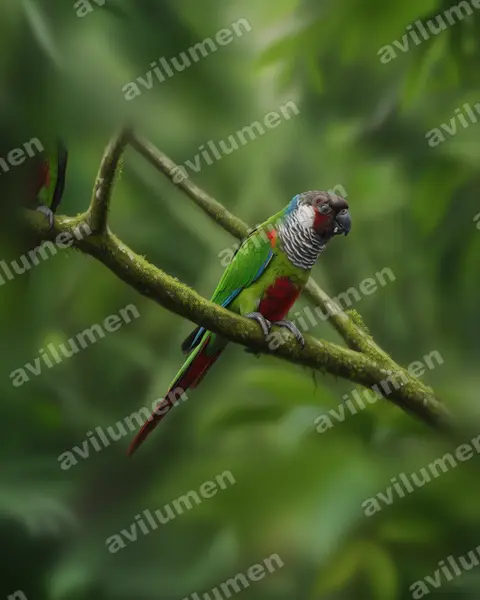
Realistic 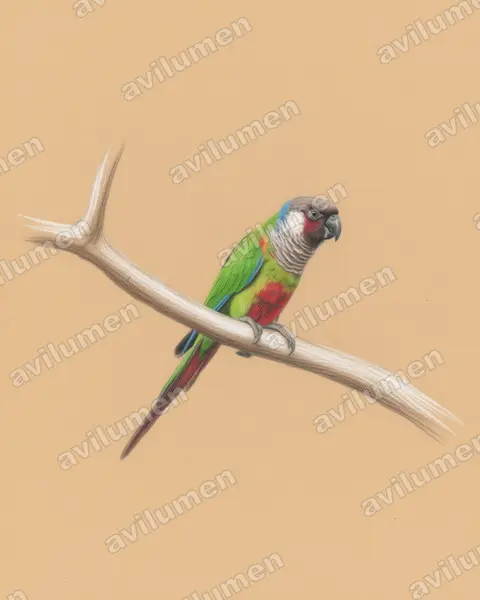
Colored pencil
Illustrations based on the photograph by Michael Hurben (CC BY-SA 4.0), from Wikimedia Commons.
Digital editions
HD Digital Art Pack — Grey-breasted Parakeet
Digital download: 6 high-resolution illustrations of the Grey-breasted Parakeet (Pyrrhura griseipectus), print-ready. This is a digital file; no animal or physical item is included.
AI Avatar — Grey-breasted Parakeet
Generate an avatar fusing your face with the Grey-breasted Parakeet (Pyrrhura griseipectus). Delivered digitally in 8K, watermark-free. Digital product; no animals are sold or brokered.
Instant download. No live birds are sold.
Frequently asked questions
- Is Pyrrhura griseipectus (Grey-breasted Parakeet) endangered?
- The IUCN Red List places Pyrrhura griseipectus, commonly known as the Grey-breasted Parakeet, in the «Endangered» category. «Endangered» means it faces a very high risk of disappearing in the wild.
- Where does Pyrrhura griseipectus (Grey-breasted Parakeet) live?
- Pyrrhura griseipectus (Grey-breasted Parakeet) is found in Brazil and South America.
- What family does Pyrrhura griseipectus (Grey-breasted Parakeet) belong to?
- Pyrrhura griseipectus (Grey-breasted Parakeet) belongs to the family Psittacidae, in the order Psittaciformes.
- What colour is Pyrrhura griseipectus (Grey-breasted Parakeet)?
- The plumage of Pyrrhura griseipectus (Grey-breasted Parakeet) combines these colours: Grey and Green.
More from the same family
 Near threatened
Yellow-faced Parrot
Alipiopsitta xanthops
The yellow-faced parrot, formerly also known as the yellow-faced amazon, is the only species of the genus Alipiopsitta. It is a Neotropical parrot, and was classified in the genus Amazona for many years. It is a predominantly green and yellow-plumaged bird with a yellow head. It is a semi-nomadic species found in the cerrado region of Brazil and adjacent Bolivia.
from $1.99
 Least concern
Moluccan King Parrot
Alisterus amboinensis
The Moluccan king parrot is a parrot endemic to Peleng Island, Maluku, and West Papua in Indonesia. It is sometimes referred to as the Ambon king parrot or Amboina king parrot, but this is potentially misleading, as it is found on numerous other islands than Ambon. The male and female are similar in appearance, with a predominantly red head and underparts, green wings, and blue back and tail.
from $1.99
 Least concern
Papuan King Parrot
Alisterus chloropterus
The Papuan king parrot, also known as the green-winged king parrot, is a species of parrot in the family Psittaculidae found in New Guinea. Its natural habitats are subtropical or tropical moist lowland forest and subtropical or tropical moist montane forest.
from $1.99
 Least concern
Australian King Parrot
Alisterus scapularis
The Australian king parrot is a species of parrot endemic to eastern Australia ranging from Cooktown in Queensland to Port Campbell in Victoria. Found in humid and heavily forested upland regions of the eastern portion of the continent, including eucalyptus wooded areas in and directly adjacent to subtropical and temperate rainforest. They feed on fruits and seeds gathered from trees or on the ground.
from $1.99