Greater Vasa Parrot
Coracopsis vasa
Avilumen editorial team ·

The greater vasa parrot is one of two species of vasa parrot, the other being the lesser vasa parrot. The greater vasa parrot can be found throughout Madagascar and the Comoros.
The greater vasa parrot (Coracopsis vasa) is one of two species of vasa parrot, the other being the lesser vasa parrot (C. nigra). The greater vasa parrot can be found throughout Madagascar and the Comoros.
Taxonomy
The bird was first described in 1812 by George Shaw. There are three subspecies:
C. v. comorensis (Peters, W, 1854)
C. v. drouhardi Lavauden, 1929
C. v. vasa (Shaw, 1812)
The bird is placed in the genus Mascarinus by some authorities.
Description
The greater vasa parrot's breeding season is uncertain, but is probably between October and December. It has a very unusual breeding biology and mating system; females are 25% larger than males, and are, physically, dominant. The species lives in loose, polygynandrous groups wherein each female has at least 3-8 sexual partners. The males have re-evolved a phallus, and copulations can last up to 90 minutes. Copulations come in two lengths—short (1–3 seconds) and long durations (averaging 36 minutes), with the latter involving a copulatory tie. A copulatory tie usually applies to mammals, such as canids and felids, where the two animals are unable to physically part during mating due to the swelling, and structure, of the penis within the female's body (being barbed or lined with small "hooks" in some species). During brooding and chick-rearing, females shed their head feathers and develop bright orange skin coloration, and also sing complex songs from perches close to the nest. These serve to attract males to approach and regurgitate food, which the female accepts while off the nest. The females also defend a territory around their nest from other females during this period.
Ecology
In Madagascar it is more common in portions of the dry deciduous forests, compared with the lesser vasa parrot which is more common in the humid forests of the east coast. Feeds, in large, noisy flocks, on wild berries, fruits, nuts and seeds and also on cultivated maize, millet and rice. The bird is active on moonlit nights, otherwise they roost in large noisy flocks in the tops of large trees. A lookout warns of danger.
Greater vasa parrots in Lincolnshire Wildlife Park have been recorded using grinding technology – the first non-human animal to be observed doing this. They were observed holding date stones and pebbles in their beak to grind calicium-rich dust from seashells. It happens most frequently just before the breeding season and the males were observed doing it more often. A possible explanation is the females need the extra calcium to build eggshells and the males feed them with regurgitated food.
Status
This bird is common in some areas and overall the population is thought to be declining, but not enough to classify this bird as vulnerable. The International Union for Conservation of Nature has classified the conservation status of this bird as of least concern.
Text adapted from Wikipedia · CC BY-SA 4.0
Taxonomy
- Order
- Psittaciformes
- Family
- Psittacidae
- Genus
- Coracopsis
- Conservation status
- Least concern
Listen to its call
No recording yet
Care guide
Amazon, African Grey and Eclectus Parrot Care Guide
How to care for Amazon parrots, African greys, eclectus and pionus: diet, cage setup, health, behavior and CITES requirements for medium and large parrots.
Read the guide →Illustration gallery
6 illustrations of Coracopsis vasa (Greater Vasa Parrot) in different styles, true to its real plumage. Shown watermarked; the art pack includes the high-resolution originals, ready to print.
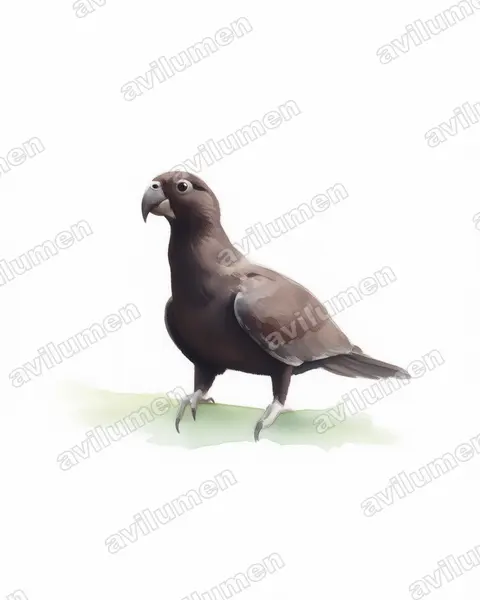
Watercolor 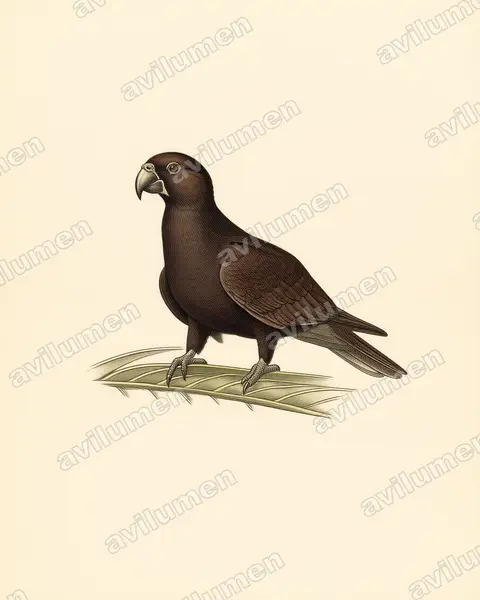
Vintage plate 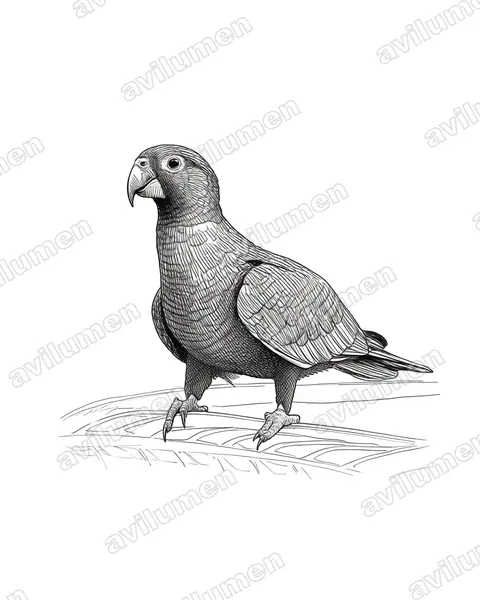
Ink 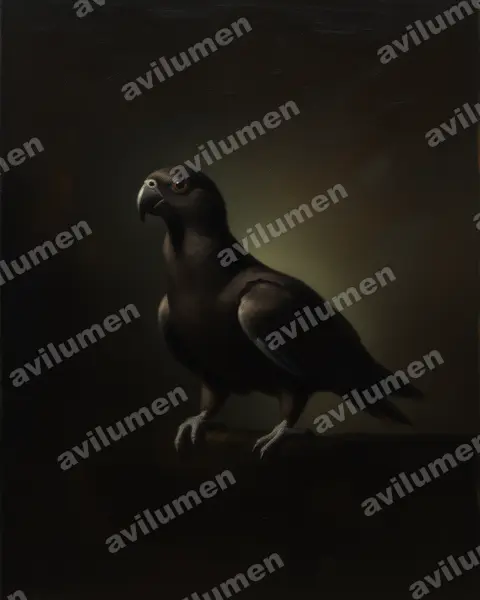
Oil 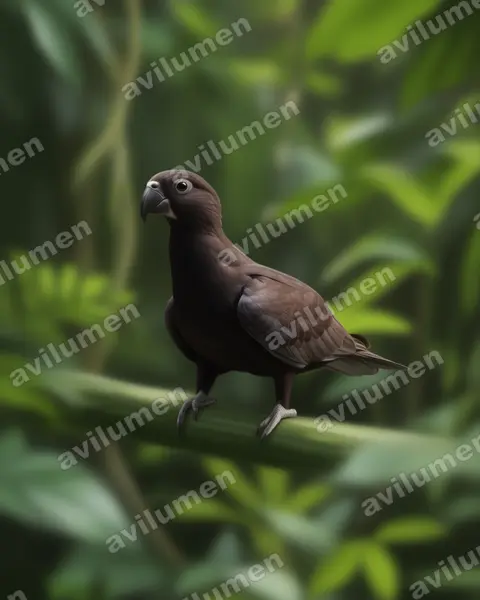
Realistic 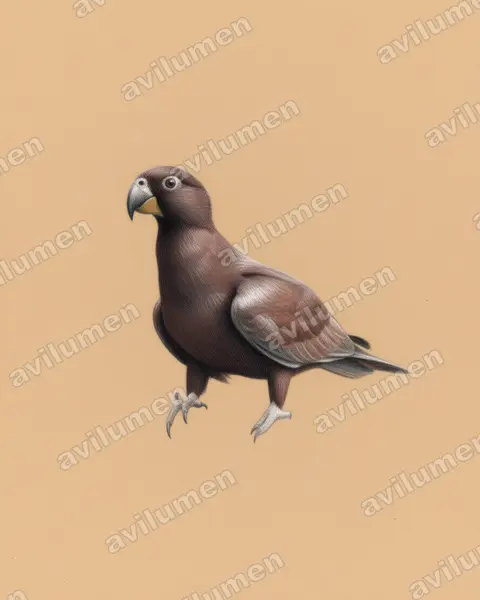
Colored pencil
Illustrations based on the photograph by AEM (CC BY-SA 3.0), from Wikimedia Commons.
Digital editions
HD Digital Art Pack — Greater Vasa Parrot
Digital download: 6 high-resolution illustrations of the Greater Vasa Parrot (Coracopsis vasa), print-ready. This is a digital file; no animal or physical item is included.
AI Avatar — Greater Vasa Parrot
Generate an avatar fusing your face with the Greater Vasa Parrot (Coracopsis vasa). Delivered digitally in 8K, watermark-free. Digital product; no animals are sold or brokered.
Instant download. No live birds are sold.
Frequently asked questions
- Is Coracopsis vasa (Greater Vasa Parrot) endangered?
- The IUCN Red List places Coracopsis vasa, commonly known as the Greater Vasa Parrot, in the «Least concern» category. «Least concern» means it is not currently threatened.
- Where does Coracopsis vasa (Greater Vasa Parrot) live?
- Coracopsis vasa (Greater Vasa Parrot) is found in Africa.
- What family does Coracopsis vasa (Greater Vasa Parrot) belong to?
- Coracopsis vasa (Greater Vasa Parrot) belongs to the family Psittacidae, in the order Psittaciformes.
- What colour is Coracopsis vasa (Greater Vasa Parrot)?
- The plumage of Coracopsis vasa (Greater Vasa Parrot) combines these colours: Black and Grey.
More from the same family
 Near threatened
Yellow-faced Parrot
Alipiopsitta xanthops
The yellow-faced parrot, formerly also known as the yellow-faced amazon, is the only species of the genus Alipiopsitta. It is a Neotropical parrot, and was classified in the genus Amazona for many years. It is a predominantly green and yellow-plumaged bird with a yellow head. It is a semi-nomadic species found in the cerrado region of Brazil and adjacent Bolivia.
from $1.99
 Least concern
Moluccan King Parrot
Alisterus amboinensis
The Moluccan king parrot is a parrot endemic to Peleng Island, Maluku, and West Papua in Indonesia. It is sometimes referred to as the Ambon king parrot or Amboina king parrot, but this is potentially misleading, as it is found on numerous other islands than Ambon. The male and female are similar in appearance, with a predominantly red head and underparts, green wings, and blue back and tail.
from $1.99
 Least concern
Papuan King Parrot
Alisterus chloropterus
The Papuan king parrot, also known as the green-winged king parrot, is a species of parrot in the family Psittaculidae found in New Guinea. Its natural habitats are subtropical or tropical moist lowland forest and subtropical or tropical moist montane forest.
from $1.99
 Least concern
Australian King Parrot
Alisterus scapularis
The Australian king parrot is a species of parrot endemic to eastern Australia ranging from Cooktown in Queensland to Port Campbell in Victoria. Found in humid and heavily forested upland regions of the eastern portion of the continent, including eucalyptus wooded areas in and directly adjacent to subtropical and temperate rainforest. They feed on fruits and seeds gathered from trees or on the ground.
from $1.99